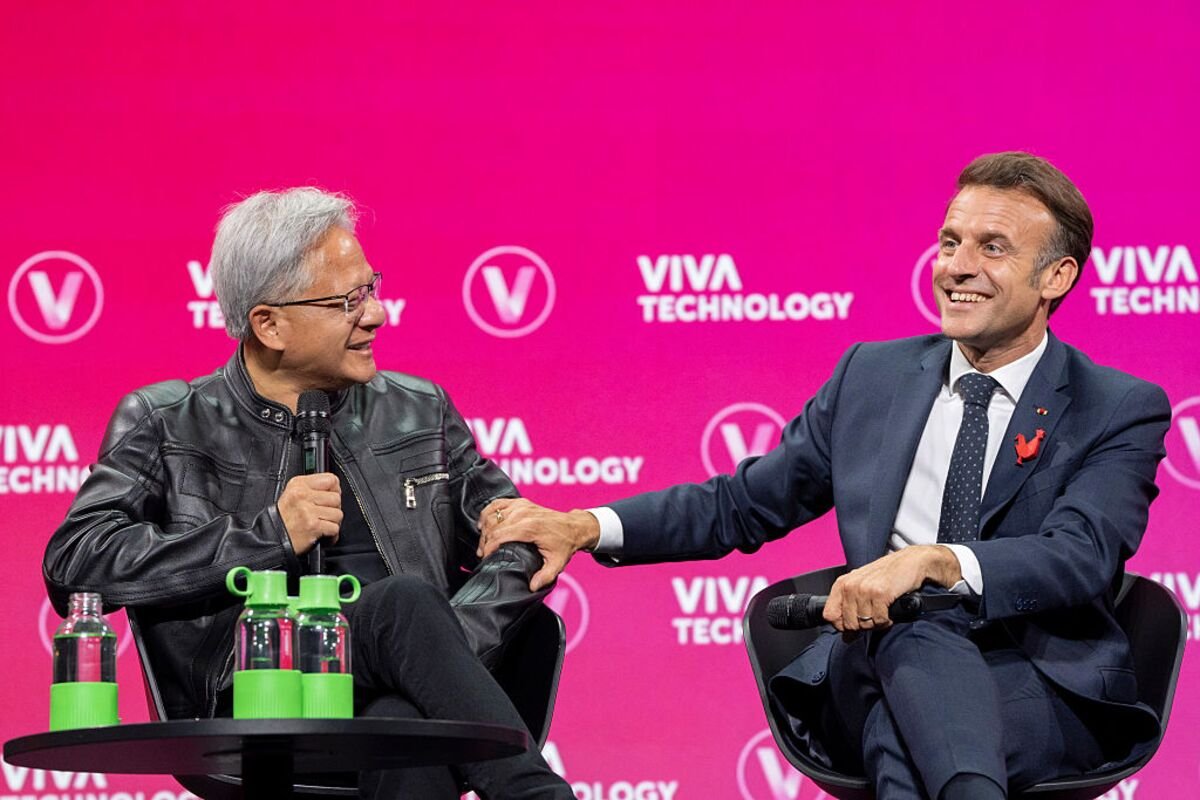

European Union leaders met in Dublin on 13 November 2026 to consider whether Europe can turn its research strengths into a globally competitive artificial-intelligence industry. European Council President António Costa chaired it, with Mistral AI chief executive Arthur Mensch and AI pioneer Geoffrey Hinton participating.
The challenge is balancing values-led AI with the investment, computing infrastructure and energy needed to compete globally. This was a strategic discussion, not a legislative session; no new AI law or funding agreement was announced.
The investment gap is a competitiveness problem
Leaders discussed mobilising public and private investment, strengthening European capabilities in AI models, chips and cloud services, securing supply chains and reducing dependence on non-European providers. They considered how businesses and public administrations could adopt AI.
The Stanford Institute for Human-Centered AI’s 2026 AI Index estimates private AI investment in 2025 at $285.9 billion in the United States, about $20.9 billion in Europe and $12.4 billion in China. These are private-investment estimates, not total national spending; China’s public and state-guided funding is not fully captured by its private-investment figure.
The dependence is visible in chips: the EU produces less than 10% of global semiconductors, and 80% of suppliers to EU chip firms are based outside the bloc. This leaves AI infrastructure exposed to overseas bottlenecks.
Regulation must work alongside innovation
Leaders examined AI’s implications for fundamental rights, children, democratic processes, employment, market concentration and cybersecurity. Costa cited the EU AI Act as a governance foundation and said Europe could help shape international standards.
The meeting did not announce new restrictions. The AI Act is being implemented in stages; most provisions began applying in August 2026, while some requirements for high-risk systems have later deadlines. The official timetable reflects amendments introduced through the Digital Omnibus on AI. AI Act Service Desk
Europe’s challenge is to make compliance workable, particularly for smaller businesses, without weakening protections. Regulation can build public trust, but cannot replace investment, skilled workers or computing capacity.
Gigafactories show where the strategy is heading
Europe is expanding its infrastructure. In July 2026, the European Commission launched a call to establish up to seven AI Gigafactories. It includes up to €10 billion in EU and national funding and is expected to attract at least €20 billion in private investment. The facilities are intended to provide computing capacity for developing and running advanced AI systems.
Success depends on chips, skilled workers and affordable, clean electricity, issues raised in the leaders’ discussion.
Back Story: Why the Dublin meeting matters
The EU adopted its AI Act in 2024 and its Chips Act in 2023, alongside AI factories and competitiveness measures. The November meeting brought these priorities together: regulation, industrial capacity and adoption must progress together.
For Nigeria and other African economies, Europe’s decisions could influence digital trade, AI standards, research partnerships and access to technology. Europe’s test is whether policy ambition can produce companies, infrastructure and products capable of competing internationally. Leaders are due to revisit AI at their 5 February 2027 meeting in Alden Biesen.