
Nigeria’s future is being quietly shaped in classrooms where too many girls are missing out on science and coding education. Across secondary schools and universities, a clear gap remains between male and female participation in science, technology, engineering and mathematics. While progress has been made in expanding education generally, the deeper issue of access, exposure and encouragement in STEM still holds many girls back. This is not just an education problem. It is an economic, social and national development issue that deserves urgent attention.
Table of Contents

The Gender Gap in Science and Coding Education
In many Nigerian schools today, girls are still less likely to pursue subjects like physics, engineering and computer science compared to their male counterparts. Research in Abuja secondary schools shows that while girls participate moderately in subjects like mathematics and chemistry, their involvement in physics remains significantly low.
This imbalance is not due to a lack of ability. Evidence consistently shows that girls perform just as well as boys academically in science subjects. The problem lies elsewhere. Cultural expectations, lack of confidence, and limited exposure to role models often discourage girls from pursuing science-related careers.
Across Nigeria, stereotypes still play a powerful role. Many young girls grow up believing that science and technology are “male” fields. These beliefs can quietly influence subject choices as early as secondary school, gradually narrowing their career paths before they even realise it.
At a broader level, Nigeria reflects a global challenge. Women remain underrepresented in STEM fields worldwide, often due to long-standing social norms and unequal access to opportunities. However, the Nigerian context adds extra layers of complexity, including regional disparities, economic barriers and limited digital infrastructure in some areas.
Barriers Limiting Girls’ Access to STEM Opportunities
The challenges facing female students in Nigeria are both visible and hidden. Some are structural, while others are deeply cultural.
One major issue is access. In many schools, especially in rural areas, there are limited resources for practical science learning or coding education. Without proper laboratories, computers or trained teachers, students struggle to develop real interest or competence in STEM subjects.
Another key barrier is exposure. Many girls simply do not see enough examples of women succeeding in science and technology careers. Without relatable role models, it becomes harder to imagine themselves in those spaces. This lack of representation continues to reinforce the cycle of underrepresentation.
There is also the issue of early engagement. Studies suggest that interest in STEM subjects often declines for girls during their formative years, especially when teaching methods are too theoretical and not connected to real life experiences. When science feels abstract or intimidating, students are more likely to disengage.
Social expectations also play a significant role. In some communities, girls are subtly or openly encouraged to prioritise traditionally “feminine” careers, while boys are pushed towards technical fields. These expectations can shape decisions even before students fully understand their own interests.
Economic factors cannot be ignored either. Families with limited resources may prioritise education for male children, especially in regions where gender inequality remains strong. This affects not just school attendance but also access to extracurricular opportunities like coding bootcamps or tech training.
Why Expanding Access Matters for Nigeria’s Future
Increasing access to science and coding education for girls is not just about fairness. It is about unlocking Nigeria’s full potential.
STEM education is a major driver of innovation and economic growth. Countries that invest in science and technology are better positioned to compete globally, create jobs and solve complex challenges. When half of the population is underrepresented in these fields, the country loses a significant portion of its talent pool.
Research highlights that inclusive STEM education allows more people, including girls, to contribute meaningfully to innovation and national development. This means more ideas, more solutions and a stronger economy.
There is also a social impact. Women in STEM often bring different perspectives to problem solving, especially in areas like healthcare, education and community development. Their contributions can lead to more inclusive and effective solutions.
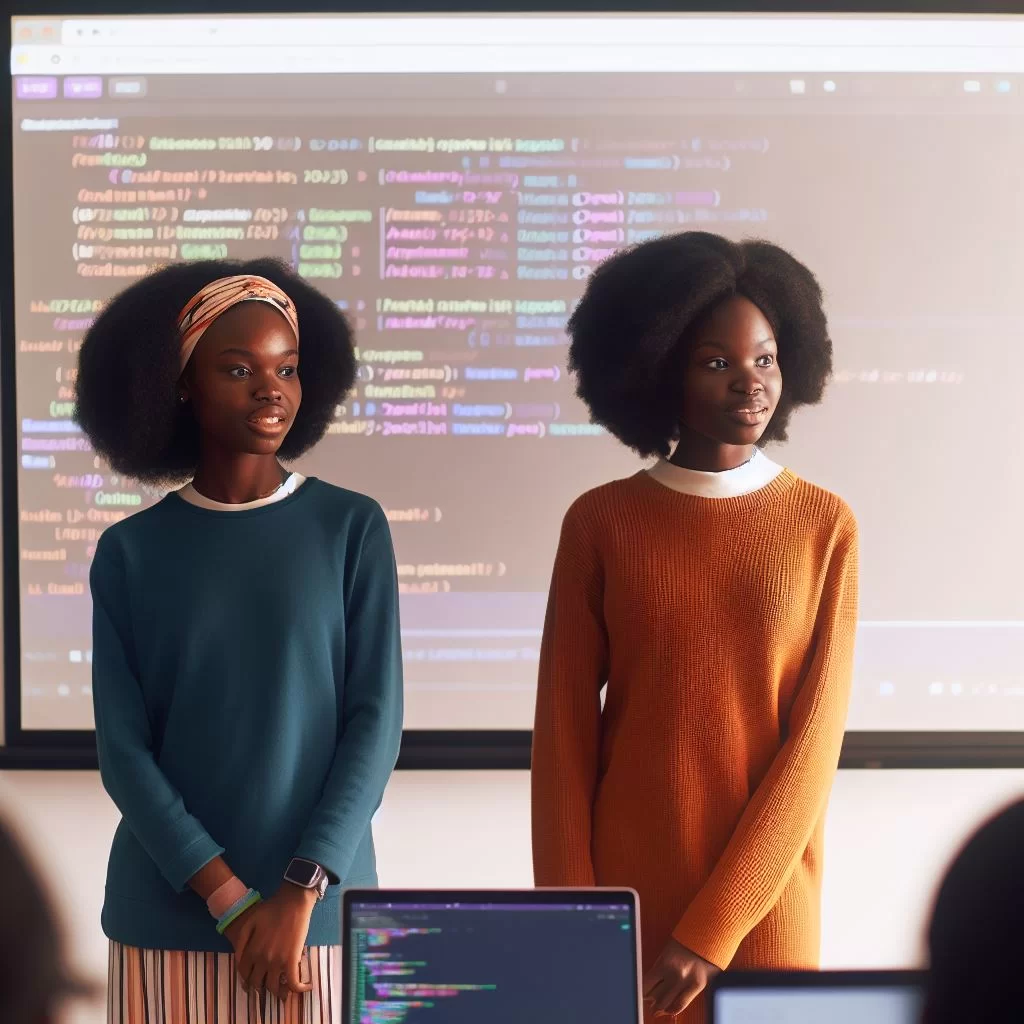
Beyond economics, empowering girls with coding and scientific skills builds confidence and independence. It opens doors to high-paying careers, entrepreneurship and global opportunities. In a digital world, coding is no longer optional. It is becoming a basic skill, just like reading and writing.
Nigeria is already seeing the benefits of targeted initiatives. Programmes that introduce girls to digital literacy and programming, such as outreach projects in northern Nigeria, have shown how exposure and mentorship can spark interest and build confidence in STEM fields.
The Way Forward for Inclusive STEM Education
Closing the gender gap in science and coding requires a deliberate and coordinated effort from government, schools, families and the private sector.
First, STEM education needs to start early. Introducing girls to science and coding at the primary school level can help build confidence before stereotypes take hold. Early exposure makes a lasting difference.
Second, teaching methods must evolve. Moving away from purely theoretical approaches to more hands-on, real-life learning can make science more engaging and relatable. When students see how science applies to everyday life, their interest naturally increases.
Mentorship is another critical factor. Organisations and professionals in the tech industry can play a huge role by mentoring young girls, sharing their experiences and providing guidance. Seeing successful women in STEM helps break mental barriers and inspires ambition.
Policy also has a role to play. Government investment in digital infrastructure, teacher training and inclusive education policies can create an enabling environment for girls to thrive in STEM. Scholarships and targeted programmes for female students can further bridge the gap.
Parents and communities must also be part of the solution. Encouraging girls to explore science subjects, supporting their interests and challenging outdated stereotypes can make a significant difference.
Ultimately, increasing access to science and coding for female students is not just about inclusion. It is about national progress. Nigeria cannot afford to leave half of its talent behind in a world driven by technology and innovation.
Join Our Social Media Channels:
WhatsApp: NaijaEyes
Facebook: NaijaEyes
Twitter: NaijaEyes
Instagram: NaijaEyes
TikTok: NaijaEyes