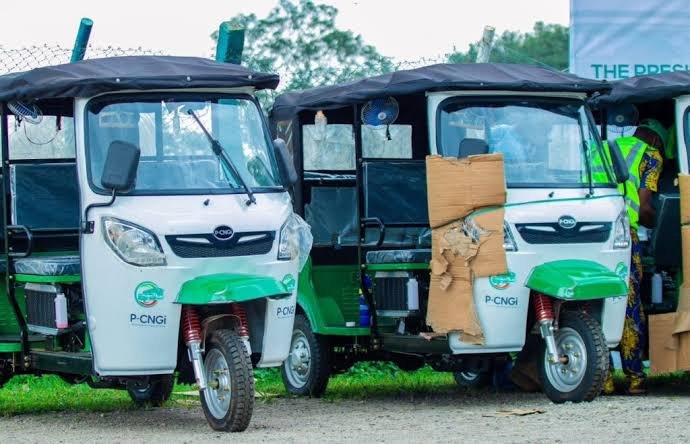
The Federal Government has officially rolled out 240 brand new electric tricycles alongside 12 solar-powered charging stations to 12 public universities across Nigeria. The unveiling took place at the University of Lagos (UNILAG), marking the start of what has been called the “Renewed Hope Campus Transport Scheme”.
Under the scheme, each university will receive 20 tricycles plus a dedicated solar charging station. The initiative aims to offer students safer, affordable and eco-friendly means of transport, especially useful for those moving around large campuses or commuting from off-campus hostels.

Nationwide reach covering all geopolitical zones
The 12 institutions selected to benefit represent all six geopolitical zones of the country. From the South West to the North East, each zone counts two beneficiary universities.
The list includes, among others, University of Lagos and University of Ibadan (South West), University of Nigeria Nsukka and Federal University of Technology Owerri (South East), University of Benin and University of Uyo (South South), University of Abuja and Federal University of Technology Minna (North Central), University of Maiduguri and Modibbo Adama University (North East), and Ahmadu Bello University Zaria and Bayero University Kano (North West).
The national scope underscores a commitment to equitable campus transport improvements, with no region left out of the pilot programme.
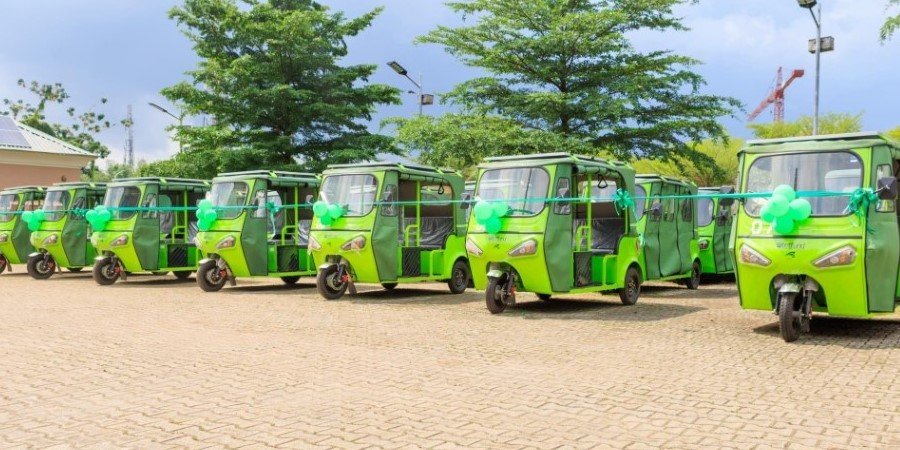
The government backs sustainability and student welfare with the electric tricycles
The scheme is part of a broader push by the government to integrate clean energy solutions and improve student welfare. The solar-powered tricycles align with earlier interventions such as planned solar mini-grids and electrification efforts for universities.
During the launch, the Minister of Education emphasised that the project is fully funded and is meant for the student unions’ direct use. Each university’s Students’ Union Government will manage the tricycles, ensuring fares remain low and the service is sustainable over time.
The adoption of electric tricycles also fits into ongoing efforts by government agencies to support renewable energy and infrastructure in tertiary institutions across the country.
What this means for students, campuses and sustainability
For many students, the tricycles promise an easier, safer and more reliable mode of transport, especially for those who commute daily or stay off campus. With 20 tricycles per institution, mobility within or around campuses will likely improve significantly.
From an environmental perspective, replacing conventional petrol or diesel transport with solar-powered electric tricycles helps cut carbon emissions and reduce reliance on fossil fuels. This aligns with global and national efforts to embrace green energy and sustainable transport solutions.
Institutionally, the move could set a standard for Nigerian universities adopting renewable energy and modern mobility solutions within campus life. With student unions managing the fleet, there is potential for accountability, affordability and long-term sustainability if handled properly.
The deployment of 240 electric tricycles marks a promising step toward greener campuses, improved student welfare and more inclusive access to mobility across Nigeria’s federal universities.
Join Our Social Media Channels:
WhatsApp: NaijaEyes
Facebook: NaijaEyes
Twitter: NaijaEyes
Instagram: NaijaEyes
TikTok: NaijaEyes
READ THE LATEST EDUCATION NEWS