
The Federal Government announced plans to introduce a fuel tax once the economy stabilizes and citizen incomes increase sufficiently to absorb the additional cost.
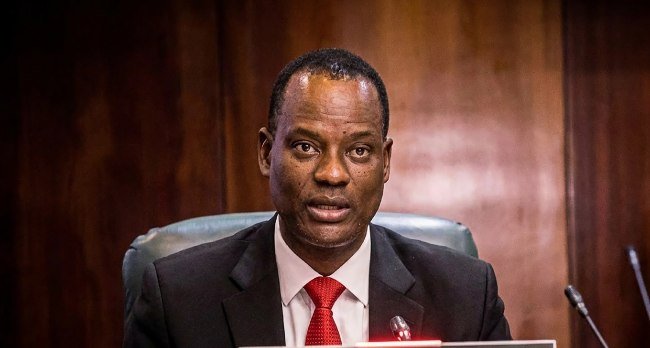
Taiwo Oyedele, the Minister of Finance and Coordinating Minister of the Economy, made the disclosure, emphasizing that implementation will necessitate a ministerial order published in the Official Gazette, with the generated revenue earmarked for road infrastructure development and a fuel reserve designed to mitigate future price shocks.
Oyedele shared these remarks during an interview on the sidelines of the 2026 annual meetings of the World Bank and the International Monetary Fund held in Bangkok, Thailand.
His comments come against the backdrop of earlier resistance from organized labor and business associations against the five percent tariff imposed on chargeable fossil fuel products under Nigeria’s tax framework.
The finance minister noted that the policy remains subject to a formal ministerial order before it can take effect, explaining that implementing the levy while fuel was subsidized would have been counterproductive since the government effectively would have borne the cost.
He added that introducing the tax immediately following the removal of subsidies would have placed an undue financial burden on Nigerians.
He said, “The objective should be that instead of trying to suppress prices, which hasn’t worked for us, it hasn’t worked for any country in the world, not one. Instead of trying to suppress prices, think about how to grow income faster than prices rise.
“That’s how you bring prosperity and grow the middle class and that is exactly what we are doing as led by Mr. President himself.
“At the appropriate time, when the economy has stabilised and income level will be able to accommodate it, those taxes will come. Not because we want to impose taxes,” Oyedele added.
Nigeria’s position with other countries
Drawing a comparison with international practices, Oyedele noted that taxes account for 20 to 80 percent of fuel pump prices in other countries, while several African nations levy between six and ten different charges on petroleum products.
He also clarified the sequencing of the administration’s economic reforms, explaining that the government first terminated petrol price subsidies before allowing the naira to undergo a gradual adjustment.
Furthermore, he asserted that currency fluctuations exert a major influence on fuel prices, requiring the administration to navigate these adjustments while remaining sensitive to the needs of Nigerians.
“That is the reason why there was still a bit of subsidy in 2023. It was to manage that process because you need to be mindful of the impact on the people.”
Backstory…
Recall that in June of 2026, the government dismissed rumors regarding the introduction of new petroleum product tariffs, which had stemmed from recommendations in the IMF’s Article IV consultation report.
Authorities clarified that no framework was active at the time to enforce the fuel surcharge, confirming that the Value Added Tax (VAT) exemption on petroleum products remained operational.
Read Also: FG confident, defends 5% Fuel tax levy, says its in full effect in 150+ countries