
The Federal Ministry of Livestock Development has warned that the shortage of veterinary clinics and regulatory personnel at livestock markets and abattoirs in Abia State could expose consumers to diseased and unsafe meat, posing serious public health risks.
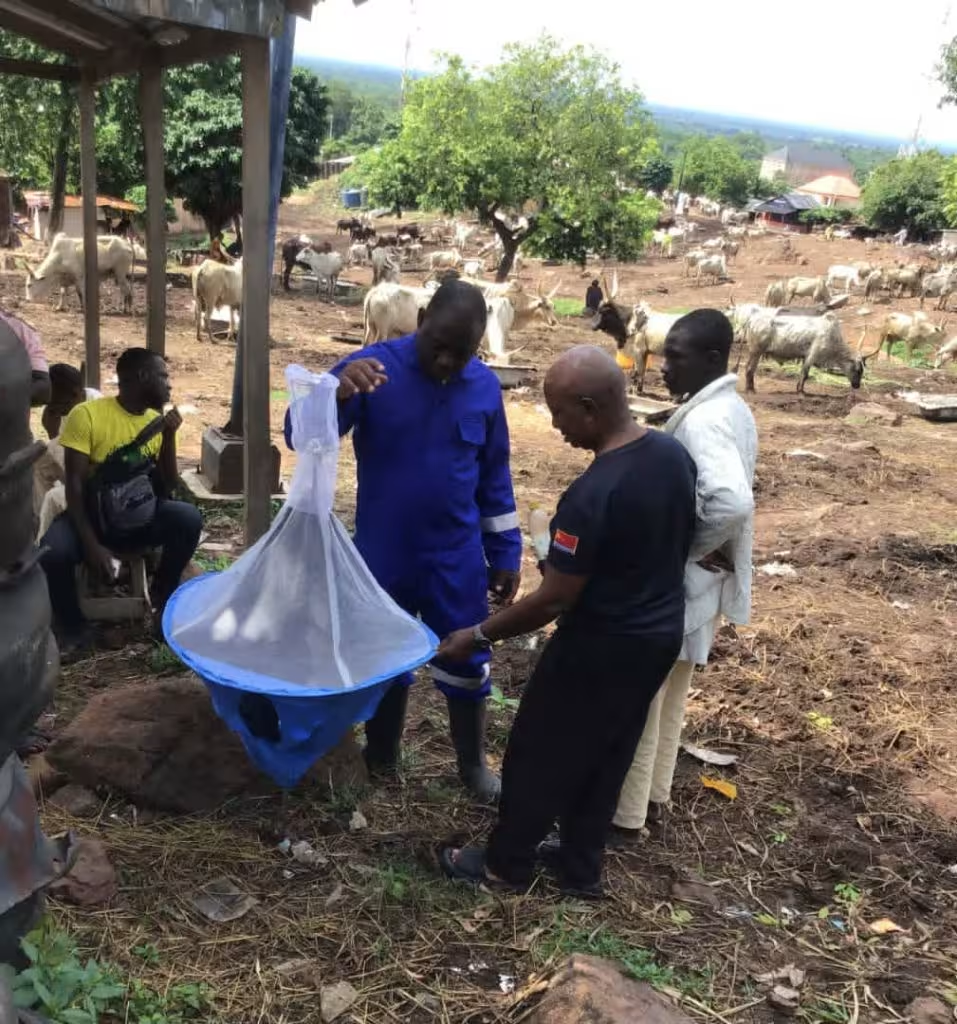
The warning was issued by the Team Lead of the Tsetse Fly Surveillance and Control Project at the ministry, Mr. Gilbert Okoro, after the conclusion of a verification exercise to assess tsetse fly infestation in Abia State.
Okoro urged the Abia State Government to establish additional veterinary clinics to complement existing facilities and strengthen disease surveillance across the state’s livestock sector.
According to him, the recommendation is aimed at preventing the distribution and consumption of meat from infected animals. He said the advice followed intelligence gathered by the ministry’s team during its assessment of the Lokpanta Cattle Market, regarded as the largest livestock trading hub in southern Nigeria.
He warned that operating a major livestock market without adequate veterinary services and regulatory personnel poses serious public health risks and could undermine the state’s healthcare achievements.
Okoro also described the failure to establish a federal veterinary clinic originally designated for the Lokpanta Cattle Market as a costly policy error.
“Lokpanta is a cattle marketing hub, and virtually all livestock consumed across the South passes through the market before being distributed to states in the South-East and South-South,” he said.
He further disclosed that the surveillance exercise recorded a high concentration of tsetse flies around the market, stressing the need for sustained control measures to reduce the risk of livestock diseases.
Okoro called on the Abia State Government to replicate the ministry’s tsetse fly control programme in affected areas, noting that expanding veterinary services would require minimal investment while significantly strengthening public health protection.