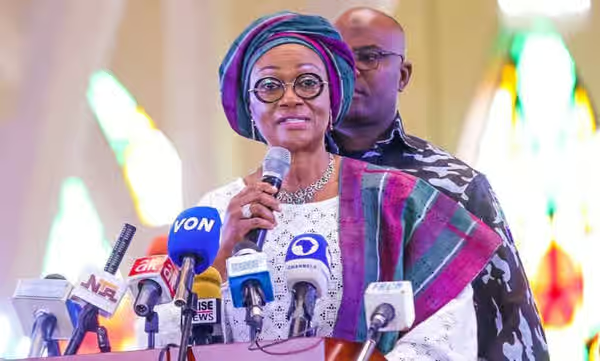
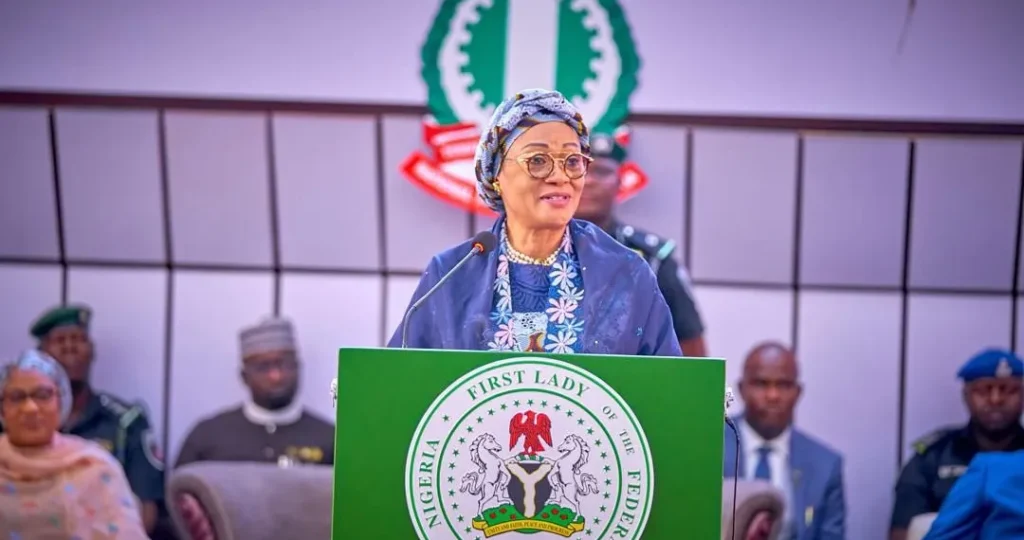
On a day dedicated to literacy and access for persons living with vision impairment, Nigeria’s First Lady, Senator Oluremi Tinubu, made a strong call for expanded digital inclusion for blind and visually impaired citizens across the nation. Her message came as the world marked World Braille Day 2026, a global observance championing the value of Braille in empowering people with sight loss to lead independent and dignified lives.
World Braille Day is commemorated each year on January 4 in recognition of Louis Braille, the French educator whose tactile writing system opened doors of literacy and opportunity for millions of blind and partially sighted people worldwide. In her statement, Tinubu highlighted the growing importance of ensuring equality in access to information and knowledge, especially as Nigeria becomes more digitally connected.
Table of Contents
A Strong Call for Inclusion in the Digital Age
In her address, the First Lady described Braille as a critical instrument of independence and human dignity for persons with visual impairments. She said that as technology becomes central to education, work, communication, and public life, action must be taken to eliminate barriers that keep visually challenged Nigerians on the margins. “Braille, when integrated with technology, guarantees equal access to information, education, and opportunities,” she noted, emphasising that the future must include all citizens.
Her comments reflect a broader national conversation about inclusion and accessibility. Advocates say that ensuring digital tools and resources are accessible to the visually impaired is not merely a matter of courtesy but of social justice and economic participation. Without deliberate steps to bridge the digital divide, many Nigerians risk being excluded from opportunities that others take for granted.
What Inclusion Looks Like in Practice
For people with visual impairment, inclusion means more than just access to smartphones and computers. It means ensuring that websites, apps, e-government services, educational materials, public information, and employment platforms are designed in ways that can be used effectively with assistive technologies. These may include refreshable Braille displays, screen readers, voice navigation tools, and accessible document formats. Currently in Nigeria and around the world, advocates point to serious gaps in the availability of accessible materials and content. An industry expert noted that less than one per cent of published materials in Nigeria are available in formats readily usable by blind and print-disabled readers
This situation often leads to what disability rights campaigners describe as a “book famine”, where blind students and professionals lack the basic resources needed to thrive academically and professionally. Increasingly, organisations both within Nigeria and globally are pushing for stronger policies, greater awareness, and practical solutions to ensure that inclusive formats become the norm rather than the exception.
Tinubu encouraged citizens, policymakers, and private organisations to work together to create an environment where every Nigerian can live a full and independent life. She called for strengthened partnerships that promote confidence, participation, and equitable access to the nation’s social and economic life for persons with disabilities.
Strengthening Policies and Partnerships
A critical part of the First Lady’s appeal was directed at government agencies and legislators, urging them to adopt policies that guarantee accessibility across digital platforms. Good policy frameworks, backed with enforcement, can protect the rights of persons with disabilities and ensure they are not left behind as the country marches forward in technology, education, and economic growth.
Experts say that inclusive policies should be complemented with inclusive practices. These include training educators and public servants on accessibility standards, equipping libraries with accessible resources, and incentivising publishers to produce materials in formats like Braille, large print, and audio. One important area of focus has been how copyright and publishing rules can be updated to support accessible format productions without compromising rights holders, thus expanding the pool of available content for visually challenged Nigerians.
Tinubu’s message also came at a time when other bodies, including regulatory agencies, have reiterated their commitment to inclusion. For example, the Nigerian Copyright Commission has emphasised the need for a balanced and human-centred copyright system that makes learning and reading materials available in accessible formats for blind and print-disabled users.
Beyond Braille: A Vision for Inclusive Nation Building
While World Braille Day is a yearly reminder of the value of tactile literacy, the First Lady’s message frames inclusion in the broader context of national development. She reminded Nigerians that inclusion is not only about providing tools but also about creating opportunities for all citizens to contribute meaningfully to society.
Her appeal aligns with ongoing national efforts to reduce digital inequalities, particularly in education and public services, where technology plays an ever-increasing role. Around the world and in Nigeria, digital skills are becoming essential for accessing jobs, participating in civic life, and engaging with critical services. Programs that build digital competence among vulnerable populations, including persons with disabilities, are increasingly seen as central to national progress.
Inclusivity advocates say that bridging the digital divide requires investment from all sectors. Government must lead the way through robust policy, budgeting, and oversight. The private sector must ensure its platforms are accessible. Civil society and disability organisations must continue to raise awareness, provide training, and hold stakeholders accountable. And citizens of all backgrounds must recognise that true equality includes everyone.
The Road Ahead for Nigeria
As Nigeria joins the global community in marking World Braille Day, Tinubu’s message urges sustained commitment and action. Access to digital tools and inclusive environments opens doors to education and opportunity that can transform lives and strengthen the fabric of the nation.
Nigerians who are blind or visually impaired have immense potential to contribute across sectors if given the tools and opportunities to succeed. Worldwide, technological innovations have transformed how people with sensory disabilities live, work, and lead. Nigeria’s own push toward inclusivity must keep pace with this revolution so that every citizen, regardless of ability, can participate fully and confidently in nation-building.
This year’s observance of World Braille Day serves as a reminder that accessibility is a shared responsibility. As Nigeria embraces the possibilities of digital transformation, there is much work to be done to ensure this progress lifts all Nigerians. The First Lady’s call for digital inclusion resonates not just as a timely appeal, but as a long-term vision for an equitable future where no one is left behind.
Join Our Social Media Channels:
WhatsApp: NaijaEyes
Facebook: NaijaEyes
Twitter: NaijaEyes
Instagram: NaijaEyes
TikTok: NaijaEyes