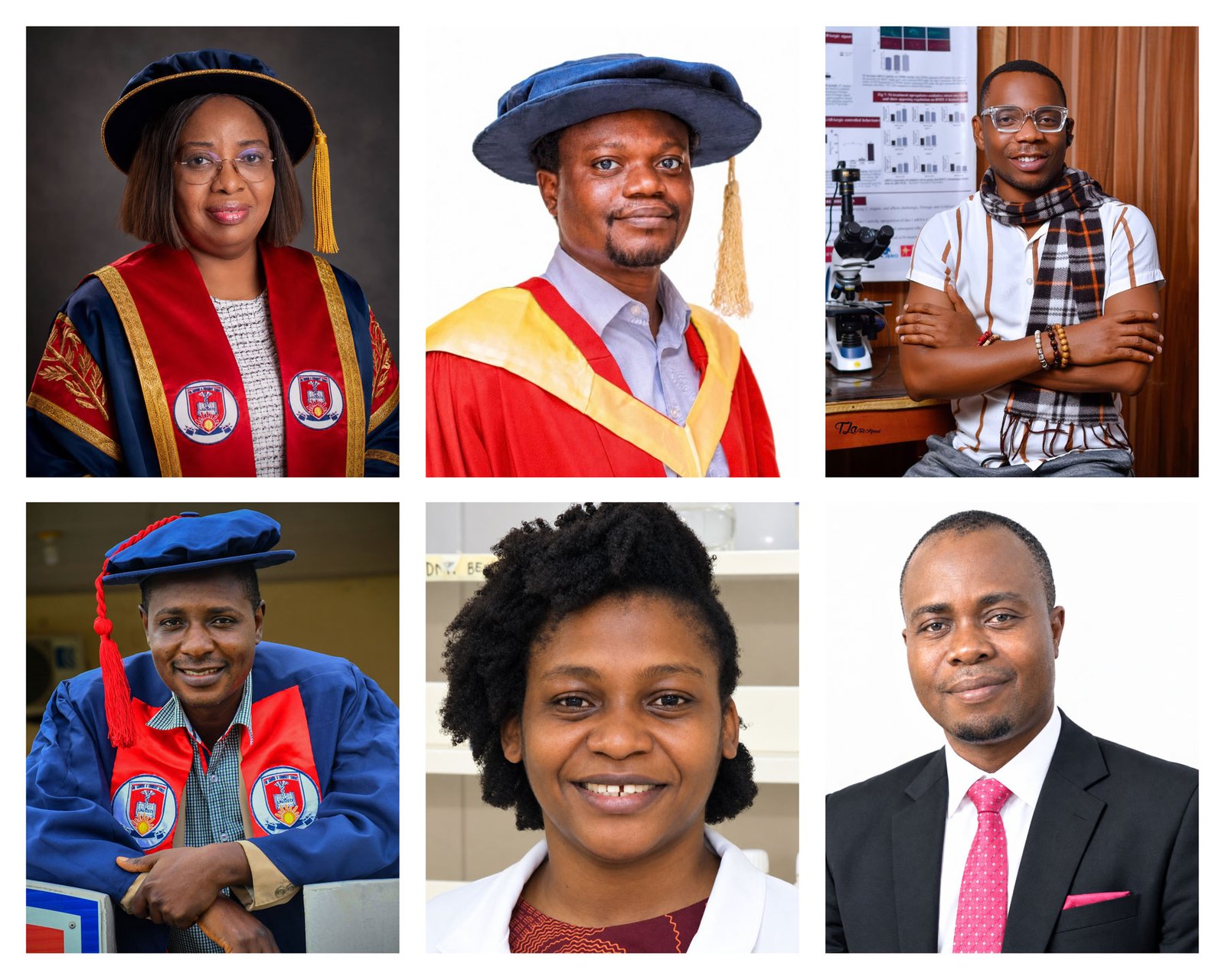

Five academics from the University of Medical Sciences (UNIMED), Ondo State, have been recognised in the 2026 Stanford-Elsevier list of the world’s top 2% scientists, highlighting the growing contribution of Nigerian researchers to international scientific development.
The recognition, announced on October 11, 2026, covers research impact recorded during the 2025 calendar year under the Single-Year Scientific Impact category. According to the university’s official announcement, the achievement reflects the quality of research being undertaken across its academic departments.
The five researchers represent different scientific disciplines, including mathematical and computer sciences, anatomy, biosciences and biotechnology, and physiology. Their inclusion demonstrates the range of research activities taking place within the institution and places their work among the scholarly contributions receiving international recognition.
The development is also significant for Nigeria’s higher education sector, where universities continue to pursue stronger research partnerships, greater international visibility and scientific solutions to challenges affecting public health and society.
Also Read: UNN Trains Academics and Students in AI as Nigerian Universities Rethink Research and Teaching
Five UNIMED Researchers Recognised Globally
The five academics named in the 2026 ranking are Dr Olumuyiwa James Peter, Dr Omamuyovwi M. Ijomone, Dr Oyetunde T. Oyeyemi, Dr Aniefiok John Udoakang and Dr Olorunsola I. Adeyomoye.
Dr Peter is from the Department of Mathematical and Computer Sciences in the Faculty of Sciences. Dr Ijomone works in the Department of Anatomy, Faculty of Basic Medical Sciences.
Dr Oyeyemi and Dr Udoakang are both affiliated with the Department of Biosciences and Biotechnology in the Faculty of Sciences, while Dr Adeyomoye is from the Department of Physiology, Faculty of Basic Medical Sciences.
The distribution of the five researchers across these departments reflects the range of scientific disciplines represented in the university’s research community.
UNIMED Vice-Chancellor, Professor Ebunoluwa Adejuyigbe, described the achievement as a source of pride for the institution. She said the recognition reflected the researchers’ dedication, intellectual rigour and commitment to producing scientific knowledge that contributes meaningfully to humanity.
According to the university, the Vice-Chancellor also congratulated the academics, their collaborators and research teams, expressing hope that their achievement would encourage other members of staff and emerging scholars to pursue impactful research.
The recognition provides an opportunity to draw attention to the researchers’ contributions while encouraging further investment in scientific inquiry and collaboration within Nigerian universities.
How the Stanford-Elsevier Ranking Measures Research Impact
The Stanford-Elsevier list uses a database developed from standardised citation indicators drawn from Scopus, a major abstract and citation database for scholarly literature.
As explained in UNIMED’s announcement of the recognition, the assessment considers several indicators of scientific impact, including citation counts, authorship contributions and measures that account for differences between research fields.
The Single-Year Scientific Impact category focuses on a particular calendar year rather than evaluating a researcher’s entire career. For the 2026 recognition announced by UNIMED, the relevant period was 2025.
This distinction matters because a researcher’s influence can be assessed over different periods. A career-based assessment reflects contributions accumulated over time, while a single-year measure offers a view of research impact within a defined period.
However, inclusion on the list should not be interpreted as a guarantee that every publication by a recognised researcher has equal influence or that the ranking measures every aspect of academic quality. Citation-based indicators provide one way of assessing scholarly influence, but they do not replace consideration of research quality, practical relevance, teaching and other academic contributions.
For Nigerian institutions, such recognition can help increase the visibility of research teams and create opportunities to build relationships with scholars and institutions outside the country. The long-term value depends on how universities use that visibility to support further research, collaboration and the practical application of scientific findings.
Back Story: UNIMED’s Growing Research Profile
Established in 2014, the University of Medical Sciences, Ondo, was created to strengthen education and training in medical and health sciences. The institution has since expanded its academic and research activities, with an emphasis on producing graduates and research capable of addressing healthcare and other societal needs.
The latest recognition follows an earlier milestone reported by the university in February 2026, when it announced that Dr Peter Olamuyiwa had been ranked among the world’s top 2% of scientists for 2024 and 2025. The university also highlighted research funding secured by members of its academic staff. More details are available in its February 2026 convocation report.
The five researchers’ inclusion in the 2026 list adds to this record of academic achievement. For Nigeria, the broader challenge is to ensure that international recognition translates into sustained research funding, stronger scientific institutions, meaningful partnerships and findings that improve people’s lives.
While rankings provide a useful measure of research visibility, continued progress will depend on universities’ ability to support researchers, develop young academics and turn scientific knowledge into practical outcomes for healthcare and national development.
Also Read: Who are the Top Goal Scorers in the FIFA World Cup History?