
The rapid rise of artificial intelligence is no longer a distant concept but a present-day force reshaping classrooms, careers and the future of learning. Across Nigeria’s education system, from secondary schools to universities, students and educators are increasingly engaging with AI-powered tools that promise speed, efficiency and new opportunities. Yet beneath this excitement lies a growing concern: whether the widespread use of AI is strengthening learning or quietly weakening it.
Recent conversations among education stakeholders suggest that the challenge is not the technology itself, but how it is being used. Experts insist that without proper guidance, students may begin to prioritise quick results over genuine understanding, a shift that could erode the quality of education in the long term.
This emerging reality has placed urgency on the need for Nigeria to rethink how AI is integrated into its learning systems, ensuring that innovation supports knowledge rather than replacing it.

Rising AI Adoption and the Shift in Student Priorities
In many Nigerian schools today, artificial intelligence has become a central part of academic life. Students use it for research, assignments, content creation and even exam preparation. While these tools can enhance productivity, there is increasing evidence that many learners are becoming more focused on what AI can do for them financially rather than academically.
Across social media platforms and online communities, AI is often promoted as a shortcut to wealth. Tutorials on automated freelancing, content generation and trading systems are gaining traction among young Nigerians. This trend is influencing how students perceive education, with some viewing it less as a pathway to knowledge and more as a means to quick income.
Education analysts warn that this mindset could have long-term consequences. When learners begin to value speed over depth, the process of critical thinking, problem-solving and intellectual growth may be compromised.
The concern is not that students are using AI, but that many are relying on it to bypass the learning process entirely. Assignments generated in seconds and solutions produced without effort may deliver results, but they often come at the cost of true understanding.
Experts Call for Ethical Frameworks and Curriculum Reform
Leading voices in Nigeria’s academic and technology sectors are calling for a more structured approach to AI integration. They argue that the country’s education system must evolve quickly to keep pace with technological change while safeguarding academic standards.
University leaders emphasise that institutions must go beyond teaching technical skills. The focus, they say, should include critical thinking, adaptability and ethical reasoning, skills that remain essential regardless of technological advancement.
Technology experts also highlight gaps in the current system, including outdated curricula, limited teacher training and inadequate digital infrastructure. These challenges make it difficult for schools to distinguish between productive AI use and misuse.
Without clear policies, students may exploit AI tools to complete assignments or assessments without genuine effort, undermining the integrity of education.
To address this, stakeholders are advocating several key reforms. These include nationwide teacher training programmes focused on AI literacy, the development of ethical guidelines for AI use in schools and increased investment in digital infrastructure. There are also calls for stronger collaboration between government agencies and technology hubs to equip educators with the skills needed to manage AI effectively in classrooms.
At the policy level, experts believe the government has a critical role to play in setting standards and ensuring that AI is used responsibly. Clear regulations, combined with continuous monitoring, could help maintain a balance between innovation and academic integrity.
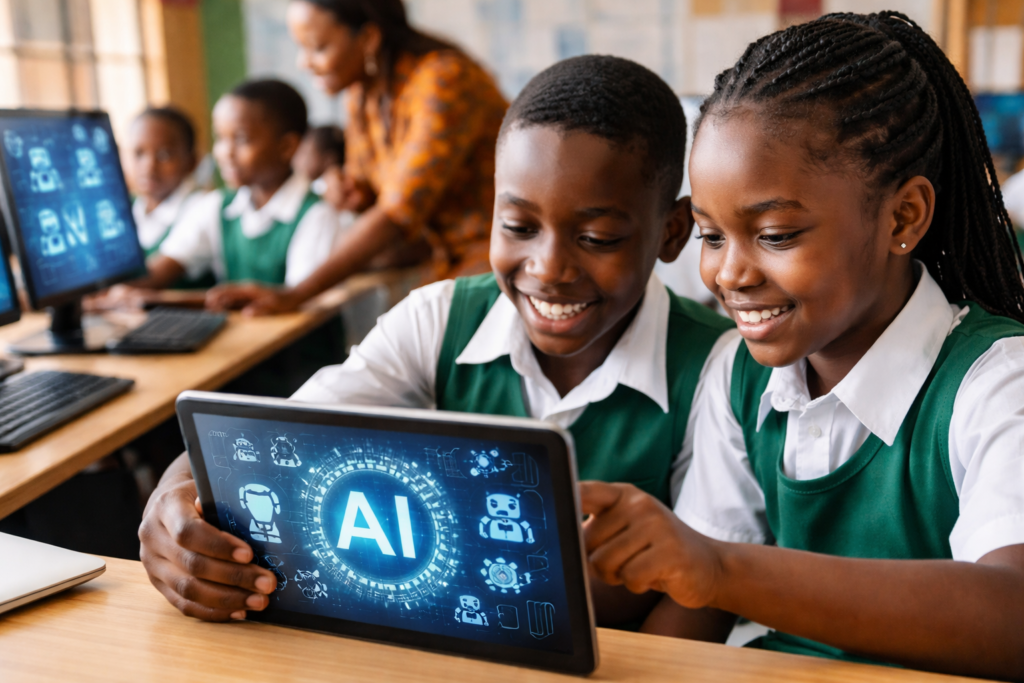
Balancing Innovation with Critical Thinking in Classrooms
While concerns about AI misuse are valid, many educators believe the technology still holds significant promise for improving learning outcomes if used correctly. The goal, they argue, is not to restrict AI but to guide its use in a way that enhances education rather than replaces it.
Lecturers and education professionals stress that teachers must first understand AI tools themselves before they can effectively guide students. With proper knowledge, educators can design assignments that encourage originality, creativity and independent thinking, even when AI is used as a support tool.
Students, too, are beginning to recognise the risks of overdependence. Some admit that while AI makes academic tasks easier, excessive reliance on it can reduce their ability to think critically and engage deeply with their studies.
To counter this, schools are encouraged to adopt teaching strategies that prioritise intellectual engagement. These include project-based learning, interactive classroom discussions and assessments that require personal input and analysis. Clear rules on academic integrity, combined with monitoring systems, can also help prevent misuse.
Importantly, experts emphasise that AI should be positioned as a complementary tool rather than a substitute for human thinking. When used responsibly, it can support research, enhance creativity and provide new ways of understanding complex subjects.

The Way Forward for Nigeria’s AI-Driven Education Future
As Nigeria continues to navigate the integration of artificial intelligence into its education system, one thing is clear: the future of learning will depend largely on how well the country manages this transition.
AI offers immense opportunities to improve access to information, personalise learning and prepare students for a rapidly changing world. However, without deliberate effort, it also carries the risk of weakening the very foundations of education.
The path forward requires a collective approach. Government, educators, institutions and students all have roles to play in ensuring that AI is used responsibly. Investment in infrastructure, continuous teacher training and the development of ethical frameworks will be essential in shaping a balanced system.
More importantly, there must be a cultural shift in how students view education. Success should not be measured solely by outcomes, but by the process of learning, growth and intellectual development.
If properly guided, artificial intelligence can become a powerful ally in Nigeria’s education sector, helping to build a generation of thinkers, innovators and problem-solvers. But if left unchecked, it risks turning learning into a shortcut-driven exercise with little depth.
The choice lies in how the country chooses to act today.
Join Our Social Media Channels:
WhatsApp: NaijaEyes
Facebook: NaijaEyes
Twitter: NaijaEyes
Instagram: NaijaEyes
TikTok: NaijaEyes
READ THE LATEST EDUCATION NEWS