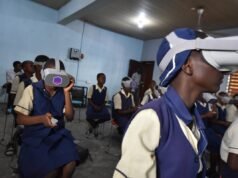
In Nigeria today, English remains the backbone of education, governance, and national communication. It is the official language and the primary medium of instruction across schools, uniting a linguistically diverse country.
But a quiet shift is underway. As Nigeria becomes more connected to the global digital economy, a new form of literacy is gaining urgency. Data literacy, the ability to read, understand, analyse, and communicate data, is increasingly being seen not as a specialist skill but as a basic life competency.
From mobile apps to online banking, from agriculture to politics, data now shapes everyday decisions. Students are already interacting with charts, statistics, and algorithm-driven content long before they understand how these systems work. Experts argue that just as English helps Nigerians communicate ideas, data literacy will help them interpret the world around them.
Across industries, decisions are no longer based on instinct alone but on measurable insights. This means the future workforce will need to think critically about numbers, trends, and evidence. In classrooms where memorisation once dominated, the conversation is gradually shifting toward interpretation, reasoning, and problem-solving.
The implication is clear. If education is meant to prepare young Nigerians for real life, then understanding data may soon sit alongside reading and writing as a foundational skill.

Table of Contents
Why data literacy is becoming a survival skill
The digital age has changed what it means to be educated. Being able to read and write is no longer enough. Students must also be able to question information, identify misleading statistics, and make decisions based on evidence.
Data is now everywhere. From election results to health information and social media trends, numbers influence public opinion and personal choices. Without the ability to interpret these numbers, people risk being misled. In fact, experts note that modern life requires individuals to evaluate data regularly, especially when distinguishing facts from misinformation.
In Nigeria, this has far-reaching implications. A data-literate population can improve governance by holding leaders accountable through evidence-based discussions. It can strengthen businesses by enabling smarter decision-making. It can even transform agriculture, where farmers increasingly rely on data for weather forecasting and crop planning.
For students, the benefits are even more immediate. Data literacy builds critical thinking skills, encourages curiosity, and prepares learners for careers in fast-growing fields like technology, finance, and analytics. It also supports better academic performance, as students learn to interpret information rather than simply memorise it.
In this context, data literacy is no longer optional. It is becoming a survival skill for navigating a complex, information-driven world.

The gaps holding Nigerian schools back
Despite its importance, data literacy is still not fully embedded in Nigeria’s education system. Many schools continue to operate with outdated curricula that do not reflect the realities of a data-driven world.
One major challenge is infrastructure. In many parts of the country, especially rural areas, access to computers, reliable electricity, and the internet remains limited. Without these basic tools, teaching data skills becomes difficult.
Another issue is teacher preparedness. Many educators were trained in systems that did not prioritise data skills, leaving them without the confidence or resources to teach it effectively. This creates a cycle where students graduate without exposure to essential competencies.
There is also a mindset barrier. Data is often seen as complex or reserved for scientists and analysts. This perception discourages early exposure and limits student interest. In reality, data literacy is not about advanced mathematics. It is about understanding patterns, asking questions, and making sense of information.
Government efforts are beginning to address these gaps. Initiatives aimed at improving digital learning, such as national education platforms, are creating new opportunities for integrating modern skills into classrooms.
Still, progress remains uneven. Without deliberate policy reforms and sustained investment, the gap between traditional literacy and modern data skills may continue to widen.
A future where data literacy sits beside English
Looking ahead, the question is no longer whether data literacy should be taught in Nigerian schools, but how soon it can be fully integrated.
Education experts increasingly advocate for embedding data skills across subjects rather than treating them as a separate discipline. This means teaching students to interpret graphs in geography, analyse statistics in economics, and evaluate evidence in civic education. By doing so, data literacy becomes part of everyday learning rather than an isolated topic.
Curriculum reform will play a key role. Updating national standards to include data competencies will ensure that all students, regardless of location or background, have access to these skills. Partnerships with technology companies and industry experts can also help bridge the gap between theory and real-world application.
Teacher training is equally important. Educators must be equipped not just with tools but with confidence to guide students through data-driven thinking. When teachers understand the value of data literacy, they are more likely to integrate it naturally into their lessons.
If these changes are implemented, Nigeria could see a transformation in how students learn and think. A generation raised with both language and data skills would be better prepared to compete globally, solve local challenges, and drive innovation.
English will remain essential as the language of communication. But in a world powered by information, data literacy may become just as important as the language used to express it.
Join Our Social Media Channels:
WhatsApp: NaijaEyes
Facebook: NaijaEyes
Twitter: NaijaEyes
Instagram: NaijaEyes
TikTok: NaijaEyes
READ THE LATEST EDUCATION NEWS