The Independent National Electoral Commission(INEC) on Thursday informed the National Assembly that it requires N873.78bn to conduct the 2027 general elections.
Additionally, the agency requested N171 billion to finance its activities for the fiscal year 2026.
Compared to the N313.4 billion the Federal Government released for the conduct of the 2023 general election, the N873.78 billion projected for the 2027 elections indicates a huge rise.
In addition to the Federal Capital Territory election and by-elections, Ekiti and Osun states will contest governorship elections this year. The nation will undergo national elections in 2027.
Join our WhatsApp community
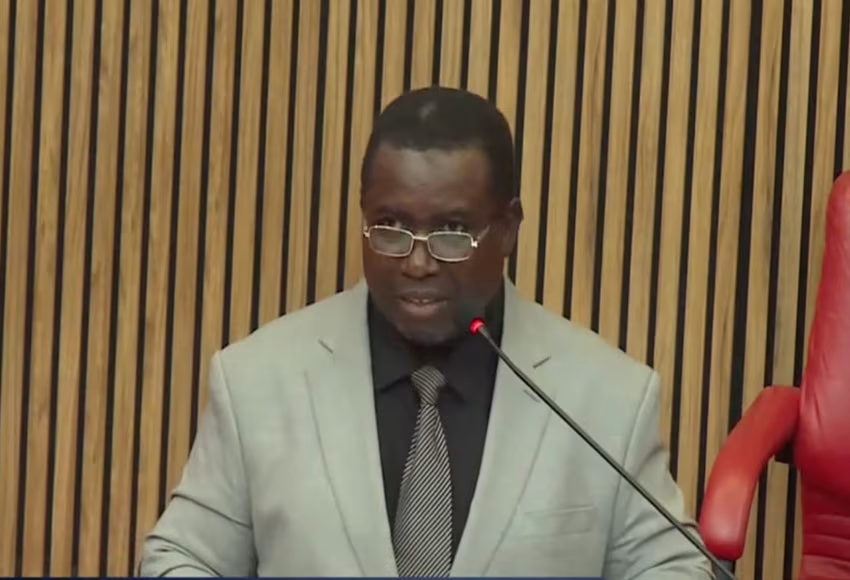
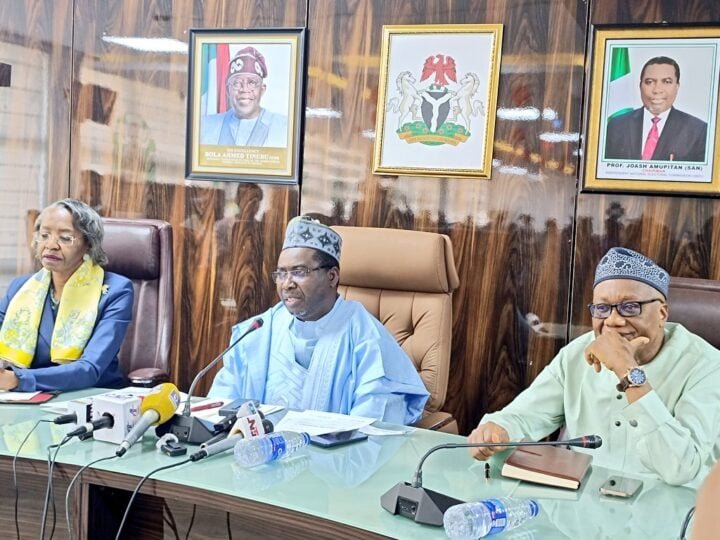
This was revealed by INEC Chairman Prof. Joash Amupitan during his presentation to the National Assembly Joint Committee on Electoral Matters in Abuja of the commission’s 2026 budget proposal and the anticipated cost of the 2027 general elections.
Amupitan claims that while the N171 billion plan for 2026 is intended to support standard operations including by-elections and off-season polls, the N873.78 billion election budget will cover the entire conduct of the general elections in 2027.
He also pointed out that the National Youth Service Corps had not submitted a new request for more funding for its ad hoc election staff personnel in the planned election budget.
Read Also: INEC finalizes crucial 2027 election timetable
INEC budget breakdown
INEC Chair explained that although details of specific line items were not exhaustively presented, the nearly N1tn budget was structured in 5 major components.
“N379.75bn is for operational costs, N92.32bn for administrative costs, N209.21bn for technological costs, N154.91bn for election capital costs and N42.61bn for miscellaneous expenses,” Amupitan said.
“In accordance with Section 3(3) of the Electoral Act 2022, which requires the commission to prepare its election budget at least one year before the general election,” he said, the budget was created.
Amupitan revealed that the Ministry of Finance had granted a budget envelope of N140 billion for the fiscal year 2026, but that “INEC is proposing a total expenditure of N171 billion.”
Personnel costs were N109 billion, overhead costs total N18.7 billion, election-related activities total N42.63 billion, and capital expenditures total N1.4 billion.
Senate’s Response
Given the delicate nature of INEC’s mandate, Adams Oshiomhole (APC, Edo North), who spoke during the session, stated that outside organisations shouldn’t set the organization’s spending guidelines. He recommended abandoning the envelope budgeting approach.
He urged the National Assembly to align with INEC’s financial proposal to avoid possible underfunding.
Similarly, Edo State representative Billy Osawaru demanded that INEC’s budget be put on first-line charge in accordance with the Constitution, with monies given in full and on schedule to allow for early preparation for the general elections in 2027.
A motion for a one-time release of the commission’s annual budget was agreed by the joint committee.
Additionally, the committee stated that it would take into account the NYSC’s request for almost N32 billion to raise corps members’ stipend to N125,000 each while they are on election-related tasks.
Join our WhatsApp community

Simon Lalong, the chairman of the Senate INEC committee, promised that the National Assembly would collaborate closely with the commission to make sure it got the backing it needed to successfully organise the general elections in 2027.
Likewise, Bayo Balogun, the chairman of the House Committee on Electoral Matters, promised legislative backing but advised the commission not to make promises it might not keep.
He remembered that INEC promised to upload the results to the INEC Result Viewing portal during the general election in 2023, giving the impression that results could be tracked in real time.
Join Our Social Media Channels: