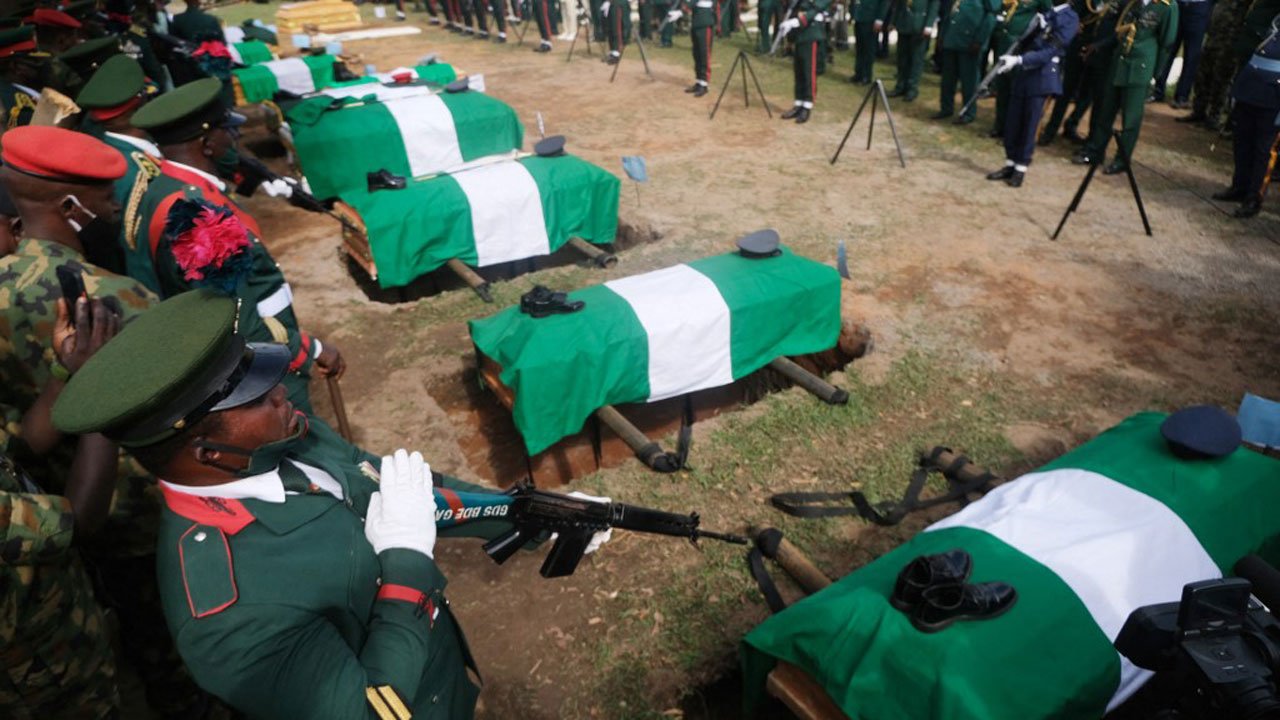

Nigeria’s worsening security crisis took another painful turn after suspected Islamist militants attacked a military training institution in Yobe State, killing at least 17 police trainees and several soldiers in a coordinated assault that has once again exposed the fragile security situation in the country’s northeast.
The attack happened at the Nigerian Army Special Forces School in Buni Yadi, a town in Yobe State that has repeatedly faced insurgent violence over the years. According to police authorities, the officers who died were undergoing specialised operational training when gunmen stormed the facility from different directions late on Friday.
Police spokesperson Anthony Okon Placid confirmed the casualties in an official statement released on Saturday, describing the incident as a carefully planned operation carried out by heavily armed militants.
Security sources said the attackers launched simultaneous strikes around the training facility, catching some personnel off guard despite the presence of armed security within the camp. Several military personnel were also reportedly killed during the firefight, although authorities have not released an official number of military casualties.
The incident has triggered renewed concerns over the ability of insurgent groups to still launch large-scale attacks despite years of military operations across the northeast.
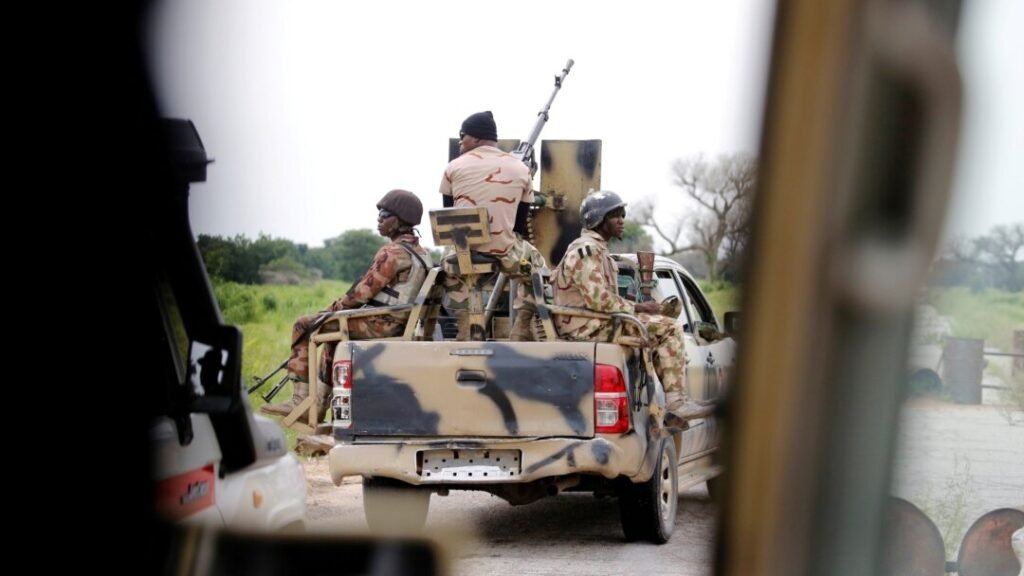
Residents in Buni Yadi described hearing prolonged gunfire and explosions as the assault unfolded overnight. Some locals said the exchange of fire lasted for hours before reinforcements eventually arrived. Fear and tension reportedly spread across nearby communities as many residents stayed indoors throughout the night.
Yobe State sits within Nigeria’s troubled northeast corridor, an area that has endured years of attacks linked to Boko Haram and Islamic State West Africa Province, also known as ISWAP. Both groups have repeatedly targeted villages, schools, military bases and civilian infrastructure across Borno, Yobe and Adamawa states.
Security analysts say attacks on training institutions are particularly troubling because they strike at the heart of Nigeria’s security architecture. Facilities designed to prepare elite officers and soldiers are expected to maintain high security standards, making successful attacks highly symbolic for insurgent groups seeking to project strength.
The killing of police trainees has also raised fresh questions about intelligence gathering and operational preparedness in areas known to be vulnerable to insurgent movement.
Although Nigerian security agencies have recorded several victories against militant groups in recent months, attacks continue to occur with alarming frequency. Just days before the Yobe incident, reports emerged of another attack in Borno State where dozens of schoolchildren were reportedly missing after armed militants stormed a school.
Earlier this year, multiple suicide bomb attacks in Maiduguri killed and injured scores of civilians, forcing authorities to tighten security across the region.
The latest assault also comes shortly after Nigerian and United States forces reportedly carried out a joint operation that eliminated a senior Islamic State commander in northeast Nigeria. Officials had presented that operation as a significant breakthrough in the fight against terrorism.
Despite those operations, security experts warn that insurgent networks remain deeply rooted across parts of the Lake Chad region, where difficult terrain, porous borders and economic hardship continue to fuel instability.
Back Story
Nigeria’s insurgency crisis has lasted for more than 15 years and has evolved into one of Africa’s longest-running security conflicts. What began as a local extremist movement eventually transformed into a regional insurgency affecting Nigeria, Niger, Chad and Cameroon.
Boko Haram first gained international attention after launching violent campaigns against government institutions, schools and religious centres in northeastern Nigeria. Over time, internal divisions within the group led to the emergence of ISWAP, a faction aligned with the Islamic State group.
Both factions have carried out deadly attacks against civilians and security forces, though ISWAP has increasingly focused on sophisticated assaults against military targets.
The conflict has displaced millions of people and devastated local economies across large parts of northern Nigeria. Thousands of schools have been disrupted, farming activities affected, and communities destroyed by repeated violence.
Military installations have remained major targets because insurgents often seek weapons, ammunition and symbolic victories that can strengthen recruitment and propaganda efforts.
Over the years, Nigeria’s armed forces have reclaimed several territories once controlled by insurgents, but militant groups have adapted by relying on surprise raids, ambushes and coordinated attacks on isolated locations.
Analysts say the continued attacks reflect the changing tactics of extremist groups operating across the Sahel and Lake Chad region.
Communities across northeastern Nigeria have repeatedly called for stronger intelligence operations, better welfare for security personnel and increased protection for vulnerable towns and institutions.
Pressure Mounts on Security Authorities After Yobe Attack
The deaths of the trainees are likely to increase pressure on Nigeria’s security leadership at a time when public frustration over insecurity is already growing nationwide.
In recent months, different parts of the country have experienced attacks linked to insurgency, banditry and communal violence. From Plateau State to Zamfara and parts of the northwest, security agencies have struggled to contain multiple threats simultaneously.
The attack in Yobe has also reignited conversations about the vulnerability of training institutions and military facilities located in conflict prone areas.
Families of the slain officers are now mourning loved ones who had reportedly been preparing for advanced operational duties. Many Nigerians on social media expressed grief and anger over the incident, with some questioning how militants were able to penetrate a heavily guarded training environment.
Security experts believe the assault demonstrates that insurgent groups still possess the capability to coordinate attacks involving multiple fighters and strategic planning.
Some analysts are also warning against complacency following recent military successes against extremist commanders. According to them, the elimination of high-profile militant leaders does not automatically dismantle operational cells spread across remote regions.
Nigeria’s government has consistently pledged to defeat insurgency and restore lasting peace to affected communities. However, persistent attacks continue to test public confidence and expose the enormous challenges facing security agencies.
The northeast remains one of the most heavily militarised regions in the country, yet attacks continue to occur against civilians, schools and security personnel.
For residents living in communities like Buni Yadi, the fear is becoming painfully familiar. Many families have lived through repeated cycles of violence, displacement and uncertainty for years.
While authorities have not officially identified the group responsible for the latest assault, suspicion is likely to fall on either Boko Haram or ISWAP, both of which maintain active cells across the region.
As investigations continue, attention will now shift to how security agencies respond and whether additional measures will be introduced to prevent further attacks on strategic facilities.
For many Nigerians, however, the bigger concern remains unchanged. After years of military campaigns, emergency operations and security promises, attacks like the one in Yobe continue to raise difficult questions about when lasting peace will truly return to the northeast.
Join Our Social Media Channels:
WhatsApp: NaijaEyes
Facebook: NaijaEyes
Twitter: NaijaEyes
Instagram: NaijaEyes
TikTok: NaijaEyes