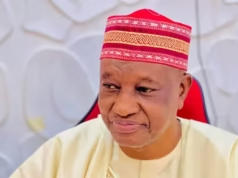
Nigeria’s political terrain witnessed a major shift as Rabiu Musa Kwankwaso formally aligned with the African Democratic Congress, marking a significant moment ahead of the 2027 general elections. The move, long anticipated by political observers, signals the beginning of a broader opposition realignment that could redefine alliances, strategies, and voter expectations across the country.
Kwankwaso, a former governor of Kano State and a key figure in northern politics, confirmed his exit from the New Nigeria People’s Party and his decision to join the ADC as part of what insiders describe as a strategic repositioning. His entry into the party is not just symbolic but deeply consequential, given his political base and influence, especially in Kano and the wider North-West region.
The development did not come in isolation. It followed a series of high-level consultations and quiet negotiations involving major opposition figures, pointing to a coordinated effort to consolidate forces ahead of the next presidential contest.
Table of Contents
A Strategic Defection Driven by Political Realignment
Kwankwaso’s decision to join the ADC reflects more than a routine party switch. It is part of a calculated attempt to build a stronger opposition platform capable of challenging the dominance of established political parties. In his resignation announcement, he emphasised the need for a new direction, suggesting that the evolving political climate requires fresh alliances and renewed commitment to national development.
The Kwankwasiyya Movement, his loyal political base, has also thrown its full weight behind the transition. Members across the country have been encouraged to register with the ADC and actively participate in its activities, reinforcing the seriousness of the move. This coordinated migration signals that the defection is not just about one individual but about an entire political structure repositioning itself.
Political analysts believe the move is aimed at strengthening a coalition that can appeal to a broader demographic of Nigerian voters. The ADC, originally conceived as a grassroots-oriented party, has increasingly become a rallying point for opposition figures seeking a common platform.
Emerging Alliances and the Obi Factor
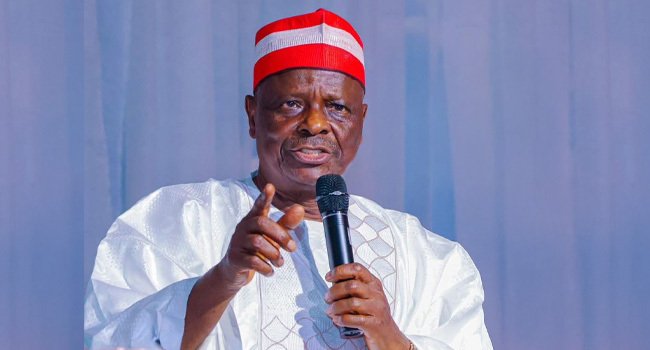
Perhaps the most intriguing aspect of Kwankwaso’s move is the growing speculation around a possible alliance with Peter Obi, the former Labour Party presidential candidate. Reports indicate that both camps are engaged in ongoing discussions that could lead to a joint ticket for the 2027 elections.
This potential partnership has generated significant interest among political stakeholders and the general public. Obi’s strong support base, particularly among young and urban voters, combined with Kwankwaso’s established influence in the North, could create a formidable political force capable of reshaping electoral dynamics.
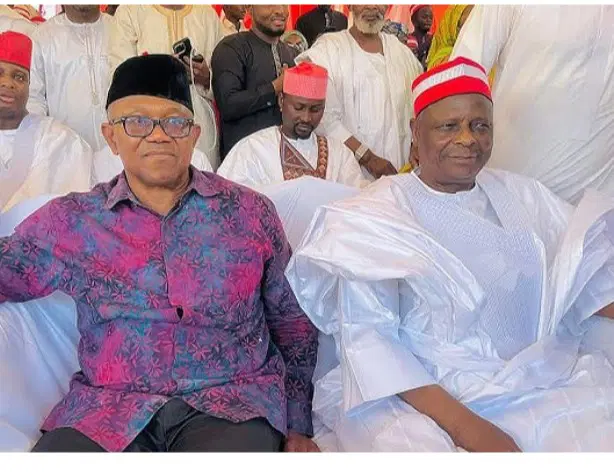
Recent interactions between the two leaders, including meetings during festive periods and consultations with other prominent figures, have further fuelled speculation about a unified opposition front. While no official announcement has been made regarding a joint ticket, the ongoing discussions suggest that such an arrangement is being seriously considered.

Implications for Nigeria’s Political Future
Kwankwaso’s entry into the ADC has already begun to trigger reactions across the political spectrum. In Kano, the development has unsettled existing alliances and raised questions about the future of other political actors in the state. Analysts suggest that the ripple effects could extend far beyond the region, influencing party strategies and voter alignments nationwide.
The move also underscores a broader trend of political realignment in Nigeria, where ideological differences are increasingly giving way to strategic partnerships aimed at electoral success. As politicians seek to consolidate their bases and expand their reach, coalitions like the one emerging within the ADC may become more common.
For voters, this evolving landscape presents both opportunities and challenges. On one hand, a stronger opposition coalition could enhance democratic competition and provide more choices. On the other hand, the fluid nature of political alliances may raise concerns about consistency, ideology, and long-term policy direction.
As the 2027 elections draw closer, all eyes will be on how the ADC positions itself and whether it can translate these high-profile defections into tangible political gains. Kwankwaso’s move is undoubtedly a major step in that direction, but its ultimate impact will depend on how effectively the party can harness the momentum and build a cohesive, credible alternative to the current political order.
Join Our Social Media Channels:
WhatsApp: NaijaEyes
Facebook: NaijaEyes
Twitter: NaijaEyes
Instagram: NaijaEyes
TikTok: NaijaEyes