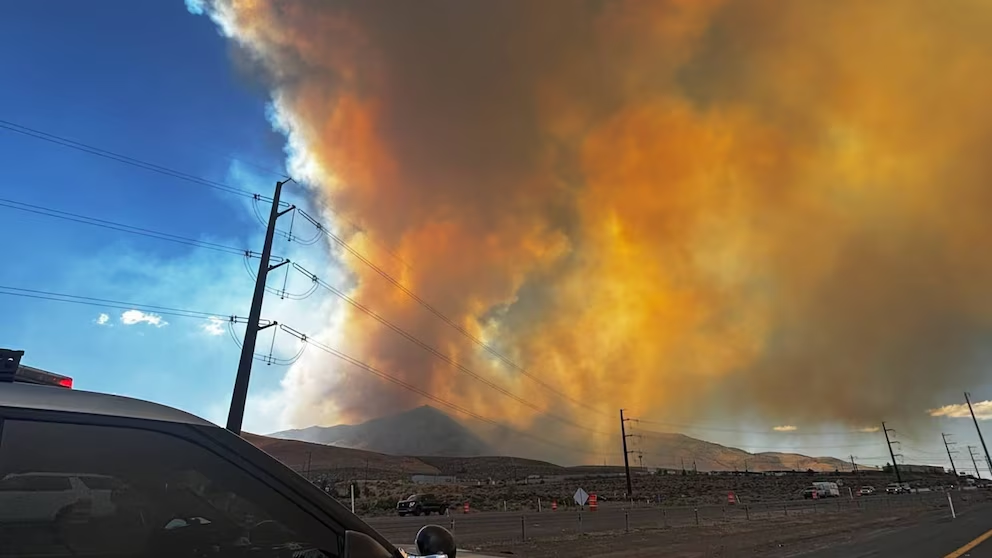

Nevada Governor Joe Lombardo declared a state of emergency in Washoe County on Saturday night after a rapidly spreading brush fire forced residents in northeastern Reno from their homes.
According to state fire officials, the Hawk Fire spread to over 10,500 acres by late Saturday and has not been contained. Its cause is yet unknown.
“This is an active and rapidly evolving situation, and I urge everyone in the affected areas to remain vigilant,” Lombardo wrote on X, urging those who were asked to evacuate to do so immediately.
Speaking, Reno Mayor Hillary Schieve said “structures have already been burned in this fire and your life is more important than a building,” in a message posted by the City of Reno on X.
Late Saturday, time-lapse footage from a UC San Diego-operated Alert California camera showed the wildfire descending rapidly down a steep incline toward illuminated Reno neighborhoods before the flames were obscured from view.
Officials reported that 400 firefighters, supported by overnight helicopter operations, have been battling the blaze, though containment efforts continue to be hampered by strong winds. The fire’s rapid progression throughout the day was fuelled by low humidity, dry undergrowth, and intense wind gusts.
By nighttime, mandatory evacuation orders had been extended to include the Somersett neighborhood and surrounding communities.
Early Sunday, authorities advised residents of approximately 1,000 homes to prepare for evacuation. However, a newly released fire map revealed that several residential areas had already been placed under mandatory “go now” orders.
In response, Lombardo directed state agencies to coordinate their efforts through Nevada’s emergency operations center.
Backstory…
The fast-moving Hawk Fire comes less than two years after the January 2025 Los Angeles wildfires, which devastated communities across Southern California.
The Palisades and Eaton fires were particularly destructive, killing at least 31 people, forcing more than 200,000 residents to evacuate and destroying or damaging more than 18,000 structures.
The scale of those fires also challenged the idea that destructive wildfires are mainly a summer problem. The World Resources Institute reported that Los Angeles recorded more than 200 satellite-detected fire alerts between January 7 and January 22, 2025, more than 130 times the average for the first four weeks of the year between 2012 and 2024.
Read Also: Devastating L.A. Fires Claim Celebrities’ Homes, Landmarks