Nigeria 2024 2025 budget re-enactment
The decision of the House of Representatives to re-enact the 2024 and 2025 budgets is a move designed to bring sanity to Nigeria’s fiscal calendar and ensure that the government stops running multiple budget cycles at the same time.
This clarification came directly from the House Spokesperson, Honorable Akin Rotimi Jr., who addressed the concerns of many Nigerians who were confused by the legislative gymnastics taking place at the National Assembly as the year drew to a close.
For a country that has struggled with a disjointed fiscal year for decades, this new approach is a significant attempt to harmonize government spending and improve the way we track every kobo that leaves the federation account.
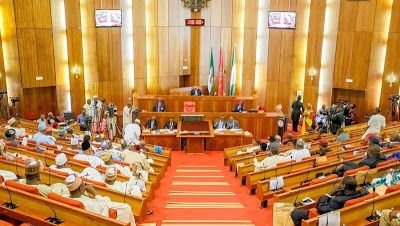
As a professional editor watching the Nigerian political landscape, I can tell you that the “budget wahala” we often experience is rooted in a lack of synchronization.
For years, we have seen situations where the previous year’s budget is still being implemented well into the middle of the new year, creating a messy overlap that makes it almost impossible for citizens and civil society to hold ministries, departments, and agencies (MDAs) accountable.
The House of Representatives has now stepped in to say that enough is enough, and they are doing this through a technical legislative process known as “repeal and re-enactment” to ensure that the 2024 and 2025 fiscal years finally line up.
Clearing The Confusion Of Overlapping Fiscal Years
One of the biggest headaches for anyone following Nigerian public finance has been the existence of multiple budget cycles running concurrently. In 2024, for instance, we had the main 2024
Appropriation Act and a 2024 Supplementary Budget, while parts of the 2023 budget were still being implemented due to various extensions. This created a scenario where different budgets were competing for the same limited resources. Honorable Akin Rotimi Jr. explained that the House recognized how this “multiple budget cycle” phenomenon was undermining the effectiveness of government spending.
By re-enacting these budgets, the House is effectively hitting the reset button to ensure that we return to a predictable January to December cycle. The spokesperson noted that this move was necessary because the 2024 budget was originally extended to run until March 2025.
However, since the 2025 budget is already being passed, having both of them active would lead to administrative chaos. The goal is to collapse the remaining parts of the 2024 spending plan into a consolidated framework that allows the 2025 “Restoration Budget” to take off on a clean slate. This is not just about moving numbers around: it is about ensuring that the executive arm of government has a clear and singular roadmap for the new year.
The Legislative Logic Behind Re-enacting The Budget
To many people outside the hallowed chambers of the National Assembly, the term “re-enactment” sounds like unnecessary jargon. However, from a professional legislative perspective, it is a vital tool for constitutional compliance.
The House of Representatives explained that instead of simply extending the life of the 2024 budget again, they chose to repeal the existing Appropriation Act and replace it with a new one that incorporates the necessary adjustments. This process ensures that every naira spent has a solid legal backing that aligns with Section 81 of the 1999 Constitution.
Akin Rotimi Jr. emphasized that this legislative strategy was adopted to prevent a situation where the government is operating in a legal vacuum.
The re-enactment allows the National Assembly to capture the current economic realities, such as the new minimum wage and the fluctuating exchange rate, which were not fully accounted for when the 2024 budget was first passed. By doing this, the House is providing the executive with a more realistic financial document.
It also simplifies the work of the Accountant General and the Budget Office, as they no longer have to juggle different sets of books for different budget years. This move is a clear sign that the 10th Assembly is prioritizing technical accuracy over quick fixes.
Upholding Transparency and Constitutional Standards
The spokesperson was very careful to point out that these actions are being taken to protect the integrity of the Nigerian economy. Transparency is often the first victim when budget cycles are confused, because it becomes easy for funds to be diverted or for projects to be double-funded across different years. By insisting on a re-enacted budget, the House of Representatives is making it easier for oversight committees to do their jobs. When there is only one active budget cycle, it is much easier to ask a Minister why a specific road project in the Southeast or a dam in the North has not been completed.
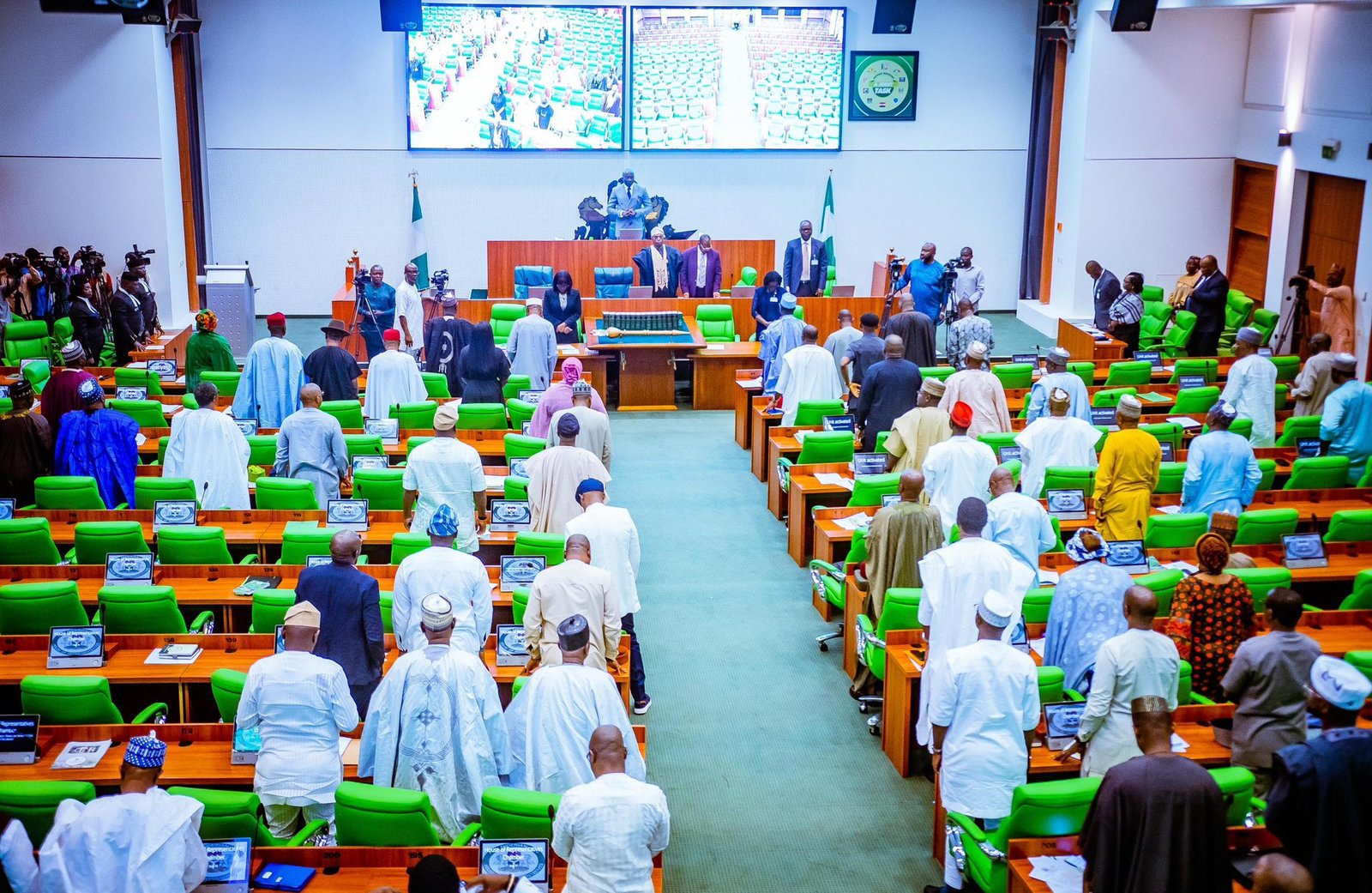
Furthermore, the House highlighted that this process is part of their commitment to the “Renewed Hope” agenda of President Bola Ahmed Tinubu. The 2025 budget, which is being synchronized through this re-enactment, is titled the “Budget of Restoration.”
It is a massive ₦58 trillion proposal that aims to tackle infrastructure, security, and social welfare. The lawmakers believe that for such a large budget to work, the foundation must be legally sound and free from the “carry over” issues of previous years. They are essentially clearing the deck so that the 2025 fiscal year can start without the baggage of unresolved 2024 projects clouding the financial reports.
What This Means For The Everyday Nigerian Economy
At the end of the day, the average Nigerian wants to know how this affects the price of rice or the availability of electricity. While budget re-enactment sounds like high level politics, its impact is felt at the grassroots.
A synchronized budget cycle means that contractors get paid on time, which in turn means that construction sites remain active and jobs are preserved. When the budget is trapped in multiple cycles, contractors often face delays because the government is unsure which “year” is responsible for certain payments. This legislative move aims to end that uncertainty.
Moreover, a stable and predictable budget cycle is a huge plus for foreign investors. When the international community sees that Nigeria is taking steps to fix its fiscal discipline, it builds confidence in our economy.
Akin Rotimi Jr. concluded by reassuring the public that the House of Representatives is working in the best interest of all Nigerians. They are not just passing laws: they are building a framework for a more prosperous nation. As we move into 2025, the hope is that this re-enactment will be the final step in ending the era of budget confusion, allowing the government to focus entirely on service delivery and economic growth.
Join Our Social Media Channels:
WhatsApp: NaijaEyes
Facebook: NaijaEyes
Twitter: NaijaEyes
Instagram: NaijaEyes
TikTok: NaijaEyes