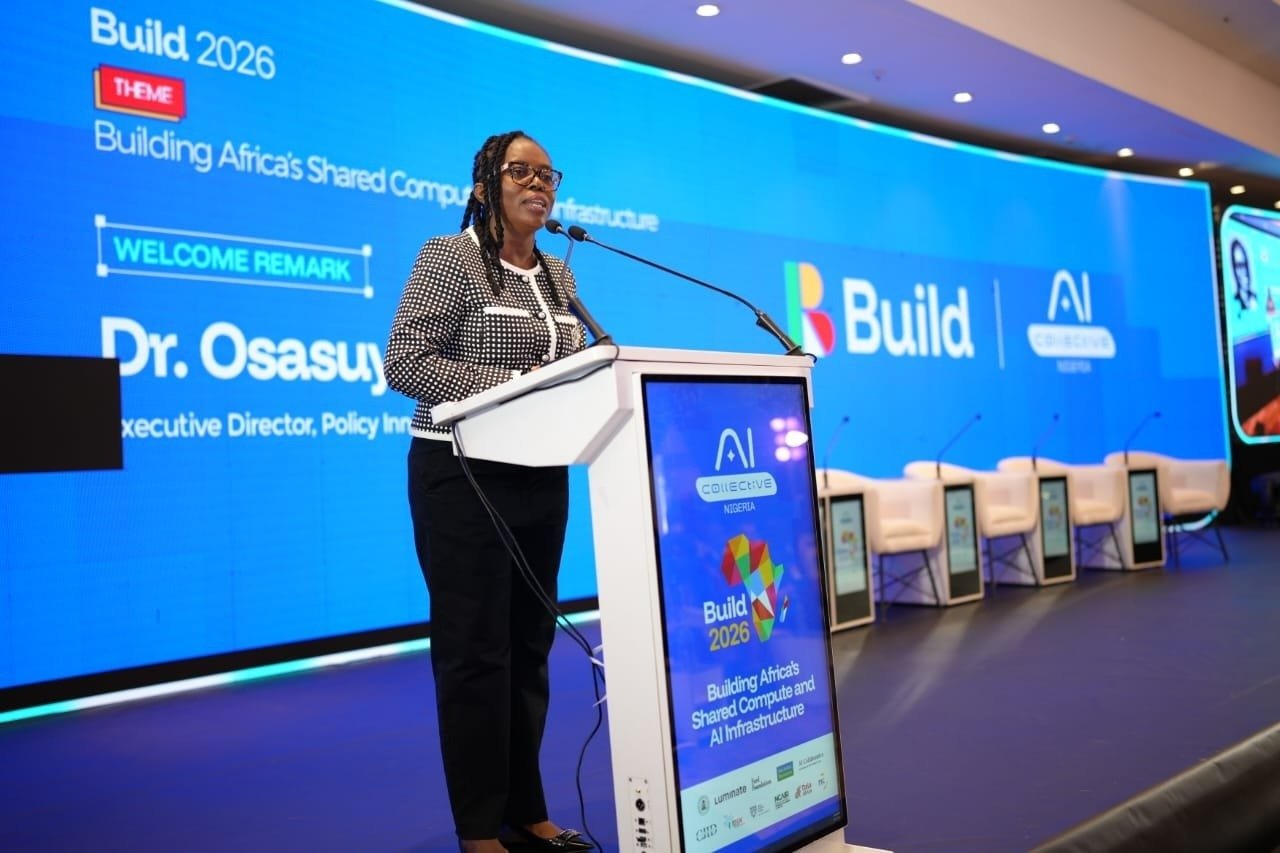

Nigeria’s artificial intelligence (AI) ambitions are receiving renewed attention as the Nigeria AI Collective calls for a development approach that prioritises local expertise, broad participation and solutions tailored to the country’s needs.
The call was made at the BUILD 2026 Conference in Abuja, where stakeholders from government, research, technology, finance and civil society gathered to discuss Africa’s computing infrastructure and its ability to compete in the global AI economy.
Dr Osasuyi Dirisu, Executive Director of the Policy Innovation Centre (PIC) and host of the Nigeria AI Collective Secretariat, said the initiative aims to bring different parts of Nigeria’s AI ecosystem together to ensure the technology is developed and deployed responsibly.
According to Voice of Nigeria’s report on the conference, Dirisu stressed the importance of local expertise, inclusive innovation and evidence-based policymaking in determining the continent’s technological future.
The position reflects a growing concern that Nigeria must do more than adopt AI products developed elsewhere. The country also needs the capacity to shape these technologies, protect its interests and ensure that their benefits reach people across different communities.
Also Read: Nigeria Targets Digital Skills and Safer Schools Through Nationwide Teacher Training
Nigeria AI Collective Wants Local Needs at the Centre of AI Development
The Nigeria AI Collective is working to establish a collaborative environment where researchers, technology companies, academics, policymakers and civil society organisations can contribute to the country’s AI direction.
Its objective is to promote AI systems that are safe, ethical, inclusive and useful to society, while supporting Nigeria’s National Artificial Intelligence Strategy.
The Collective also aims to strengthen engagement between government institutions and other stakeholders, ensuring that decisions about AI development are informed by evidence and the experiences of people who may be affected by the technology.
This approach is particularly important for Nigeria, where AI applications could support sectors such as agriculture, education, healthcare, financial services and public administration. However, the usefulness of these applications depends partly on whether they account for local languages, available infrastructure, cultural realities and the challenges Nigerians face.
The Collective’s official overview identifies collaboration across civil society, academia, innovation and policy as central to its work.
For Nigeria to compete effectively, local developers must have opportunities to build relevant solutions rather than depend entirely on imported platforms. This also requires access to computing resources, quality datasets, technical training and investment that can help promising ideas move from research into practical applications.
BUILD 2026 Highlights Infrastructure and Digital Sovereignty
The call for locally driven AI development comes as African countries confront the cost and availability of the infrastructure needed to build advanced AI systems.
BUILD 2026 brought together government officials, regulators, investors, researchers, technology businesses and innovators to explore practical responses to Africa’s computing needs. Discussions focused on infrastructure, economics and digital sovereignty, including how African countries can strengthen their position in the global technology industry.
Nigeria’s Minister of Communications, Innovation and Digital Economy, Dr Bosun Tijani, highlighted the importance of computing power, electricity, connectivity and advanced chips in determining whether African countries can influence AI development or remain dependent on technologies produced elsewhere.
As reported by Voice of Nigeria, the conference placed shared computing infrastructure at the centre of efforts to improve Africa’s competitiveness.
Digital sovereignty, in this context, means having greater control over the data, infrastructure and technological capabilities needed to pursue national interests. It does not necessarily mean rejecting international partnerships. Rather, it involves ensuring that collaboration strengthens local capacity and allows African innovators to participate meaningfully in the value created by AI.
Without reliable infrastructure and affordable computing resources, Nigerian startups and researchers may struggle to develop and test solutions, even when they have the skills and ideas to do so.
Back Story: Nigeria’s Efforts to Build an Inclusive AI Ecosystem
The Nigeria AI Collective forms part of wider efforts to position Nigeria as an active participant in global AI development. The initiative brings together organisations with complementary roles in research, innovation, public engagement, policy and capacity building.
According to the Policy Innovation Centre, the Collective promotes responsible AI governance, innovation and capacity development, with support from organisations including Luminate, the Ford Foundation and AI Collaborative.
Its participating institutions include Lagos Business School, Pan-Atlantic University, through Data Science Nigeria, the Centre for Journalism, Innovation and Development, the National Centre for Artificial Intelligence and Robotics, and the Policy Innovation Centre, which coordinates the initiative.
Nigeria’s wider AI policy direction is also shaped by the National Artificial Intelligence Strategy, which seeks to create an environment for responsible adoption, local innovation and economic development.
However, translating these ambitions into meaningful outcomes will require sustained investment, effective policies and participation beyond government and established technology companies. Students, small businesses, people with disabilities, women, rural communities and other underserved groups must have opportunities to contribute to and benefit from AI.
The latest call therefore places an important question before Nigeria’s technology sector: how can the country turn its AI ambitions into solutions that reflect local realities while creating economic opportunities for its people?
The answer will depend on whether collaboration continues beyond conferences and policy discussions, leading to stronger infrastructure, practical research, accessible training and locally developed technologies that address real problems.