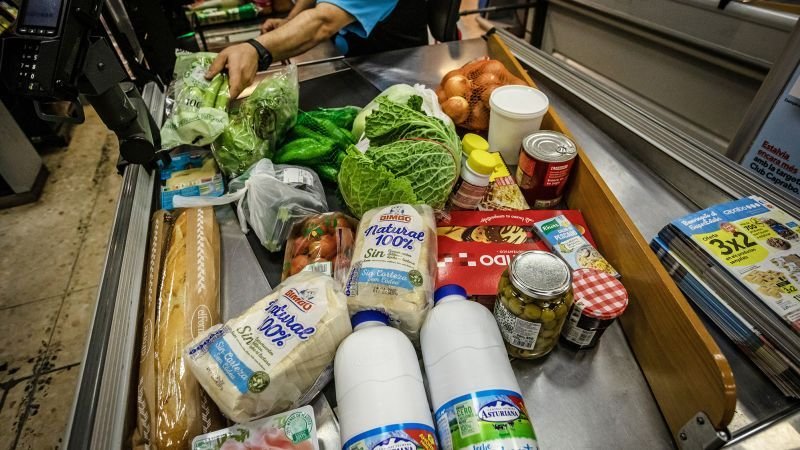
Nigeria’s food inflation hits record 14-year low as prices crash in January
The latest report from the National Bureau of Statistics (NBS) has brought a much needed smile to the faces of many Nigerians who have been battling the heavy “sapa” of the last few years.
For a very long time, every trip to the market felt like a serious battle with your wallet, but the news for January 2026 is actually looking very bright. According to the NBS, food inflation in Nigeria has crashed to 8.89 percent.
To put this in proper perspective, this is the lowest level the country has seen in more than 14 years. As a professional editor who has tracked these economic cycles, I can tell you that this is not just a minor fluctuation on a piece of paper. It represents a massive 20.73 percentage point drop from the 29.63 percent we saw just one year ago in January 2025.
It feels like the “wahala” of skyrocketing food prices is finally taking a back seat, giving many households some much needed room to breathe.
Analyzing the statistics and the items getting cheaper for households
When we look at the “koko” of the report, the most impressive part is the month on month performance. In January 2026, food inflation actually contracted by 6.02 percent.
This means that instead of prices just rising more slowly, the average cost of many food items actually went down compared to December 2025. The NBS highlighted that Nigerians are now paying less for essentials like water yams, eggs, and green peas. We are also seeing price drops in groundnut oil, palm oil, maize grains, and beans.
Even the price of beef, which has been a “luxury” for many families, saw a very noticeable reduction. While headline inflation only moved slightly from 15.15 percent to 15.10 percent, the significant crash in food costs is what will truly matter to the mother in the market trying to feed her children on a tight budget.
Why the exchange rate and local farming are the real heroes
You might be asking what exactly changed to bring this kind of relief so suddenly. Well, it is a combination of hard work on our farms and some level of stability in the financial markets. The government has pointed to a massive increase in the production of rice and cassava across many states as a major driver for this change.
When there is more food hitting the market stalls, the price naturally has to come down. Also, the exchange rate has behaved itself lately, staying around N1,350 to the dollar.
This stability is very important because it prevents the “yoyo” movement of prices that typically occurs when the Naira is weak. When importers and farmers can predict their costs for transport and materials, they do not feel the need to hike prices every other day just to stay afloat.
Why we must stay vigilant despite the positive economic outlook
Even though we are celebrating this 14 year low, we must stay very alert and realistic. Economic experts, such as Kuti George from the Small Scale Industries Association, have warned that while the speed of inflation has dropped, many prices are still relatively high for the common man on the street.
We are also approaching the fasting season, which is often a time when “shylock” traders try to exploit the high demand for food to make quick gains. We should also note that states like Kogi and Benue still recorded higher food prices compared to places like Ebonyi and Abia.
However, the current trend shows that Nigeria is set for a more positive year if the government keeps its foot on the pedal. We need to continue supporting our local farmers so that food security is not just a temporary miracle but a permanent reality for every Nigerian home.
The journey to a cheaper cost of living is still ongoing, but for the first time in a long while, the destination looks reachable.
Join Our Social Media Channels: