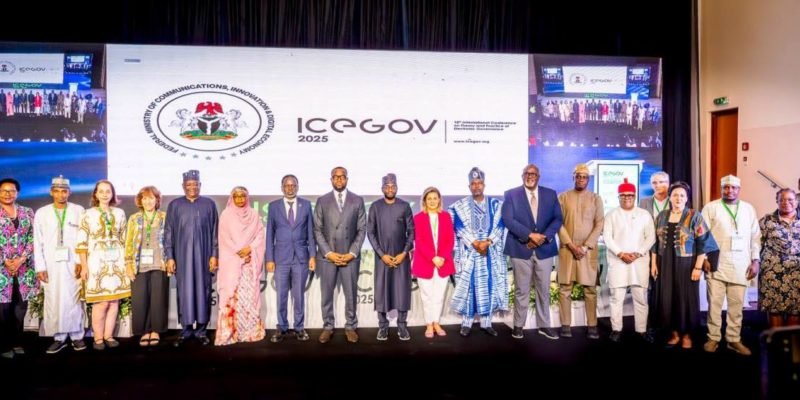
In a decisive move that signals the country’s commitment to leapfrogging into the future of technology, the federal government has earmarked approximately ₦12 billion to fund research initiatives in the digital economy. The announcement came from Bosun Tijani, Nigeria’s Minister of Communications, Innovation and Digital Economy, at the opening of the 18th International Conference on Theory and Practices of Electronic Governance (ICEGOV) held in Abuja.
Having covered the nation’s tech sector for years, I must say this is a welcome and long-overdue investment. In my discussions with tech practitioners in Lagos and Abuja, there’s a palpable sense that research in Nigeria has often been left to chance, under-resourced or poorly aligned with national digital ambitions. This intervention—if executed well—could pivot us from reactive to proactive in shaping our digital future.

Table of Contents
Three ‘Research Clusters’ to Tackle AI, Connectivity and Digital Skills
The minister laid out the structure for how the funds will be deployed. According to Tijani, the proposal involves establishing three research clusters, each hosted by six universities across the country.
- The first cluster will zero in on artificial intelligence (AI).
- The second will focus on connectivity, which the minister identified as “the biggest issue in our nation today.”
- The third will target digital skills and literacy, particularly given Nigeria’s youth-filled demographic.
Tijani emphasised that this is not just for show. He reminded the audience that following ICEGOV last year, over 55 research projects were funded already.
From what I gathered speaking informally with university researchers in Abuja this week, the promise of sustained research funding—especially outside Lagos and the usual hubs—is being greeted with optimism. The challenge will be ensuring the clusters are well supported, not just in money but in governance, partnerships and real-world application.
Why This Matters: From Governance to Global Tech Participation
The minister made it clear: digital technologies are now central to human progress, and no nation can afford to remain under-connected or under-skilled. “Platforms like ICEGOV help countries to explore emerging technologies responsibly and shape policies that balance innovation with societal needs,” he said.
Here are some of the broader implications:
- Governance and policy readiness: The move signals recognition that Nigeria must not simply adopt technology but govern it — especially as AI, connectivity and digital literacy intersect with issues like inclusion, ethics and misinformation. The chair of the ICEGOV Steering Committee, Elsa Estevez, stressed this when she reminded that innovation must remain people-centred and ethical.
- Research capacity building: Establishing clusters in universities across the country raises the potential for more home-grown solutions and less dependency on imported tech or frameworks.
- Inclusion and skills development: With Nigeria’s young, digitally native population, placing emphasis on digital skills and literacy is timely. The National Information Technology Development Agency (NITDA) Director-General, Kashifu Inuwa, noted plans to integrate digital literacy into the school curriculum from next year.
- Global competitiveness: By positioning itself as a research hub, Nigeria can hope to benefit from the global digital economy—not just as a consumer, but as a contributor. Drawing partnerships, hosting conferences like ICEGOV, and creating research clusters are visible steps in that direction.
In conversation with one tech startup founder in Yaba, Lagos, he remarked, “It’s the first time I’ve seen a research fund at this scale that mentions connectivity and digital literacy explicitly. Normally, we hear about startups, hackathons, broadband auctions—but research clusters? That’s new.”

Challenges Ahead: Execution, Oversight and Measurement
While the announcement is promising, the real work begins now. Based on my experience covering Nigerian policy announcements—and the occasional follow-through delay—here are some key points to watch:
- Clear governance structure: It will matter greatly how the research clusters are managed: which universities, what selection criteria, how the funds will flow, and how outcomes will be tracked.
- Equitable spread: Too often, tech-funding in Nigeria is concentrated in Lagos, Abuja or a few elite institutions. These clusters must reach universities in different regions to avoid reinforcing existing disparities.
- Alignment with private sector and real-world demands: Research must not remain theoretical. The connectivity cluster, for example, must work hand-in-hand with telecom operators, ISPs and infrastructure players to ensure findings translate into action.
- Measurement of impact: The minister mentioned 55 research projects funded after last year’s ICEGOV—what were their outcomes? Scaling this to ₦12 billion means there must be metrics, follow-up and accountability.
- Sustainability and long-term funding: Research seldom delivers overnight. Ensuring that the clusters have long-term funding will be key, not simply a single tranche.
- Ethics, equity and inclusion: With AI and digital governance in the mix, questions of bias, access and data protection loom large. The conversation at ICEGOV reflects this reality.
One civil society tech advocate told me, “We all hope it works. But research without dissemination—research that stays locked in a university coffers—is research wasted. We’ll need open access, translation into policy, and communities engaged.”
The Road Ahead: What This Means for Nigerians and the Tech Ecosystem
For ordinary Nigerians and the wider tech community, what does the ₦12 billion investment signal?
- Better connectivity: If the cluster focuses on connectivity delivery, more areas could see improved broadband, more last-mile access and reduced digital divides.
- More jobs and skills: Digital skills and literacy research may lead to curricula updates, vocational modules and perhaps stronger government-industry links that create more jobs for youth.
- Increased research visibility: Nigerian universities could play stronger roles in global tech research papers, conferences and collaborations — raising Nigeria’s profile internationally.
- Stronger governance of tech: With research feeding into policy, Nigerians may benefit from better digital governance frameworks—on AI ethics, data protection, misinformation, and inclusive innovation.
- Startup and innovation fuel: For startups, knowing that the government is investing in research may open up collaboration opportunities, access to new data, test-beds and partnerships with academia.
In my chats with students in Abuja last week, one computing undergraduate said: “It’s good to know our universities might now get research money with national relevance. I hope it means our work stops being just class exercises and becomes real.”
Conclusion: Opportunity Meets Responsibility
Nigeria’s announcement of a ₦12 billion investment into digital economy research is a bold step. It communicates that digital transformation is not just a buzzword but a strategic national priority. At the same time, execution will be the acid test. To borrow a phrase I often hear from tech practitioners: “Vision is one thing, delivery is another.”
If handled well, this move could mark a turning point for Nigeria’s digital future — more than broadband, more than apps — but an ecosystem where research, policy, infrastructure and skills converge. But it will call for vigilance: civil society, academia, the private sector and government will need to collaborate and hold one another accountable.
I’ll be watching with interest how those three research clusters are set up, which universities are chosen, how partnerships form, and most importantly — how the outcomes are measured and shared. For now, the promise is genuine; for it to matter, the follow-through must be substantial.
Join Our Social Media Channels:
WhatsApp: NaijaEyes
Facebook: NaijaEyes
Twitter: NaijaEyes
Instagram: NaijaEyes
TikTok: NaijaEyes