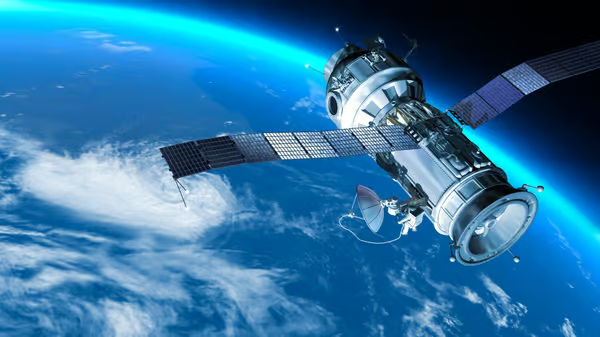
Nigeria is accelerating its journey to become a strong digital economy with a major push to improve internet access and connectivity across all parts of the country. At a high-profile event in Abuja on Global Privacy Day 2026, government officials unveiled a bold plan to launch two new communication satellites and expand the nation’s fibre-optic backbone to reach virtually every region of Nigeria. This project is one of the most ambitious steps yet toward transforming the country’s digital landscape.
The drive to strengthen broadband services reflects Nigeria’s wider ambitions to grow its economy, support businesses, and bridge long-standing geographic and economic divides in access to reliable internet. With these new initiatives, millions of Nigerians could soon experience faster, more affordable, and more stable connectivity.
Table of Contents
A Vision for Nationwide Connectivity
Nigeria’s digital infrastructure push centres on two major pillars: space-based communication capacity and an expanded terrestrial fibre network. The federal government has secured approval for the purchase of two new communication satellites, a milestone that places Nigeria among the growing number of African nations investing in sovereign space assets for national development. These satellites are expected to expand national coverage and support communications services across urban and rural communities alike.
The satellite project complements ongoing efforts to build out one of Africa’s longest fibre-optic backbones. When complete, this network will stretch over 90,000 kilometres, connecting the nation’s major cities, towns, border regions, and underserved rural communities with high-capacity broadband infrastructure. Officials say about 60 percent of the fibre network has already been installed and funding for its completion has been secured.
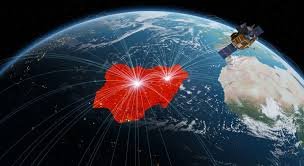
This combined strategy of satellites and fibre seeks to address persistent challenges in Nigeria’s internet ecosystem, including uneven coverage, high costs, and slow speeds for both mobile and fixed broadband users. By weaving space technology with ground infrastructure, Nigeria is positioning itself for more resilient, accessible, and future-ready connectivity.
What This Means for Citizens and the Economy
For many Nigerians, improved digital infrastructure will have real-world impacts on daily life. Faster, stable internet supports a range of essential services that are increasingly part of everyday living. Students attending online classes, professionals working remotely, small businesses selling goods and services online, and households streaming or communicating with loved ones all stand to benefit from stronger broadband capacity. This will also make it easier for government services to migrate online, improving efficiency and access.
Industry watchers have noted that improved fibre deployment and satellite coverage could also enable sectors like healthcare, education, finance, and agriculture to innovate and deliver services more effectively. For example, reliable connectivity is critical to telemedicine and digital learning platforms, while strong bandwidth can support tech startups and creative industries that rely on streaming, cloud services, and large data transfers.
While the quality of internet service in Nigeria has improved, challenges remain. Previous reports show that despite an increase in licensed internet operators, network quality and rural penetration lag behind urban areas. Addressing this gap has been a core part of the federal strategy, and the new infrastructure programmes are aimed directly at closing it.
Challenges Along the Way
Expanding digital infrastructure in a nation as populous and geographically diverse as Nigeria is not without obstacles. The country has dealt with millions of reported fibre cuts and damage to existing lines caused by roadworks, vandalism, and environmental factors. These issues have disrupted broadband services, underscoring the need for robust infrastructure protection and maintenance strategies.
The government’s approach includes not just deploying more fibre and satellites, but also enhancing protections for digital infrastructure and encouraging private sector participation. Industry regulators and stakeholders have emphasised that licences for new internet service providers alone are not enough to close the broadband divide. Sustainable infrastructure deployment, quality service delivery, and reliable last-mile connections must be part of the solution.
Critics have also pointed to budgetary pressures. Recent national budget figures show a reduction in allocation for digital economy initiatives compared with the previous year, even as authorities affirm that digital transformation remains a priority. The drop in funding suggests a shift toward consolidating existing projects rather than launching new large-scale initiatives.
Looking Ahead
Despite challenges, momentum is clearly building around Nigeria’s digital transformation agenda. Beyond the state’s own satellites, regulatory approval for foreign satellite internet providers has opened the door for additional capacity and competition in the broadband market. Service licences granted to operators planning low-Earth orbit networks are expected to contribute to deeper coverage and help underserved communities gain reliable internet access.
The strategic rollout of these technologies points to a future where Nigeria could overcome historical barriers to digital inclusion. By leveraging both ground and space assets, and fostering a collaborative environment between government, private companies, and international partners, Nigeria is charting a course toward a more connected, competitive, and innovative economy. As the country continues to wire and connect every corner of its territory, millions of people stand to gain new opportunities for education, work, entrepreneurship, and social engagement through enhanced digital access.
Economists and tech leaders alike believe that stronger digital infrastructure will be a major driver of economic growth in the years ahead. With the groundwork now being laid, Nigeria is closer than ever to realising the full promise of its digital potential.
Join Our Social Media Channels:
WhatsApp: NaijaEyes
Facebook: NaijaEyes
Twitter: NaijaEyes
Instagram: NaijaEyes
TikTok: NaijaEyes