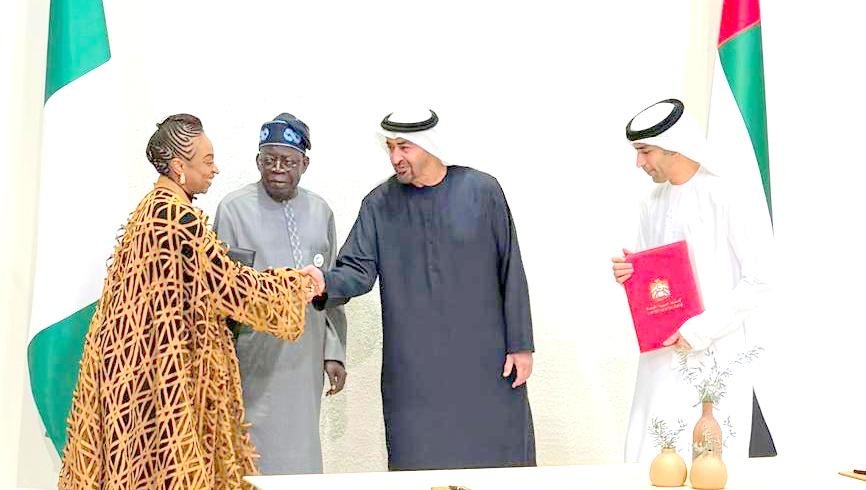
Nigeria’s growing partnership with the United Arab Emirates is entering a more strategic phase, as both countries deepen collaboration not just in trade and investment, but also in defence technology and security innovation. What began as a broad economic agreement is now evolving into a multi-layered relationship that could reshape Nigeria’s military capabilities while opening fresh pathways for industrial growth.
According to Bloomberg, at the centre of this shift is the Comprehensive Economic Partnership Agreement signed earlier in 2026, which has already laid the groundwork for cooperation across key sectors such as digital trade, infrastructure, and logistics. But beyond the headlines about tariffs and exports lies a quieter, more strategic development, one that focuses on defence technology, intelligence systems, and capacity building.
For Nigeria, a country grappling with complex security challenges ranging from insurgency to cyber threats, this evolving partnership is more than diplomatic optics. It is a calculated move to modernise its defence architecture and align with global technological trends.
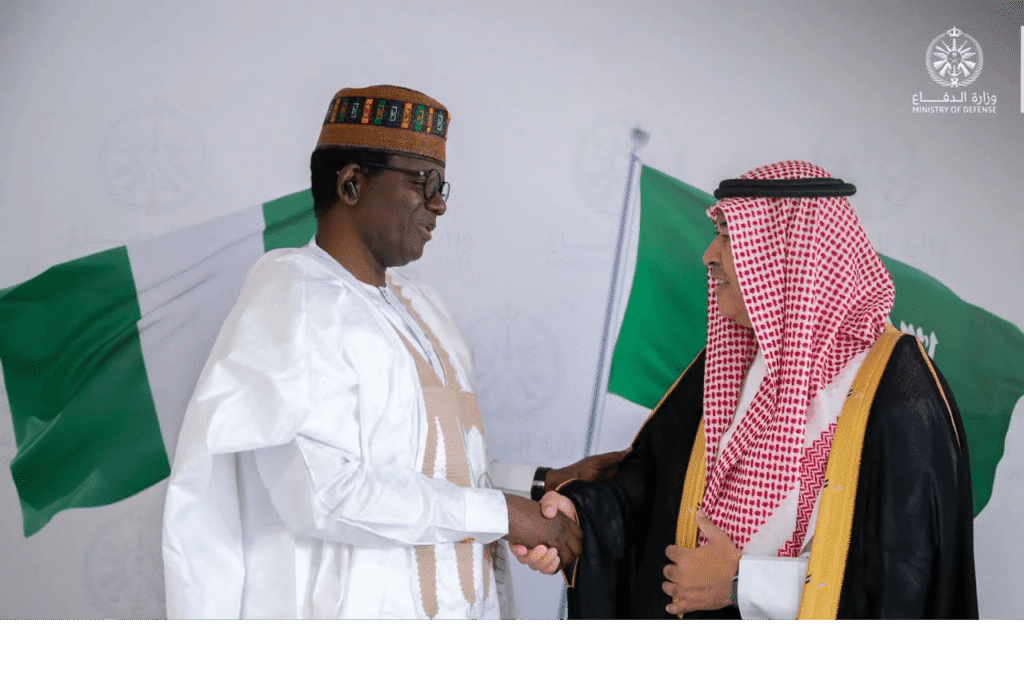
Table of Contents
A Strategic Pivot Towards Defence Technology Collaboration
The Nigeria–UAE agreement is not limited to trade liberalisation. It reflects a deliberate pivot towards integrating advanced technology into national security frameworks. While official communications have emphasised economic gains, analysts point to the inclusion of defence-related cooperation as one of the most consequential aspects of the deal.
This collaboration is expected to cover areas such as surveillance systems, cybersecurity infrastructure, intelligence sharing, and possibly joint development of defence solutions. In a world where warfare is increasingly driven by data, artificial intelligence, and unmanned systems, Nigeria’s engagement with a technologically advanced partner like the UAE signals a shift in strategic thinking.
The UAE has, over the past decade, positioned itself as a hub for defence innovation in the Middle East, investing heavily in indigenous military technologies and global partnerships. By aligning with such a player, Nigeria gains access not only to equipment but also to technical expertise and training frameworks that can strengthen its armed forces.
This is particularly significant given Nigeria’s ongoing efforts to combat terrorism and secure its borders. Traditional military approaches alone have proven insufficient. What is needed is a fusion of intelligence, technology, and rapid-response capability, areas where this partnership could make a tangible difference.
Economic Deal as a Foundation for Security Expansion
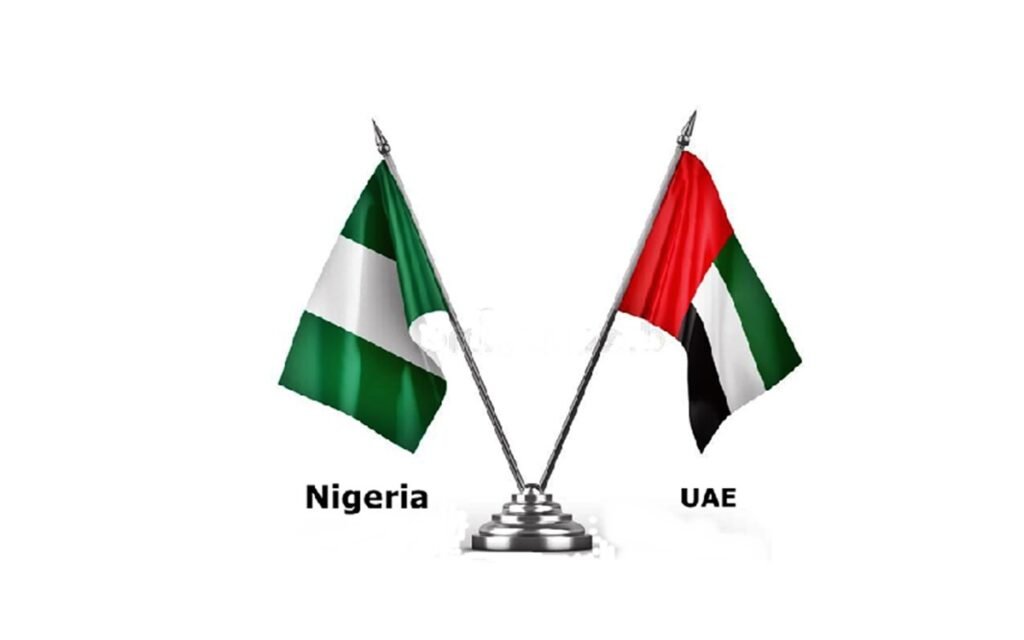
The defence component of the Nigeria–UAE relationship cannot be separated from its economic foundation. The Comprehensive Economic Partnership Agreement has already opened duty-free access for over 7,000 Nigerian products into the UAE market, while also removing tariffs on thousands of imports into Nigeria.
This level of economic integration creates trust, and trust is a critical ingredient in any defence collaboration. By strengthening trade ties, both countries are effectively building the confidence required to share sensitive technologies and intelligence.
The agreement also enables Nigerian businesses to establish operations in the UAE and vice versa, fostering cross-border investments that can spill into defence manufacturing and technology development.
For Nigeria, this presents an opportunity to develop local capacity in defence production. Rather than relying solely on imports, the country could leverage Emirati expertise to build domestic industries that support military needs. This aligns with the broader goal of economic diversification, reducing dependence on oil while creating jobs in high-tech sectors.
Moreover, the deal positions Nigeria as a gateway to Africa’s vast market, making it an attractive base for defence and technology firms looking to expand across the continent.
Implications for Nigeria’s Security Landscape
The potential impact of this partnership on Nigeria’s security landscape is profound. For years, the country has faced criticism over gaps in intelligence coordination, slow adoption of modern defence technologies, and limited local production capacity.
A structured collaboration with the UAE could address these gaps in several ways.
First, enhanced surveillance and intelligence systems could improve situational awareness in conflict zones. This would allow security agencies to respond more quickly and effectively to threats.
Second, investment in cybersecurity infrastructure is increasingly critical. As Nigeria digitises its economy, the risk of cyber attacks grows. A partnership that includes cyber defence capabilities would help protect critical national infrastructure.
Third, joint training programmes and knowledge transfer could elevate the professionalism and technical competence of Nigeria’s armed forces. This is particularly important in areas such as drone operations, data analysis, and electronic warfare.
However, experts caution that the success of such initiatives will depend on implementation. Agreements alone do not guarantee results. There must be sustained commitment, transparent governance, and proper funding to translate these opportunities into real outcomes.
Opportunities and Challenges Ahead
While the Nigeria–UAE defence and technology deal holds significant promise, it also comes with challenges that must be carefully managed.
One key concern is ensuring that the benefits of the partnership are widely distributed within Nigeria’s economy. There is a risk that without proper policies, the gains could be concentrated among a few large firms or government agencies.
Another issue is regulatory alignment. Defence technology involves sensitive materials and strict compliance standards. Nigeria will need to strengthen its regulatory frameworks to meet international requirements and build investor confidence.
There is also the question of sustainability. Partnerships can lose momentum if they are not backed by consistent political will and institutional support. For Nigeria, maintaining continuity across administrations will be crucial.
Despite these challenges, the overall outlook remains positive. The agreement reflects a broader trend of Nigeria repositioning itself in the global economic and security landscape. By forging strategic alliances with countries like the UAE, it is taking steps towards becoming not just a consumer of technology, but a participant in its development.
In many ways, this deal represents a turning point. It is a recognition that national security and economic development are deeply interconnected. Investments in defence technology can drive innovation, create jobs, and strengthen national resilience.
As Nigeria moves forward, the real test will be execution. If implemented effectively, this partnership could redefine the country’s approach to security and set a new standard for international cooperation in Africa.
Join Our Social Media Channels:
WhatsApp: NaijaEyes
Facebook: NaijaEyes
Twitter: NaijaEyes
Instagram: NaijaEyes
TikTok: NaijaEyes