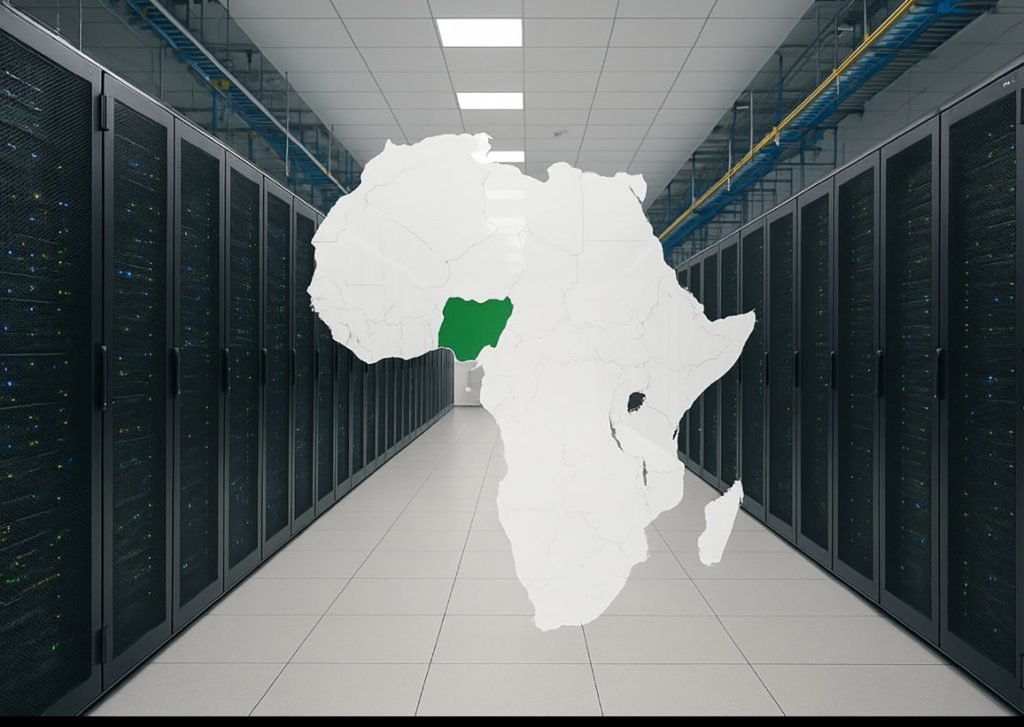
Nigeria is striving to join the global race for digital transformation, yet a severe shortage of data centres is quietly holding back progress. As government platforms go online, fintech expands, and artificial intelligence becomes central to modern business, the country faces a critical gap in infrastructure that could slow its technological ambitions and weaken its competitive position globally.
Digital Public Infrastructure, popularly known as DPI, includes digital identity systems, payment platforms, e-governance, and other online services that power modern economies. Nigeria is pushing ahead in these areas by encouraging cashless payments, fintech innovation, smart city pilots, and cloud adoption. But experts warn that these advances are built on fragile foundations if the country lacks enough data centres to process and store its data locally and securely.
Data centres are often called the backbone of digital economies because they store vast amounts of information and handle everything from government records to online payments. Without sufficient capacity in the country, Nigerian data continues to be hosted overseas, which raises issues of security, sovereignty, and speed. It also leads to slower service delivery and difficulties scaling innovations.
Nigeria currently has only about 21 operational data centres, with over 90 percent of them located in Lagos. This centralisation leaves most states without local hosting facilities and worsens the infrastructural imbalance between regions. Analysts say the country requires at least 72 centres nationwide to keep up with growing demand and to build a truly digital economy.
The shortfall is not just a matter of facility numbers. Industry players note that the active capacity of these centres remains far too small. Although some facilities claim high installed capacity on paper, the actual power and computing resources available for customers are much lower. Nigeria is believed to have less than 40 megawatts of active data centre capacity, instead of the estimated 600 megawatts required to serve a country of over 230 million people.
The shortage affects several sectors simultaneously. Financial services, digital government, telecoms, education, and healthcare all rely on technology infrastructure. As AI and big data analytics drive innovation in banking, logistics, and e-commerce, the need for heavy computing resources will only grow. The absence of adequate infrastructure could slow the adoption of advanced technologies and make Nigeria dependent on foreign hosting.
Several industry leaders have expressed concern about the implications of relying on overseas data hosting. They warn that it weakens cybersecurity, increases operational costs, and puts sensitive national data in foreign jurisdictions. It also limits opportunities for local job creation in the data, AI, and cloud services sectors.
The government acknowledges the seriousness of the challenge. Policymakers have promised reforms and budget allocations to expand data centre capacity and to encourage private investment. The hope is to create a digital ecosystem robust enough to compete globally and to support Nigeria’s ambition of building a technology-led economy.
Still, the country faces a turning point. To fully harness the benefits of artificial intelligence and digital services, data must be processed locally on secure and reliable infrastructure. Without decisive investment, Nigeria risks falling further behind other emerging markets in technology advancement and digital inclusion.
Table of Contents
Nigeria’s Data Centre Gap And Its Consequences
Experts say that Nigeria’s data centre deficit can be seen from several angles. First, there is the physical shortage of facilities. With only a handful of centres distributed across the country and the bulk concentrated in one major city, many states have no on-ground digital infrastructure at all. This limits their ability to host local services and slows the spread of digital transformation beyond major urban centres.
Secondly, the available infrastructure has insufficient active power capacity. Even the best Tier III data centres, which are designed for high reliability, often struggle with unstable power supply. Many data centre operators rely heavily on diesel generators, solar installations, and backup systems to maintain uptime. This significantly increases operating expenses and reduces competitiveness.
Thirdly, regional comparisons highlight the scale of the challenge. Africa itself has only a fraction of the global data centre capacity required, and South Africa dominates the continent’s infrastructure. Nigeria’s capacity represents a very small share of the African total, despite being home to the continent’s largest population and one of its biggest economies.
Artificial intelligence places new demands on computing hardware, power supply, and cooling systems. Many of Nigeria’s existing centres were built before high-density AI workloads became normal. Their designs lack advanced features such as specialised cooling and robust energy architecture needed for AI applications. As a result, most Nigerian startups building AI solutions rely on cloud resources hosted outside the country.
The heavy dependence on foreign data hosting comes with risks. Foreign servers mean that compliance, governance, and privacy policies are shaped by external regulations. Businesses must deal with latency issues, cross-border data disputes, and potential outages they cannot control. This weakens the country’s technological sovereignty.
Financial institutions feel the impact as well. Banks rely on data centres for real-time transactions, mobile banking, and digital payment infrastructure. When local capacity is constrained, these operations become more costly and difficult to scale. Fintech startups, known for rapid innovation, face delays in deploying new products and bringing them to market.
Rising operational expenses from diesel consumption add to the burden. Tech companies must factor energy costs into pricing, reducing their competitiveness locally and internationally. Analysts warn that without robust infrastructure and stable power, Nigeria’s fintech industry could struggle to maintain its growth trajectory.
Security professionals also worry about data localisation. Hosting sensitive information abroad raises questions over who can access it, where it is stored, and how it is protected. For countries building national digital identity systems, social security databases, and biometric records, strong local hosting capacity is crucial for protecting citizens’ information.
Although some experts disagree on whether Nigeria lacks enough data centre facilities overall, many agree that capacity distribution, power reliability, and cloud infrastructure remain weak links. Even those who insist Lagos has adequate facilities acknowledge that the country underperforms in developing local cloud service providers and nationwide digital infrastructure integration.
Government agencies responsible for digital transformation have highlighted the enormous power needs of AI and cloud computing. They argue that energy investment must accompany technology investment if the country is to build reliable infrastructure. Large-scale data centres consume enormous amounts of electricity and require a stable supply to stay online around the clock.
The lack of policy direction is another barrier. Nigeria currently treats the development of data centres mostly as private ventures rather than strategic national infrastructure. There are no targeted incentives to attract global players or to encourage local investors to build hyperscale centres. As a result, expansion has been slow and uneven across the country.

Voices From Industry And Government
Technology leaders have been vocal about the urgent need for action. Several executives from telecoms, energy, and data-centre firms say the country is lagging behind global standards and must move quickly to expand digital infrastructure.
One veteran industry figure notes that Nigeria needs at least two data centres in every state and the Federal Capital Territory to support a trillion-dollar digital economy. However, the reality is far from this goal. While some modern data centres exist in Lagos and Abuja, most regions still rely on distant hosting, creating digital inequality.
Experts also caution that Nigeria’s national power grid is too unreliable to meet data centre demands. Operators, therefore, invest millions of dollars building independent power sources. This increases the cost of building and running facilities, making Nigerian data hosting more expensive than similar services in regions with stable electricity.
Executives from telecom companies have warned that the rapidly growing use of AI will soon overwhelm existing capacity. They argue that new hyperscale facilities are needed urgently to support increasing data volumes and the heavy computing power required by AI models.
Fintech leaders highlight the direct impact on their businesses. They say inadequate hosting capacity slows down deployment cycles, increases onboarding times for new financial services, and complicates regulatory compliance. Many stress that more Tier III and Tier IV facilities with reliable power and cooling infrastructure are required to foster innovation.
Meanwhile, government officials acknowledge the challenge and promise reforms. The Senate Committee on Communications has stated that Nigeria needs to increase local capacity to host and secure data. They also confirm ongoing policy reviews and funding efforts to strengthen the sector.
The government insists that Nigeria cannot afford to depend on foreign hosting for sensitive national information. Efforts to align the country with global standards are ongoing, including building databases, improving infrastructure, and fostering collaboration with industry players.
Technology regulators also emphasise the importance of energy innovations to support data centres. They urge engineers and policymakers to develop better power solutions and to avoid using energy constraints as an excuse to delay infrastructure investments.
The debate among industry stakeholders reflects a broader national conversation about how best to position Nigeria in the global digital economy. While some believe the current infrastructure is a good foundation, most agree that major investment, innovation, and policy reforms are needed.
What Must Change For Nigeria To Compete Globally
To secure its digital future, Nigeria must treat data centres as essential infrastructure necessary for economic growth. Just as highways, ports, and power plants are seen as national assets, digital infrastructure deserves similar recognition and investment. Without this, progress in e-government, fintech, and AI will remain limited.
Better planning is crucial. Nigeria needs a national strategy for locating, funding, and maintaining data centres across the country. Each region requires facilities that can support its own digital economy and reduce dependence on foreign hosting. Private investors will play a role, but government leadership and incentives are indispensable.
Technological sovereignty is another factor. Having the capacity to store and secure data locally is critical for building trust in digital services. Citizens and businesses must feel confident that their information is protected by strong domestic regulations and local infrastructure.
Investment in renewable and reliable power solutions will also be key. To operate efficiently, data centres must have a stable electricity supply that is both cost-effective and environmentally sustainable. The combination of solar, grid, and backup systems remains common, but long term solutions require more integrated energy planning.
Nigeria’s private sector is already demonstrating strong interest in digital technology. Hundreds of startups are exploring AI, cloud computing, and fintech innovations. But without sufficient infrastructure support, many will continue relying on platforms outside the country, sending value and opportunities abroad.
The global economy is increasingly data driven. Countries that control and process their own data are better positioned to create jobs, attract investment, and provide efficient services. Nigeria, therefore, stands at a critical juncture. With clear policies, strategic public investment, and stronger collaboration with the tech industry, the country can build the infrastructure needed for digital leadership.
If these challenges remain unresolved, Nigeria could face persistent fintech downtime, stalled cloud migration, cybersecurity risks, and slow adoption of AI technologies. But if it acts boldly and strategically, the country can unlock vast economic opportunities and secure a central place in Africa’s digital future.
Join Our Social Media Channels:
WhatsApp: NaijaEyes
Facebook: NaijaEyes
Twitter: NaijaEyes
Instagram: NaijaEyes
TikTok: NaijaEyes