Nigeria’s Gas Revolution: FG Commits ₦287 Billion to Infrastructure, Unlocking $500M in Funding
The Federal Government of Nigeria is aggressively accelerating its push to transform the nation into a global gas powerhouse. The Midstream and Downstream Gas Infrastructure Fund (MDGIF) has committed over ₦287 billion to strategic gas infrastructure development projects across the country, fulfilling key mandates of the Petroleum Industry Act (PIA).
This monumental investment is already paying dividends, having successfully attracted an additional $500 million in foreign funding through a pivotal partnership with the African Export-Import Bank (Afreximbank).
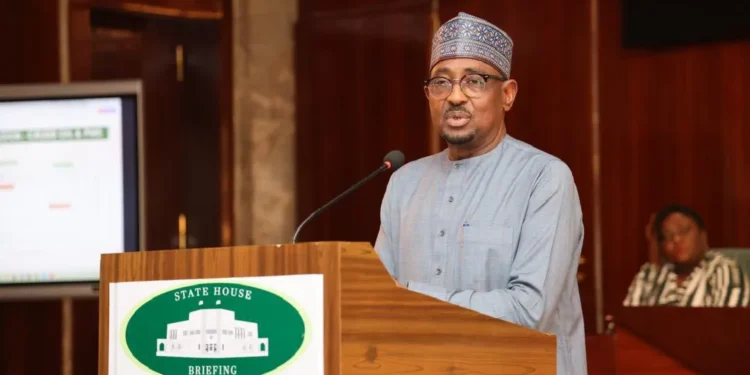
Mr. Farouk Ahmed, Chief Executive of the Nigerian Midstream and Downstream Petroleum Regulatory Authority (NMDPRA), disclosed these figures at the inaugural Energy Correspondents Association of Nigeria (ECAN) Conference in Abuja. He emphasized that the MDGIF’s role is critical in catalyzing private capital to expand energy access, support industrialization, and solidify Nigeria’s position as a regional gas hub.
The PIA’s Impact: Four Years of Sectoral Reform
The disclosures highlight the tangible progress achieved four years after the enactment of the PIA, which was designed to commercialize Nigeria’s vast oil and gas resources.
1. Massive Gas Infrastructure Investment
The MDGIF’s commitment of ₦287 billion has been spread across 62 strategic gas infrastructure projects, involving 16 different companies. These investments are vital for building the necessary pipelines, processing plants, and distribution networks required to utilize Nigeria’s enormous gas reserves.
Financial Leverage: The ability of MDGIF’s investment to immediately attract an extra $500 million from Afreximbank demonstrates the fund’s capacity to de-risk projects and draw in necessary foreign capital.
2. Regulatory Efficiency and Licensing Boom
The NMDPRA has also driven significant regulatory change, easing the bureaucratic hurdles that previously slowed sector growth:
Refinery Boost: The NMDPRA has issued 23 refinery establishment licences, which are expected to add over 850,000 barrels per day (bpd) to Nigeria’s total refining capacity. This includes the recent licensing of three new refineries in Abia, Delta, and Edo States, with a combined capacity of 140,000 bpd.
Pipeline Expansion: The Authority has issued 10 gas distribution licences covering 692km of pipelines, with a combined distribution capacity of 712 million standard cubic feet per day (MMscf/d).
3. Boosting Domestic Refining Output
A major goal of the PIA was to ensure crude supply for local refining, a mission that is showing success:
Crude Supply: Crude supply to domestic refineries has risen from 20,000 bpd in 2023 to over 40,000 bpd in 2025.
Refined Products: Consequently, local output of Premium Motor Spirit (PMS), or petrol, has surged from 1.3 billion litres in 2024 to 3.8 billion litres in 2025, significantly easing the pressure on imported fuel.
Key Projects Under the PIA Framework
The NMDPRA confirms that the PIA framework is actively supporting several critical energy projects vital to Nigeria’s industrial future, demonstrating the fund’s broad impact across the value chain:
Gas Pipelines: The ongoing AKK (Ajaokuta-Kaduna-Kano) and OB3 (Obiafu-Obrikom-Ogbainbiri) gas pipelines are crucial for extending gas distribution across the country.
Refining and Processing: Projects include the expansion of the Waltersmith refinery and the development of the Supertech’s methanol project.Large-Scale Infrastructure: Major developments like the UTM Offshore Floating LNG and the NLNG Train 7 expansion are being supported, positioning Nigeria as a global exporter of liquefied natural gas.
The commitment of the MDGIF is not just a disbursement of funds; it is a foundational investment designed to leverage the vast, untapped potential of Nigeria’s gas reserves, ensuring energy security and sustained industrial growth for decades to come.
Given the massive investment in gas pipelines and processing, which specific Nigerian industry—such as power generation or fertilizer production—do you think will benefit most immediately from this expanded gas infrastructure?
Join Our Social Media Channels:
WhatsApp: NaijaEyes
Facebook: NaijaEyes
Twitter: NaijaEyes
Instagram: NaijaEyes
TikTok: NaijaEyes