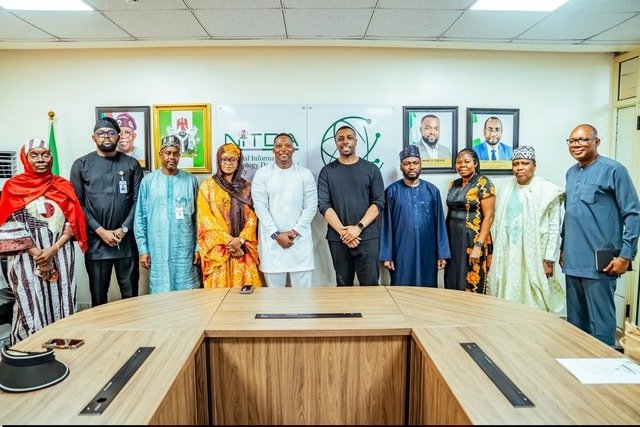
Nigeria has taken a bold step in the global artificial intelligence race by launching a new partnership aimed at bringing African languages into the heart of digital technology. The National Information Technology Development Agency (NITDA) has entered into a strategic collaboration with Nkenne AI to build an artificial intelligence infrastructure designed specifically for African languages.
The move is widely seen as part of Nigeria’s broader effort to ensure that technological innovation on the continent reflects its linguistic diversity. Across Africa, more than 2,000 languages are spoken, yet most modern artificial intelligence systems are trained mainly on global languages such as English and Mandarin. This imbalance means millions of people may struggle to fully benefit from emerging digital tools.
Nigeria’s initiative seeks to address that gap by developing advanced AI systems capable of understanding and processing African languages. By partnering with Nkenne AI, the government hopes to create digital infrastructure that allows local languages to function seamlessly in sectors such as healthcare, finance, education, and governance.
Technology experts say this effort could be a major milestone for Africa’s digital transformation. If successful, the project could expand access to technology for millions of people who currently interact with digital platforms mainly through foreign languages.
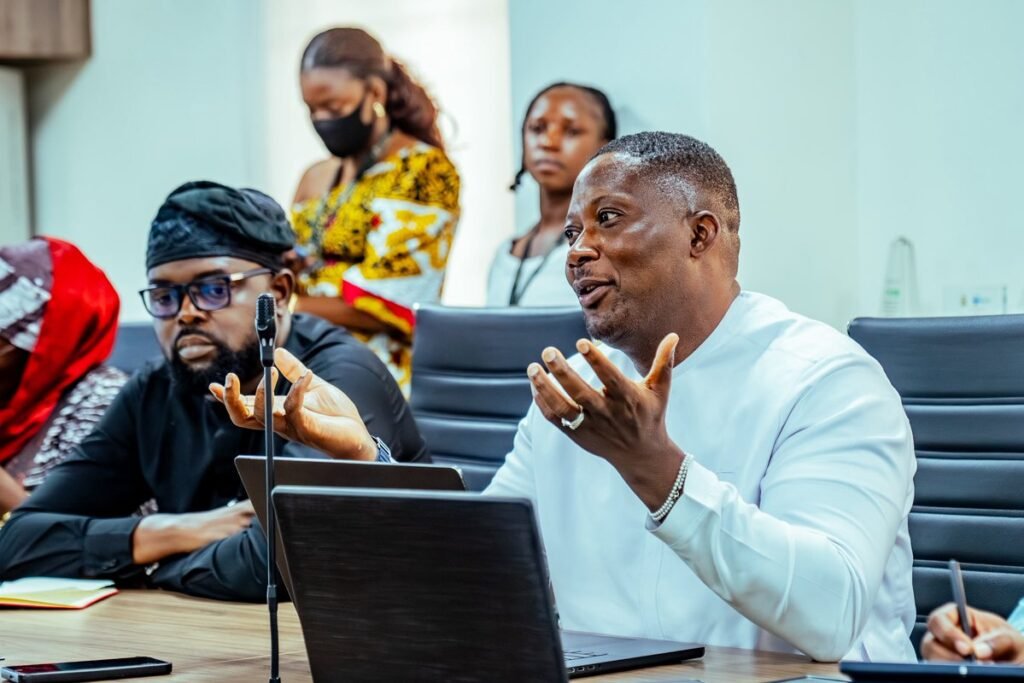
Table of Contents
Tackling the Language Barrier in Nigeria’s Digital Economy
Nigeria is home to more than 500 languages, making it one of the most linguistically diverse countries in the world. While this diversity reflects the country’s rich cultural heritage, it also presents a challenge for digital development. Many digital platforms, mobile applications, and government services still operate primarily in English.
For millions of Nigerians, particularly those in rural communities, this language barrier can limit access to vital services and information. Artificial intelligence powered by indigenous languages could dramatically change that situation.
Under the new partnership, NITDA and Nkenne AI will focus on building scalable AI translation and language technologies capable of supporting government systems and digital platforms across the country.
The collaboration is also aligned with Nigeria’s ambition to strengthen its position as a major technology hub in Africa. Officials believe that building local AI infrastructure will not only improve digital inclusion but also stimulate innovation within the country’s growing tech ecosystem.
According to representatives of NITDA, the project will contribute to broader national goals, including expanding digital literacy and preparing Nigeria’s workforce for an increasingly AI-driven future. The agency has already set a target of achieving 70 percent digital literacy among Nigerians by 2027 as part of its national digital strategy.
Beyond accessibility, the initiative is expected to create new economic opportunities. Developers, startups, and technology companies will be able to build applications using language tools tailored specifically for African contexts.

From Language Learning Platform to AI Innovation
At the centre of the partnership is Nkenne AI, a technology company that emerged from a language learning platform originally designed to teach African languages.
The story behind the platform began when founder Michael Odokara Okigbo searched for a digital tool to learn Igbo during the COVID-19 pandemic. When he realised that such a platform did not exist, he decided to build one himself.
That idea eventually evolved into NKENNE, a community-driven language learning platform dedicated to African languages. The platform allows users to learn languages such as Igbo, Yoruba, Hausa, Swahili, Twi, Somali, and Nigerian Pidgin through interactive tools, including storytelling, games, and music-based lessons.
What started as a cultural project quickly gained international attention. Within a few years, the platform attracted hundreds of thousands of users around the world who were interested in learning African languages.
As the community grew, the platform began to accumulate large volumes of linguistic data from lessons, voice recordings, and user interactions. That data eventually became the foundation for a much larger technological ambition.
Recognising the potential of this dataset, the company launched Nkenne AI as a separate platform focused on developing artificial intelligence tools for African languages.
Unlike many global AI systems that adapt existing models to African languages, Nkenne AI aims to build technology designed specifically around the structure, tones, and cultural context of these languages.
Building the Foundations for African Language AI
One of the major challenges facing artificial intelligence in Africa is the lack of large, high-quality datasets in local languages. Most AI models are trained using enormous quantities of text and speech data. Unfortunately, such resources are limited for many African languages.
This shortage makes it difficult for global AI systems to accurately understand tonal and context-dependent languages like Yoruba, Igbo, and Hausa.
For example, a single word in Yoruba can have multiple meanings depending on tone. Without specialised training data, AI systems may struggle to interpret such differences correctly.
The NITDA and Nkenne AI partnership aims to address this challenge by building extensive datasets and machine learning models designed for African linguistic structures.
The technology under development will support a wide range of capabilities, including text to text translation between languages, speech recognition for African language audio, and natural language processing tools for digital platforms.
Such capabilities could significantly transform the way Nigerians interact with technology. Government portals could eventually provide services in indigenous languages, while healthcare information systems might deliver guidance in the language most familiar to patients.
Industry analysts believe that language-focused AI solutions could also strengthen sectors such as financial technology, education technology, and digital commerce.
Strengthening Nigeria’s AI Ecosystem
The collaboration also forms part of Nigeria’s broader push to build a robust artificial intelligence ecosystem.
Over the past few years, the country has introduced several initiatives aimed at expanding digital capacity and strengthening its technology workforce. One of the most ambitious is the federal government’s Three Million Technical Talent programme, which aims to train millions of Nigerians in high-demand digital skills, including artificial intelligence and software engineering by 2027.
Officials believe that investments in local AI infrastructure will complement such training programmes by giving Nigerian developers access to tools and datasets needed to create locally relevant solutions.
The partnership with Nkenne AI is therefore expected to go beyond technology development. Plans include building a pipeline of local talent capable of designing, maintaining, and expanding language-based AI systems.
Developers may also gain access to application programming interfaces that allow them to integrate African language capabilities into new digital products.
For Nigeria’s technology sector, this could represent an important shift. Instead of relying entirely on global AI platforms, local innovators would have the opportunity to build solutions tailored specifically to African realities.
A Step Toward Inclusive Digital Transformation
Experts say the significance of the NITDA and Nkenne AI collaboration extends far beyond language technology. At its core, the initiative represents a push toward inclusive digital transformation across Africa.
Technology has often advanced in ways that prioritise dominant global languages, leaving many communities on the margins of digital progress. By investing in African language infrastructure, Nigeria is attempting to change that narrative.
If implemented successfully, the initiative could open the door to more inclusive government services, improved digital education platforms, and better communication tools across Africa’s diverse societies.
For everyday Nigerians, the long-term impact could be profound. Accessing public information, navigating online services, or interacting with digital assistants may soon become possible in the languages people speak at home.
While the project is still in its early stages, it reflects a growing recognition that Africa must shape its own technological future. By combining government support with private sector innovation, Nigeria hopes to build an AI ecosystem that truly reflects the continent’s linguistic and cultural richness.
As artificial intelligence continues to reshape global industries, initiatives like this may determine whether Africa remains a consumer of imported technologies or becomes a creator of solutions designed for its own people.
Join Our Social Media Channels:
WhatsApp: NaijaEyes
Facebook: NaijaEyes
Twitter: NaijaEyes
Instagram: NaijaEyes
TikTok: NaijaEyes