By the end of this year, it is anticipated that World Bank loan to Nigeria between 2023 and 2025 will total $9.65 billion as new approvals, continuing talks, and disbursements pick up speed across important sectors.
Source’s review of data from the bank’s website indicates that the sum solely includes loans from the International Development Association and the International Bank for Reconstruction and Development. The total World Bank loan and funding during the three-year period increases to almost $9.77 billion when grants are included.
While the International Development Association offers very concessional loans and grants to the world’s poorest countries, the International Bank for Reconstruction and Development offers loans on commercial or near-commercial terms to middle-income and creditworthy low-income countries.
The World Bank loan figures show a steady build-up of commitments with government officials pushing ahead with digital infrastructure, social protection, power, education, and health programmes while defending the concessional nature of the borrowings.
On December 19, 2025, the Federal Government is anticipated to obtain an additional $500 million facility as part of the Fostering Inclusive Finance for MSMEs in Nigeria initiative. The Development Bank of Nigeria will carry out the operation, which is being prepared for Board consideration.
Bola Tinubu’s administration started the borrowing cycle in 2023 with $2.7 billion in loans for four significant projects. The revival of the electricity sector, access to renewable energy, girls’ education, and women’s economic empowerment dominated financing that year.
International Development Association (IDA) provided $750 million for the Nigeria Distributed Access through Renewable Energy Scale-up initiative, which aims to increase access to renewable energy driven by the private sector. For secondary education for girls in participating states, an additional $700 million IDA credit was authorized. Through the Nigeria for Women Program Scale Up, $500 million in IDA was allocated to women’s economic empowerment.
Additionally, $449 million in IBRD funding and $301 million in IDA were given to the AF Power Sector Recovery effort in order to boost the sector’s financial viability and increase the dependability of the energy supply. In 2023, the whole amount was made up of loans because there were no grant components.
Another $750m IBRD loan was approved for the NG Accelerating Resource Mobilisation Reforms programme to boost non-oil revenues and safeguard oil and gas receipts.
Additionally, the World Bank approved $500 million in IDA for programs related to irrigation, dam safety, primary healthcare, and rural road access. A $70 million grant for the basic healthcare program increased the overall amount of World Bank loan for 2024, including grants, to almost $4.32 billion.
The data for 2025 shows $52.18 million in grants and $2.695 billion in World bank loans at various project processing stages. In the areas of financial inclusion, digital broadband, health, education, social protection, and institutional capacity, nine operations have already been selected.
An earlier report by PUNCH reveals that Nigeria’s stock of World Bank International Development Association loans rose to $18.5bn, making it the largest IDA borrower in Africa and the third-biggest in the world.
The biggest facilities are linked to $500 million in IDA each for basic education, internet development, and livelihood assistance for low-income and vulnerable people. IDA also provides $65 million for procurement standards and an additional $630 million for health security, nutrition, and internally displaced communities.
The country has retained the ranking it first achieved in 2024, when it moved up to third place after surpassing India, according to new data from the IDA’s unaudited financial accounts for the third quarter of 2025. In 2023, the nation was the fourth biggest borrower.
According to the report, Nigeria’s exposure rose by $1.4 billion, or 8.2%, from $17.1 billion in September 2024 to $18.5 billion in September 2025. The rise is a reflection of the nation’s increased reliance on concessional funding to finance social spending, stabilize its reform program, and close infrastructure gaps in the face of unstable oil earnings.
Lagos-based economist, Adewale Abimbola, noted that the critical question is not whether Nigeria should be borrowing, but whether the Word Bank loan are structured and deployed effectively. “If it’s concessionary and tied to viable projects with medium-term revenue prospects, I don’t think it’s a bad idea,” Abimbola explained. “Borrowing isn’t bad; what matters is utilisation.”
With the naira trading at historically low levels, he cautioned that this crowding-out impact restricts the creation of jobs, increases inflation, and exacerbates Nigeria’s foreign exchange imbalance.
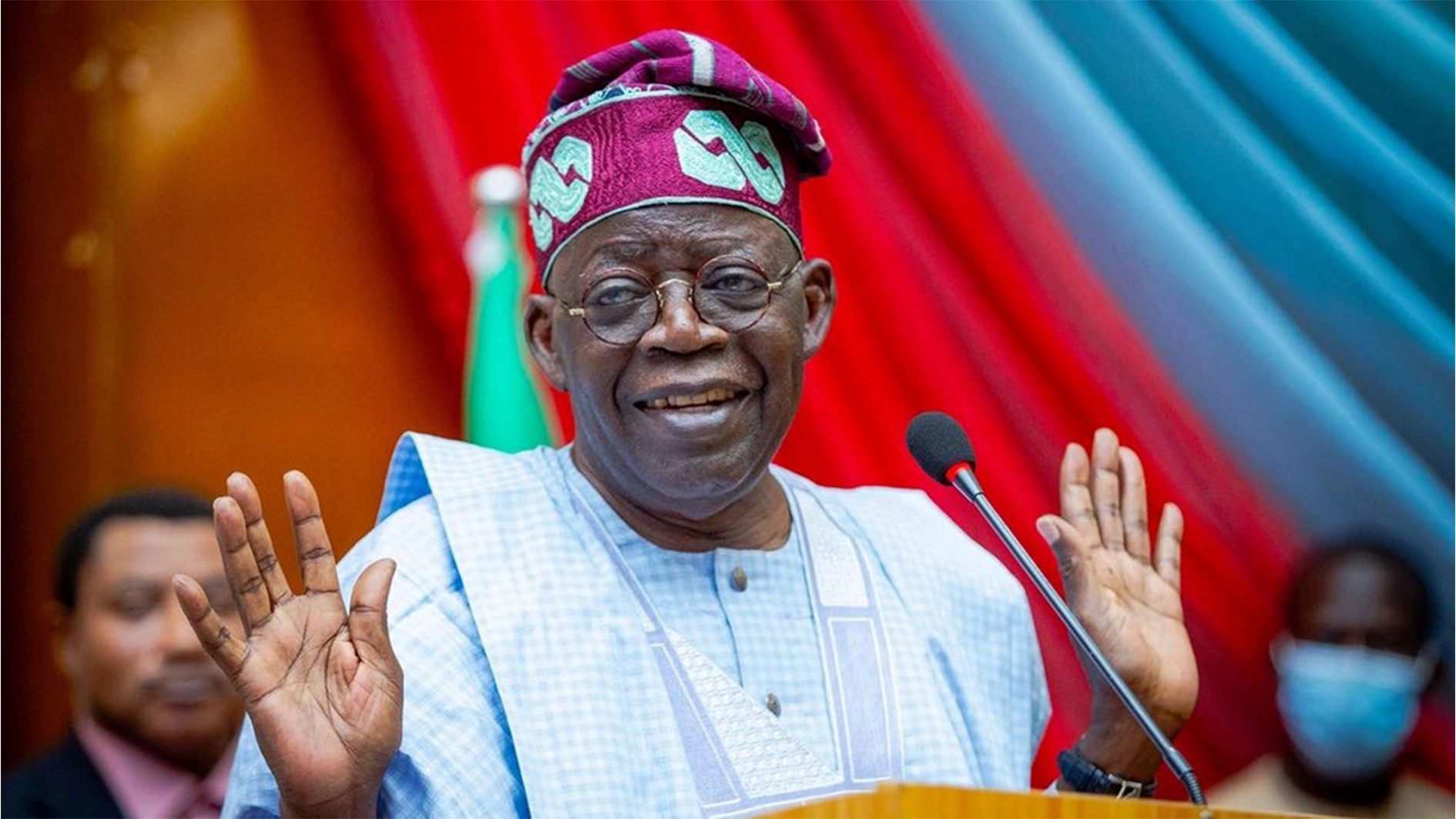
He maintained that the Tinubu administration shouldn’t have need to seek another world bank loan during its first two years in power, much less on the magnitude that is currently being observed, given the purported revenue surpluses.
Similarly, Dr. Muda Yusuf, an economist and CEO of the Centre for the Promotion of Private Enterprise, stated that the country’s Medium-Term Expenditure Framework and annual budgets, which already allow for both domestic and foreign borrowing, should be taken into consideration when analyzing the growing World Bank commitments to Nigeria.
Nigeria’s external debt, according to figures from the Debt Management Office, was $46.98 billion as of June 30, 2025. $19.39 billion of this sum came from the World Bank loan, which included $1.35 billion from the International Bank for Reconstruction and Development and $18.04 billion from the International Development Association.
This indicates that the World Bank owns 41.3% of the total, highlighting its disproportionate contribution to Nigeria’s development initiatives.
Amid all these, Senator Abubakar Bagudu, the Minister of Budget and Economic Planning, recently urged the World Bank to back Nigeria’s Renewed Hope Ward Development Programme, a grassroots endeavor he described as essential to reaching President Bola Tinubu’s goal of creating a $1 trillion economy by 2030.
Join Our Social Media Channels:
WhatsApp: NaijaEyes
Facebook: NaijaEyes
Twitter: NaijaEyes
Instagram: NaijaEyes
TikTok: NaijaEyes