Nigeria, with its vast youth population and demographic potential, seems poised for a boom. But behind the surface of promise lies a growing crisis: the nation’s foundation for future growth, its human capital, is crumbling. Recent data shows millions of children are either out of school or attending with little chance of learning the basics. These aren’t just grim statistics; they represent a generation whose talents and potentials may never be realised, undermining Nigeria’s long-term economic ambitions.
What the Numbers Reveal: A Lost Generation
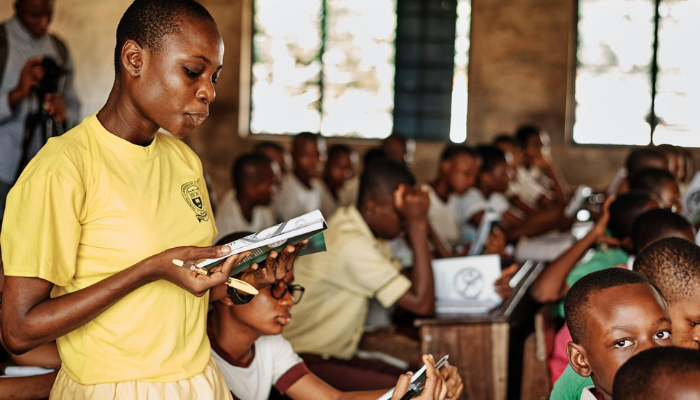
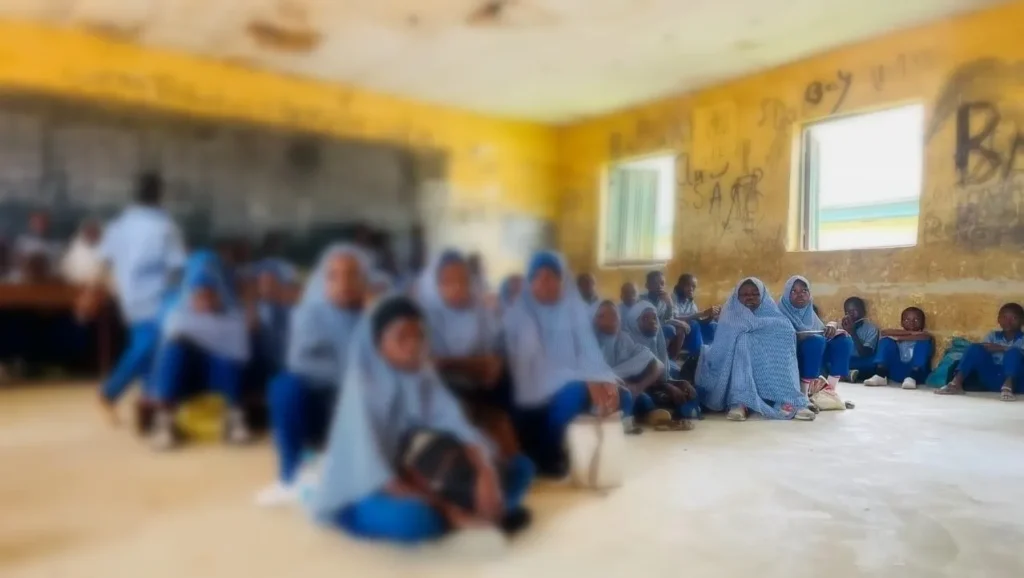
The situation is stark. According to a 2024 analysis by UNICEF, roughly 10.2 million primary-school-age children and 8.1 million lower-secondary-age children in Nigeria are out of school, by far the largest such population globally. Among those in school, many still fail to develop essential skills: in some areas, up to three out of four pupils complete primary education without acquiring foundational literacy or numeracy.
Moreover, a 2024 assessment by the World Bank estimates that 72.6 percent of children aged 7–14 cannot read and understand a simple text at their grade level, a phenomenon now widely described as “learning poverty.” Far from being limited to a few regions, these deficits span the country, with even relatively better-off states unable to claim immunity. The implication is clear: Nigeria is not just failing to educate millions — it is failing to equip the bulk of its next labour force with basic, non-negotiable skills.
In the face of a still-expanding population, missing the early learning window for millions amounts to forfeiting the quality — and not just the quantity, of future workers. In an era when economic growth must increasingly rely on productivity rather than consumption, Nigeria risks squandering its main competitive advantage: its people.
Underfunding, Insecurity and a Crumbling Pipeline
Why is Nigeria’s education system collapsing under such a weight? The answers point to systemic neglect, insecurity, and a dangerously thin teacher pipeline.
Globally respected benchmarks recommend that countries allocate between 15–20 percent of public expenditure — or between 4–6 percent of GDP, to education. Businessday NG+1 Yet, in 2024, Nigeria’s federal budget devoted roughly 8.2 percent to the sector — equivalent to about 3.3 percent of GDP. Businessday NG Early signals for 2025 suggest the share may fall to around 7 percent, with uncertain allocation across basic, post-basic and tertiary levels. In short, Nigeria is under-investing in its long-term growth capacity.
Underfunding is worsened by pervasive insecurity, especially in many northern states. Abductions, banditry, insurgency, and general community violence continue to disrupt school attendance. Parents, fearful for their children’s safety, often keep them at home.
Recognising the threat, the federal government launched the National Plan on Financing Safe Schools (2023–2026), estimating a need for ₦144.8 billion over four years to safeguard schooling. But civil society monitoring shows the 2024 allocation fell to roughly ₦5 billion — raising serious doubts over execution and political will.
Meanwhile, the teacher gap looms large. Before Nigeria can even consider scaling up quality instruction, it must fill an estimated shortfall of 195,000 teachers in public primary schools. Without meaningful interventions, hiring, deployment, training, and incentives, even well-funded reforms risk collapsing under their own weight.
Glimmers of Hope and the Road Ahead
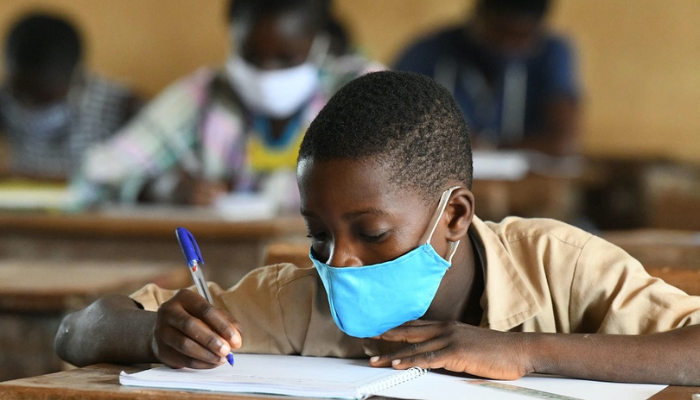
Despite the gloom, glimmers of progress emerge. By mid-2025, the Universal Basic Education Commission (UBEC) reported that 25 states plus the Federal Capital Territory had accessed ₦92.4 billion in matching grants, a notable improvement in drawdown compared to previous years.
Additionally, UBEC released ₦19 billion earmarked for teacher professional development during the 2023/24 cycle. These are promising signs. Where states commit counterpart funds and follow through on approved projects, improvements in infrastructure, training, governance, and learning outcomes have been recorded, some within a single electoral cycle.
On the international front, the World Bank approved a $1.57 billion financing package for Nigeria in 2024, part of which is directed at reforms in the education and health sectors. The complementary HOPE-GOV Nigeria Human Capital Opportunities for Prosperity and Equity initiative sets an explicit goal of reducing staffing gaps in basic education by 40 percent by 2028, while expanding state-level access to UBEC funds.
But long-term success will hinge on whether political will, particularly at the state level, matches ambition. Consistent funding, accountable disbursements, and transparent reporting must become standard rather than an exception.
Why Education Must Be Nigeria’s Next Infrastructure Priority
It is time for Nigeria to reframe basic education not as mere “social spending,” but as critical economic infrastructure — the foundation on which industrialisation, productivity and national competitiveness rest.
Countries like Singapore, South Korea and Vietnam transformed their economies through decades of investment in human capital. Empirical evidence supports what seems intuitive: academic studies spanning decades confirm a strong positive relationship between human capital and economic growth in Nigeria.
To draw on this potential, Nigeria must:
- Commit to budgetary allocations in line with international benchmarks, ideally allocating 15–20 percent of public expenditure to education.
- Protect investments in physical infrastructure, classrooms, sanitation, water, electricity, connectivity, by ring-fencing funds and linking disbursements to verified outputs.
- Address the teacher shortfall with a national recruitment and deployment plan, expand training institutions, reform pay and conditions, and institutionalise in-service development.
- Encourage private sector participation, not as charity, but as investment in national competitiveness. Corporations should support teacher training (especially in digital pedagogy), infrastructure (connectivity, power), and systems for real-time tracking of learning outcomes.
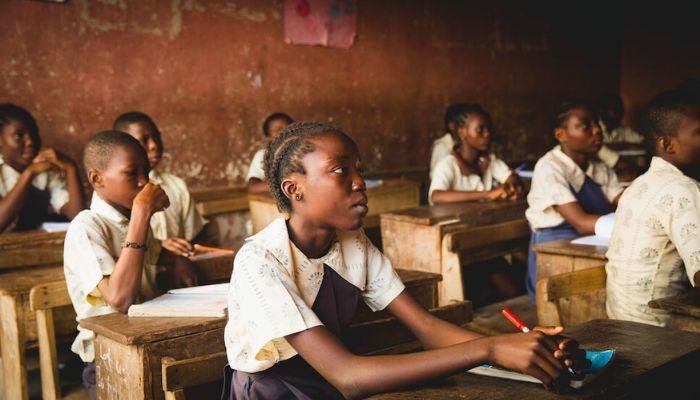
If Nigeria fails to act decisively, its youth bulge will become a ticking economic time bomb. Without foundational skills, a substantial proportion of the next generation will be ill-equipped to contribute meaningfully to growth, innovation or competitiveness.
Yet the path forward is not hopeless. The reforms viewed as modest in some states demonstrate that with political clarity, institutional discipline and cross-sector collaboration, change can happen, and fast. For Nigeria, the choice is stark: treat basic education as a non-negotiable growth asset or continue watching a generation of potential wilt into wasted human capital.
Only bold, sustained investment, early and deep, will secure the dividends of Nigeria’s demographic promise.
Join Our Social Media Channels:
WhatsApp: NaijaEyes
Facebook: NaijaEyes
Twitter: NaijaEyes
Instagram: NaijaEyes
TikTok: NaijaEyes
READ THE LATEST EDUCATION NEWS