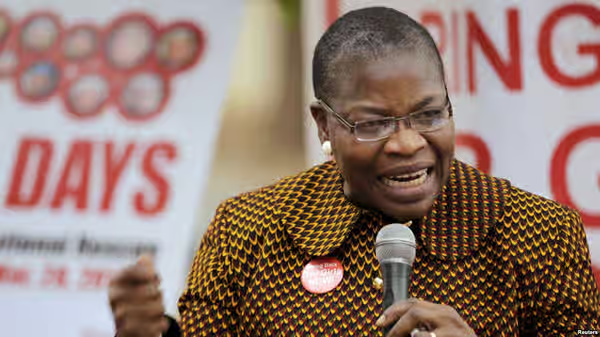
In what many see as a defining moment for Nigerian voices on the international stage, Dr Obiageli “Oby” Ezekwesili has been honoured with one of the world’s most respected anti-corruption recognitions. The event, held in Doha, Qatar, on Sunday, 14 December 2025, saw the Nigerian public figure and global governance advocate receive the International Anti-Corruption Excellence Award in the Lifetime/Outstanding Achievement category, a testament to her decades-long campaign for integrity and transparency in public life.
Ezekwesili’s work over the years has spanned continents and institutions. A former Vice President of the World Bank for Africa and co-founder of Transparency International, she has long been at the forefront of efforts to fight graft and promote accountable leadership. Her recognition in Qatar was the culmination of a rigorous evaluation process by an independent Assessment Advisory Board and the High-Level Award Committee, which judged her contributions to match the values the award seeks to celebrate.

A Moment of Recognition on the World Stage
The ceremony in Doha drew attention from diplomats and governance advocates across the globe. It was chaired by Dr Ali Bin Fetais Al Marri, the United Nations Special Advocate for the Prevention of Corruption and Chairman of the Award Committee. In a letter notifying Ezekwesili of her selection, Dr Al Marri expressed high regard for her achievements, emphasising how her work resonated with the principles of transparency and public service that the award honours.
For Ezekwesili, the accolade was not merely a personal milestone but a reflection of a shared struggle against a deeply rooted global challenge. She has worn many hats in her career, from public office holder to international civil society leader, but her voice on corruption and governance reforms has remained consistent and unyielding. Many observers note that her advocacy strikes at the heart of what holds back social and economic progress in many countries, Nigeria included.
While the award ceremony spotlighted her international stature, it also reminded audiences of the ongoing struggles at home. In recent months, Ezekwesili has spoken candidly about the state of corruption in Nigeria, characterising it as a pervasive force that has become entrenched within societal structures. At an event marking the launch of a leadership programme in Nigeria, she described corruption as corrosive and systemic, urging new generations of leaders to reject practices that undermine public trust and accountability.
What This Means for Nigeria’s Anti-Corruption Narrative
Ezekwesili’s win comes at a time when Nigeria continues to grapple with high levels of graft, which have had far-reaching effects on public resources, institutional integrity, and citizen confidence in governance. Her award draws global focus not only to her own efforts but also to the broader fight against corruption that many Nigerians and civil society groups continue to wage daily.
International recognition of this nature serves multiple purposes. On one hand, it elevates Nigeria’s presence in global discussions on transparency and governance. On the other, it reinforces the message that anti-corruption efforts are not only necessary but also valued at the highest levels of global diplomacy and policy discourse.
For many Nigerians, this recognition resonates on a personal level. Stories from every end of the country speak to frustrations with everyday corruption that affects access to public services, economic opportunities, and justice. Ezekwesili’s advocacy often echoes these lived realities, positioning anti-corruption not just as a policy issue but as a moral and social imperative.
Some commentators have linked the award to broader debates about governance in Nigeria, arguing that international acknowledgement of homegrown advocates may bolster internal momentum for reform. In a society where corruption scandals frequently make headlines and where faith in public institutions is continually tested, such accolades can help shift the narrative towards accountability and hope.
Voices from Home and Abroad
Reactions to Ezekwesili’s award have been mixed but deeply engaged. Supporters celebrate the recognition as overdue and a sign that hard work in the cause of justice and integrity can attract global respect. Many have taken to social media to share clips and messages of congratulations, framing the accolade as a beacon for Nigerians who continue to push for reform.
Across civil society networks, discussions have also emerged about the role of Nigerians in global governance spaces. Ezekwesili’s visibility on the world stage is seen by many as proof that voices from Africa, and particularly from Nigeria, can shape international policy conversations on corruption, governance, and development.
International governance experts, too, have noted the significance of recognising leaders who have sustained pressure on systems that resist transparency. Such recognition can create leverage for policy interventions and strengthen cross-border cooperation in tackling corruption, an issue that knows no single boundary.
The Road Ahead for Anti-Corruption in Nigeria
While the award marks a high point in Ezekwesili’s career, many see it as a call to action. The fight against corruption remains unfinished work. For Nigeria, the challenges are enormous: entrenched interests, weaknesses in institutional enforcement, and a history of governance struggles that have frustrated reforms.
Still, advocates believe that recognition of leaders like Ezekwesili can galvanise public demand for accountability. They argue that the values celebrated by the International Anti-Corruption Excellence Award are the same values that everyday Nigerians want to see reflected in governance at home.
Ezekwesili’s journey also underscores the importance of sustained civic engagement. Her work reminds Nigerians that anti-corruption is not the responsibility of a few individuals but a collective endeavour that requires participation from citizens, leaders, and institutions alike.
As the world acknowledges Nigerian voices in global advocacy circles, it also raises expectations for domestic progress. The challenge now for Nigeria’s leaders is to translate international recognition of its champions into tangible reforms that improve governance, strengthen institutions, and uphold the rule of law for all citizens.
In a country where the battle against corruption has often felt uphill, this moment in Doha offers a renewed sense of possibility. It underscores that the fight for integrity is both local and global, and that Nigerians committed to that cause can find support and respect on the world stage.
Oby Ezekwesili’s anti-corruption award not only celebrates her individual contributions but also amplifies the ongoing conversation about Nigeria’s future in governance and accountability. The recognition invites reflection, action, and a deeper commitment to the values that underpin just and prosperous societies.
Join Our Social Media Channels:
WhatsApp: NaijaEyes
Facebook: NaijaEyes
Twitter: NaijaEyes
Instagram: NaijaEyes
TikTok: NaijaEyes