
In an important development for both artificial intelligence and healthcare, OpenAI has confirmed the acquisition of health technology startup Torch in a deal reportedly worth about $100 million in equity. The move marks a bold step by the AI giant to strengthen its footprint in health-related tools and services as the industry evolves rapidly.
The acquisition, announced in early January, brings Torch’s team and technology into the heart of OpenAI’s ambitious ChatGPT Health strategy. The partnership could reshape how people interact with their personal medical information and how AI supports health management for users around the world.
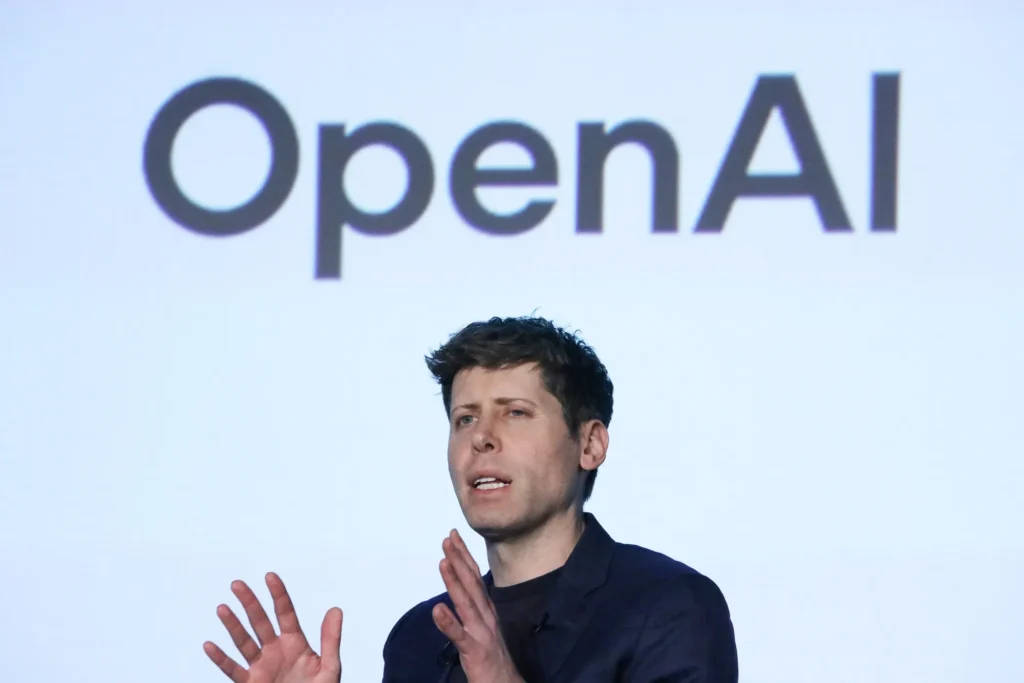
Table of Contents
A startup built for “unified medical memory”
Torch was established to tackle one of the most persistent problems in healthcare: scattered and siloed patient data. From lab results and hospital records to wearable health device data and medication histories, health information is often spread across unconnected systems. Torch’s founders designed the company’s platform to act as a “medical memory for AI,” pulling these fragmented data points into a single, coherent context engine that helps reveal a more complete picture of a user’s health.
The four-person team behind Torch, including co-founders Ilya Abyzov and Eugene Huang, built the technology with the aim of enabling AI systems to better understand and reason about an individual’s health journey. Their approach emphasises consolidating data from diverse sources to support deeper insights and clearer answers.
With the acquisition, that vision will now be scaled within OpenAI’s broader AI ecosystem, allowing the company’s growing number of health-focused users to benefit from richer contextual understanding during interactions with ChatGPT.

Strengthening ChatGPT Health with integrated data
OpenAI’s ChatGPT Health is still relatively new to the technology scene, but it has already attracted millions of users interested in exploring personal health questions with AI assistance. The service lets people upload and connect their medical records from a variety of sources, including wellness apps, to receive personalised insights that go beyond general information.
By bringing Torch’s capabilities into this framework, OpenAI is betting that better organisation and context around health data will be a cornerstone of next-generation AI health applications. Instead of simple Q&A, the goal is to allow deeper, longitudinal understanding of a person’s health history so that responses can be more tailored and relevant over time.
OpenAI has stressed that tools like ChatGPT Health are designed to support individuals’ understanding of their health and wellness, not to replace clinical care or formal medical advice. Instead, the technology will aim to help users interpret test results, prepare for appointments, and make informed decisions about diet, exercise and general wellbeing.
What the acquisition means for the AI and health sectors
This acquisition signals several important trends in both the AI and healthcare industries. First, it highlights how major AI companies are increasingly looking to specialised data infrastructure as strategic assets. While general-purpose AI models remain powerful, integrating real-world, personal data in meaningful ways requires robust systems that can manage privacy, context and continuity.
The deal also underscores growing competition among AI firms to lead in what has become an important vertical: health and wellness technology. Competitors in the space, such as Anthropic with its Claude for Healthcare tools, are likewise pushing boundaries in how AI can be applied in clinics, labs and consumer settings.
Industry observers believe that OpenAI’s move to embed a “unified medical memory” layer into ChatGPT could set new standards for how AI handles sensitive personal information. That said, privacy and trust will be crucial elements to get right if people are to adopt these tools widely. OpenAI has already stated that health-related interactions in ChatGPT Health will not be used to train its models, emphasising user control and safety in handling medical data.
For Torch’s founders, the acquisition represents a chance to see their technology reach a much broader audience than would have been possible on its own. Abyzov has said that joining OpenAI puts their ideas into the hands of hundreds of millions of users who already engage with ChatGPT for health information each week.

Looking ahead
With the integration of Torch’s team and technology, OpenAI is poised to push the boundaries of how AI can assist people in understanding and managing their health. The acquisition reflects a larger shift in how artificial intelligence companies are approaching sector-specific use cases, moving from generic chat interfaces toward specialised, data-driven services.
As AI continues to spread into everyday life, from financial planning to education and now health, the way personal data is used responsibly and securely will remain a central question. For users in Nigeria and beyond, tools like ChatGPT Health, enhanced by technology like Torch’s unified data engine, may become part of how people take charge of their wellbeing in the years ahead.
The acquisition of Torch offers a glimpse into that future, where AI does more than answer questions it anticipates needs, drawing from a richer, more complete understanding of individual health journeys.
Join Our Social Media Channels:
WhatsApp: NaijaEyes
Facebook: NaijaEyes
Twitter: NaijaEyes
Instagram: NaijaEyes
TikTok: NaijaEyes