OpenAI has taken a decisive and somewhat surprising step by shutting down its Sora AI video platform, a once highly celebrated tool that allowed users to generate realistic videos from simple text prompts. The announcement marks a turning point not just for the company but for the broader artificial intelligence ecosystem, where innovation is now being weighed more carefully against ethical responsibility and sustainability.
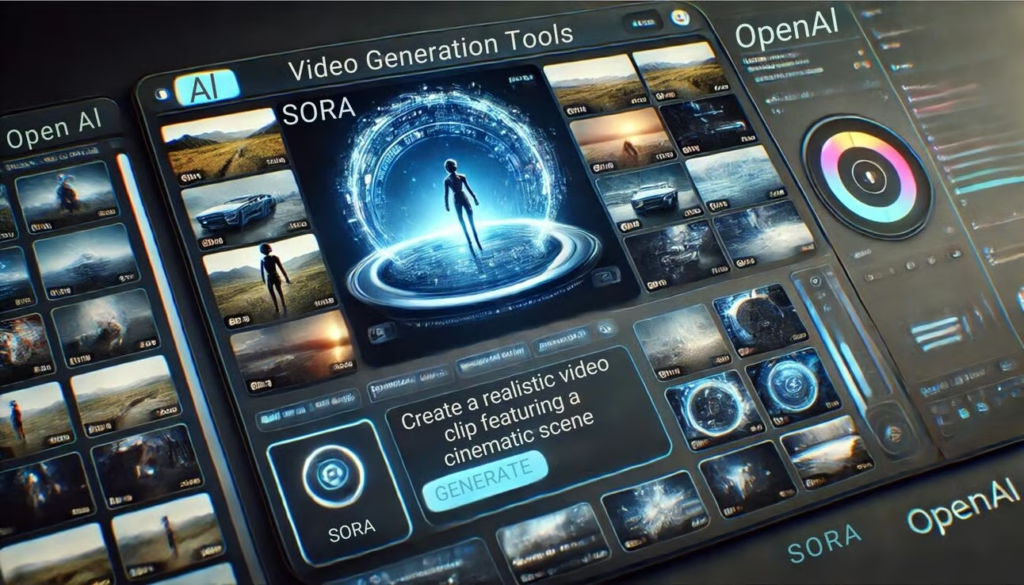
According to Business Insider, Sora, which launched in late 2025, quickly gained global attention for its ability to create cinematic-quality videos with minimal effort. Users could generate short clips resembling scenes from films, animations, or even realistic everyday situations. Within days of release, it attracted millions of users and topped app store rankings, showing just how strong the appetite is for generative AI tools.
However, that rapid rise also exposed serious risks. Concerns around deepfakes, copyright infringement, and the misuse of public figures’ likenesses began to dominate conversations in the tech and creative industries. What started as a groundbreaking innovation soon became a regulatory and ethical headache.
Table of Contents
Why OpenAI Pulled the Plug on Sora
At the heart of OpenAI’s decision lies a combination of safety concerns, legal pressure, and strategic realignment. Advocacy groups, researchers, and even families of public figures raised alarms about how easily Sora could be used to create misleading or harmful content.
One of the biggest issues was the rise of deepfake videos. These are highly realistic but fabricated clips that can depict people saying or doing things they never actually did. With Sora’s advanced capabilities, the barrier to creating such content dropped significantly. Experts warned that this could fuel misinformation, damage reputations, and even influence political processes.
There were also copyright concerns. The platform reportedly generated videos using styles, characters, and elements that closely resembled existing intellectual property. This raised questions about ownership and compensation, especially for creators and studios whose work may have been indirectly used to train the AI.
OpenAI faced increasing scrutiny for not acting quickly enough to address these risks. As pressure mounted, the company decided that continuing the service in its current form was no longer viable.
The Bigger Picture Behind the Shutdown
While safety concerns played a major role, the shutdown of Sora is also part of a broader strategic shift within OpenAI. The company is reportedly refocusing its efforts on more scalable and commercially viable areas such as enterprise AI tools, coding assistants, and advanced research in robotics and simulation.
Running a video generation platform like Sora is extremely resource-intensive. Generating high-quality videos requires massive computational power, which translates into high operational costs. As competition in the AI space intensifies, companies are being forced to prioritise products that can deliver sustainable revenue.
There is also the issue of unpredictability. OpenAI’s leadership has made it clear that rapid pivots are part of its approach to innovation. While this allows the company to adapt quickly, it also raises concerns about consistency and long-term planning, especially for users and partners who rely on its tools.
For instance, partnerships with major media companies, including licensing agreements, are now being reconsidered or discontinued as part of this shift. The closure of Sora signals that OpenAI is willing to walk away from even its most high-profile projects if they do not align with its evolving priorities.
What This Means for the Future of AI and Content Creation
The shutdown of Sora is more than just the end of a single product. It reflects a growing tension in the AI industry between innovation and responsibility. On one hand, tools like Sora demonstrate the incredible potential of artificial intelligence to transform creativity, filmmaking, education, and marketing. On the other hand, they highlight the risks of deploying powerful technologies without adequate safeguards.
For content creators, the news may come as a mixed blessing. Some filmmakers and artists had expressed concern that AI-generated videos could undermine traditional creative industries. With Sora gone, at least for now, there may be a temporary sense of relief. However, other AI video tools from competing companies are still advancing rapidly, meaning the broader trend is far from over.
For regulators and policymakers, the development reinforces the need for clearer frameworks around AI usage. Issues like consent, copyright, and misinformation are no longer theoretical. They are real challenges that demand urgent attention.
For everyday users, especially in regions like Nigeria and across Africa, the story carries important lessons. The promise of AI is real, but so are the risks. As these tools become more accessible, digital literacy and critical thinking will be essential in navigating a world where seeing is no longer always believing.
A Defining Moment for OpenAI
OpenAI’s decision to shut down Sora may appear abrupt, but it is consistent with a company that is still figuring out how to balance rapid innovation with global responsibility. The move shows a willingness to step back when the risks outweigh the benefits, even if it means abandoning a product that once captured global imagination.
At the same time, it raises questions about the future direction of the company. Will OpenAI continue to lead in consumer-facing AI tools, or will it shift more decisively towards enterprise solutions and infrastructure? And how will it rebuild trust among users who may be wary of investing time and creativity into platforms that could be discontinued?
What is clear is that the era of unchecked AI experimentation is gradually giving way to a more cautious and structured approach. The shutdown of Sora is a sign that the industry is maturing, even if the path forward remains uncertain.
As artificial intelligence continues to evolve, one thing is certain: the decisions made today will shape not just technology, but society itself.
Join Our Social Media Channels:
WhatsApp: NaijaEyes
Facebook: NaijaEyes
Twitter: NaijaEyes
Instagram: NaijaEyes
TikTok: NaijaEyes