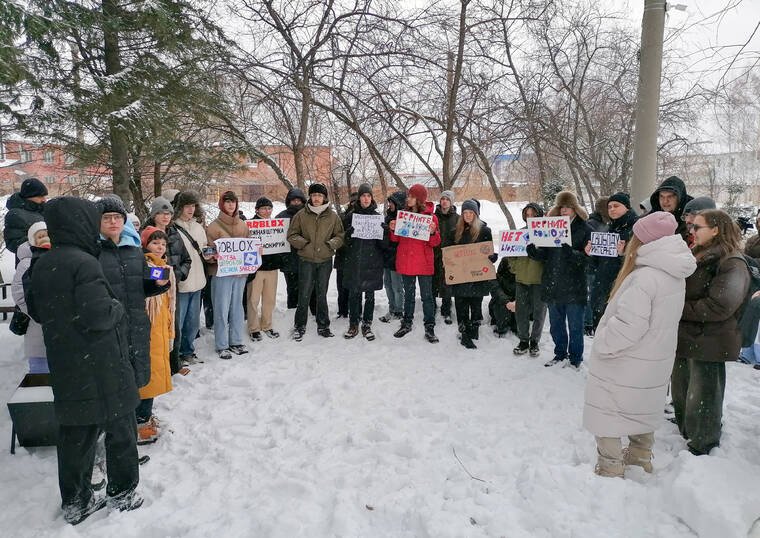
A fresh wave of unrest is sweeping through parts of Russia after the federal government moved to block access to the globally popular gaming platform Roblox. The decision by Roskomnadzor, Moscow’s media and internet regulator, has ignited deep discussion across the country about digital freedoms, child safety, censorship and the role of the state in controlling online spaces. In an unusual public demonstration that reflects rising frustration, citizens in the Siberian city of Tomsk took to the streets to protest against what many see as an overreach of government power, according to Reuters.
The protests in Tomsk are remarkable because visible public demonstrations against state policy remain rare, especially on issues of technology and culture. The Roblox ban, which went into effect in early December, has struck a nerve with families, children and tech-savvy youth who argue that the platform is more than just a game. For many Russians, Roblox represents a creative online world where users build, share and interact in ways that are central to their daily livesPresident Vladimir Putin’s government has increasingly restricted foreign social media platforms and messaging services in recent years, citing national security and cultural protectionist goals. The ban on Roblox fits squarely within this pattern, but it has also touched a sensitive chord by affecting a digital space used by millions of young Russians, according to Investing.com.
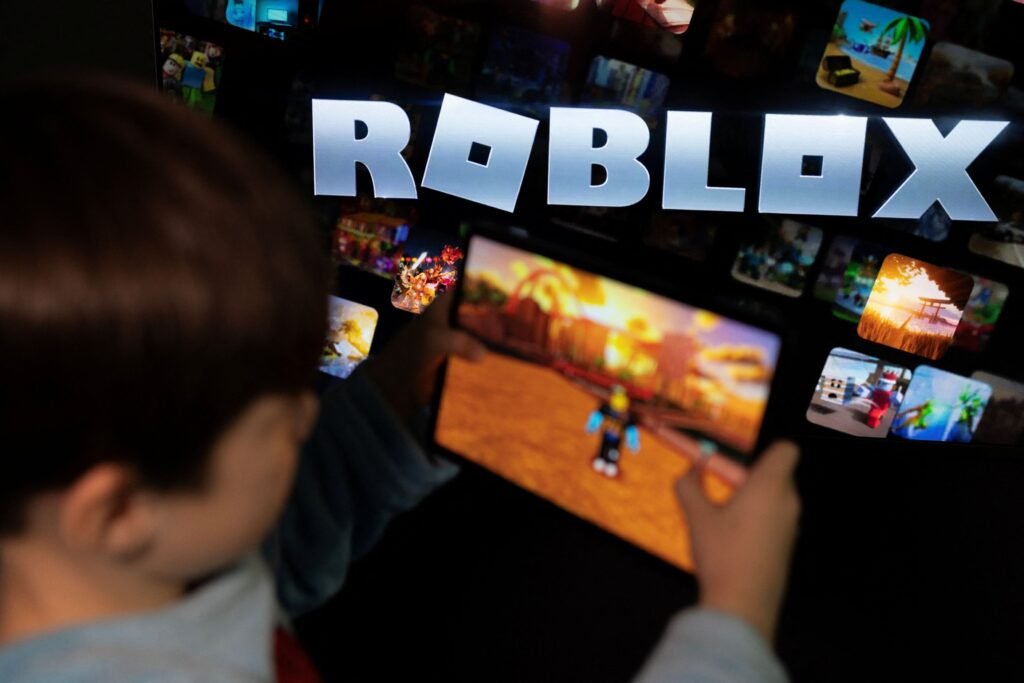
Table of Contents
Protesters Stand in the Snow to Defend Their Digital Space
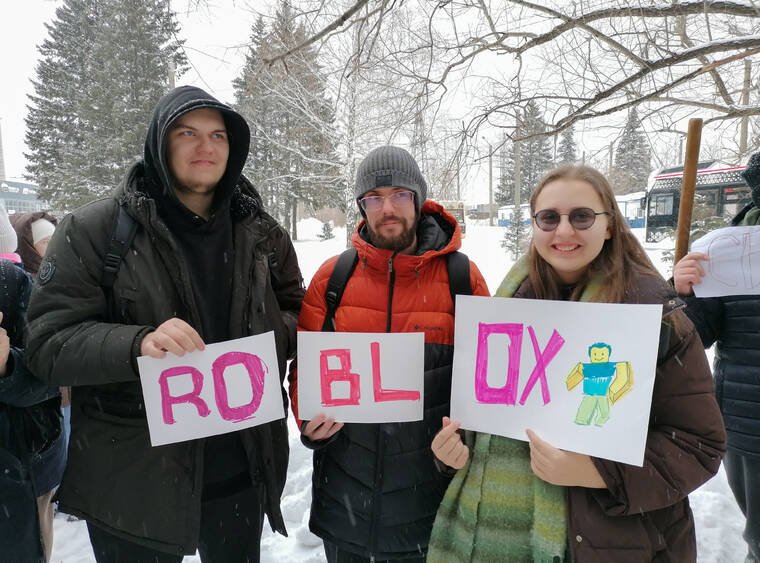
On a cold Sunday in Tomsk’s Vladimir Vysotsky Park, around two dozen people gathered, clutching homemade signs and braving freezing temperatures to voice their displeasure at the ban. Some of the banners read “Hands off Roblox” and “Roblox is the victim of the digital curtain.” The sight of parents, children and tech-enthusiasts united in protest highlighted the personal impact of the ban on everyday life.
Organisers of the protest said they were motivated by more than just frustration at losing access to a game. Many see the ban as part of a broader tightening of internet freedoms that threatens personal choice and expression. “When you start blocking tools we use to communicate, to learn, to create, you are telling us what we can and cannot be part of,” one participant told local media. For some families, Roblox is a virtual playground where their kids learn basic coding, social skills, and teamwork — experiences they believe are now being unfairly stripped away, according to Yahoo News.
The protest, though modest in number, reflects a growing sentiment among Russians who feel increasingly disconnected from global digital platforms and frustrated by restrictions that appear, to them, unjust and ineffectual. In many cases, young people and parents argue that technical workarounds such as VPNs make the ban moot and only serve to deepen resentment towards authorities.
Government Justifies Ban on Safety and Cultural Grounds
Roskomnadzor has defended its actions by emphasising concerns over content that it believes is harmful to children’s moral and spiritual development. According to official statements, the platform is “rife with inappropriate content,” including material linked to violence, extremist themes and other subjects deemed unsuitable under Russian law. These claims draw on broader anxieties within the government about foreign cultural influence and national values.
The regulator’s argument is that by blocking access to Roblox, authorities are protecting children from exposure to content that could put them at risk. This includes alleged scenarios of adult communication with minors and images or interactions that violate Russian content standards. Critics, however, cast doubts on the effectiveness of such measures, arguing that digitally savvy users can simply sidestep the block with virtual private networks and proxy services, leaving the underlying problem unresolved.
Russia’s broader censorship strategy is not new. Platforms like YouTube, Instagram, WhatsApp and Snapchat have all faced varying degrees of restriction in recent years, often tied to the government’s desire to control information flows during wartime and to sideline Western influence online. Many independent observers say the cumulative effect of these actions is a shrinking digital space for ordinary Russians.
Debate Widens on Censorship, Child Safety and Digital Freedom
The Roblox ban has reopened discussions across Russian society about how to balance child protection with digital freedom. Some parents and educators support the government’s stance, expressing genuine concerns about how unrestricted online platforms can expose children to harmful interactions and content. However, others argue that responsible digital education and parental guidance are better tools than outright blocking.
Tech analysts point out that the ban underscores the absence of strong domestic alternatives to the likes of Roblox and other global platforms. While Russia has invested in developing local apps and services, none have yet matched the popularity or creative appeal of major international counterparts. This digital gap, some argue, leaves Russian internet users feeling cut off from the global tech landscape.
The protest in Tomsk, modest though it was, may signal a shift in public willingness to challenge internet policy decisions when they touch everyday life. Observers note that public dissent on cultural and technology issues is particularly unusual in a country where political demonstrations are heavily regulated and often met with swift response from authorities.
Roblox itself, headquartered in California, has reiterated its commitment to safety through robust content moderation and built-in protections designed to keep users secure. The company has faced similar safety concerns internationally, including bans in other countries over child protection worries. But it continues to defend its platform as a creative and social space for young users worldwide.
What Comes Next for Digital Rights in Russia
As debate rages about the Roblox ban, it is clear that digital governance and internet freedoms have become hot-button issues in Russia. Whether this protest in Siberia sparks further demonstrations remains to be seen, but for now, it has given voice to a generation of Russians who feel passionately about their right to access and participate in global digital culture.
The global gaming community and digital rights advocates will likely keep a close eye on how this situation unfolds. In a world where online platforms increasingly shape communication, learning and entertainment, the balance between safety and freedom has never been more important. For many in Russia, the Roblox ban is more than a policy decision — it is a symbol of the wider tension between state control and the digital lives of ordinary citizens.
Join Our Social Media Channels:
WhatsApp: NaijaEyes
Facebook: NaijaEyes
Twitter: NaijaEyes
Instagram: NaijaEyes
TikTok: NaijaEyes