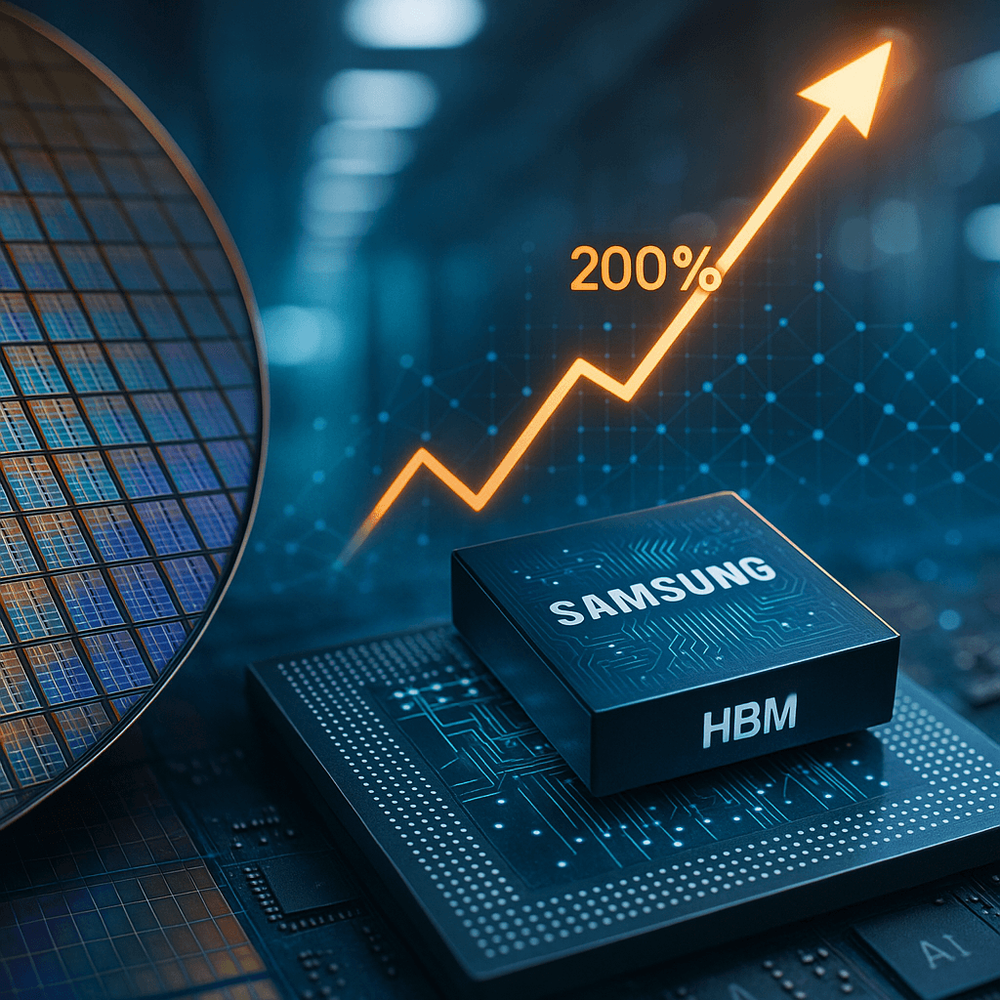
Samsung Electronics is on the verge of delivering one of the most remarkable financial performances in its history, with early projections pointing to a massive jump in quarterly profit driven by the global rush into artificial intelligence. The South Korean tech giant, already the world’s leading memory chip producer, is benefitting heavily from a surge in demand for advanced semiconductors powering AI systems, data centres, and next-generation computing.
According to analyst estimates, the company is expected to post an operating profit of about 40.5 trillion won, roughly 26.9 billion dollars, for the first quarter of 2026. That figure represents a sixfold increase compared to the same period last year and is close to what the company generated in total profit for the whole of 2025.
This anticipated performance is not just a routine growth story. It reflects a broader shift in the global technology landscape, where artificial intelligence is no longer a future concept but a present-day economic driver reshaping industries and corporate fortunes.
Table of Contents
AI Boom Drives Unprecedented Chip Demand
At the centre of Samsung’s expected windfall is the ongoing AI revolution. Companies across the world are investing billions of dollars into building AI infrastructure, from cloud computing platforms to advanced machine learning systems. All of these technologies rely heavily on high-performance memory chips, particularly DRAM, where Samsung dominates globally.
The result has been a sharp increase in chip prices, creating what industry experts describe as a “supercycle” for memory semiconductors. Demand has significantly outpaced supply, pushing contract prices higher and strengthening Samsung’s pricing power in the market.
This trend did not begin overnight. Over the past year, the semiconductor industry has gradually recovered from a downturn, with AI-related demand accelerating the rebound. By late 2025, Samsung had already started seeing strong earnings growth, supported by rising prices for conventional memory chips and expanding data centre investments.
Now in 2026, that momentum has intensified. Analysts say the current demand pipeline remains strong, with backlogs stretching across multiple quarters. Even with some recent softening in spot prices, many experts believe the dip is temporary and does not signal a slowdown in the broader AI-driven demand cycle.
For a company like Samsung, which has invested heavily in semiconductor manufacturing capacity and research, this environment presents a near-perfect opportunity to maximise returns.
Record Profits Come with Global Risks
Despite the impressive outlook, Samsung’s growth story is not without its complications. One of the major concerns facing the company is the impact of geopolitical tensions, particularly conflicts in the Middle East, which have led to rising energy costs and potential disruptions in supply chains.
Semiconductor production is highly energy-intensive and depends on a complex network of global suppliers. Any instability in energy markets or raw material supply could increase production costs and affect margins.
There are also emerging technological challenges. Innovations such as new memory-efficient technologies from competitors could reduce demand for certain types of chips, at least in the short term. In addition, fluctuations in DRAM prices have already triggered some caution among investors, leading to volatility in Samsung’s stock performance in recent weeks.
Another issue is the potential impact of rising costs on end consumers. As memory chips become more expensive, manufacturers of smartphones, laptops, and other electronics may pass those costs on to buyers. This could weaken demand in some segments, indirectly affecting Samsung’s non-chip businesses.
Still, the company appears to be taking proactive steps to manage these risks. One strategy includes negotiating longer-term supply contracts with major clients, which helps stabilise revenue and reduce exposure to short-term price fluctuations.
Other Business Units Face Pressure
While Samsung’s semiconductor division is booming, other parts of its business are facing a more difficult reality. The company’s smartphone, display, and contract chip manufacturing units are expected to record weaker performance in the same quarter.
The main reason is cost pressure. As memory prices rise, the cost of producing consumer electronics also increases, squeezing profit margins. At the same time, competition in the global smartphone market remains intense, with rivals offering similar features at competitive prices.
Samsung’s contract chip manufacturing business, which competes with Taiwan’s TSMC, is also struggling to achieve consistent profitability. Although the division has secured new partnerships, including involvement in AI processor production, it is still operating under significant pressure.
Labour-related issues may further complicate matters. Reports indicate that worker unions in South Korea are pushing for changes to bonus structures and have threatened industrial action. If not managed properly, this could disrupt operations at a critical time when demand for chips is at its peak.
This contrast between booming semiconductor profits and weaker performance in other divisions highlights a key challenge for Samsung: balancing its diverse business portfolio in a rapidly changing global market.
What This Means for Nigeria and Global Tech
For Nigeria and the wider African market, Samsung’s performance carries important implications. As one of the world’s largest electronics manufacturers, its pricing and production decisions influence the cost and availability of devices used across the continent.
If memory chip prices continue to rise, Nigerians may see higher prices for smartphones, laptops, and other digital tools. This could affect everything from education technology adoption to small business operations that depend on affordable devices.
On the other hand, the global AI boom presents opportunities. Increased investment in data centres and digital infrastructure could eventually expand into emerging markets, including Africa. For Nigerian tech entrepreneurs and developers, this shift may open new doors in areas like cloud computing, AI services, and digital innovation.
Globally, Samsung’s projected results reinforce a clear message: artificial intelligence is now the driving force behind the next phase of technological and economic growth. Companies that control critical components such as semiconductors are positioned to benefit the most.
As the company prepares to release its official earnings report later in April, all eyes will be on whether it meets or exceeds these already ambitious projections. Some analysts are even predicting profits as high as 51 trillion won, which would set a new benchmark for the industry.
What is certain is that Samsung’s performance in 2026 will serve as a key indicator of where the global tech industry is headed. For investors, policymakers, and everyday consumers alike, the message is clear: the AI era is not coming; it is already here, and it is reshaping the rules of the game.
Join Our Social Media Channels:
WhatsApp: NaijaEyes
Facebook: NaijaEyes
Twitter: NaijaEyes
Instagram: NaijaEyes
TikTok: NaijaEyes