Ahead of the 2026 national budget presentation by President Bola Tinubu, the Senate on Tuesday lowered the oil price benchmark for the projected N54.46 trillion budget from $64.8 to $60 per barrel, while maintaining all other projections and parameters outlined in the 2026–2028 Medium Term Expenditure Framework (MTEF) and Fiscal Strategy Paper (FSP).
Join our WhatsApp community
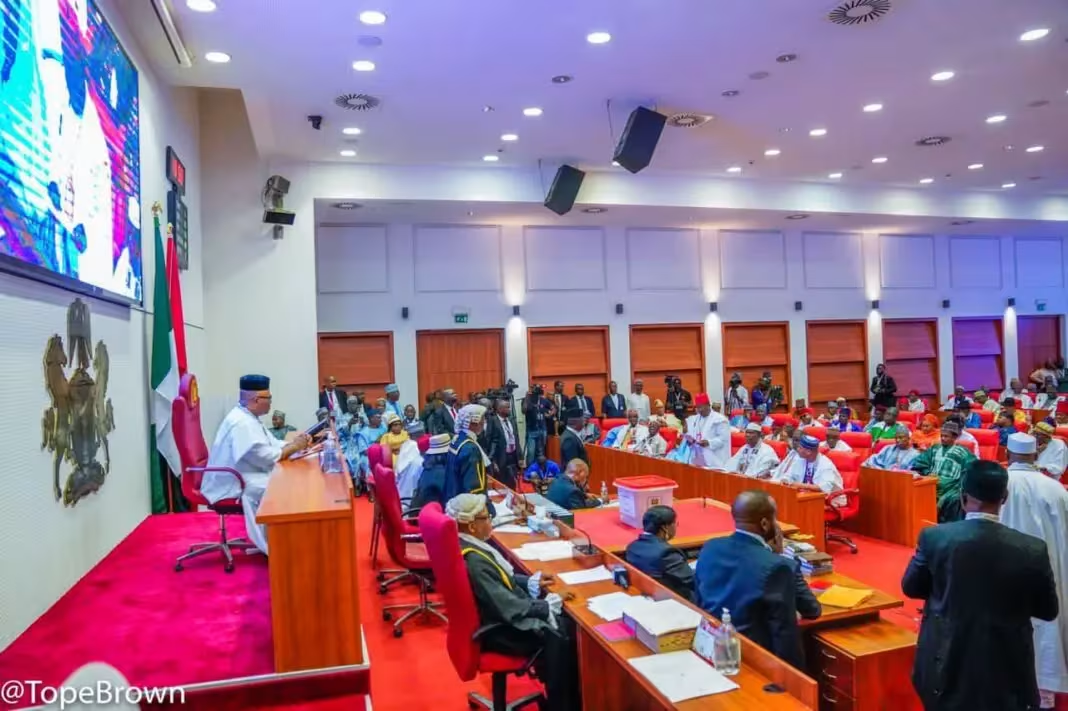
The adjustment followed recommendations from the Senate Committee on Finance, presented by its chairman, Senator Sani Musa (APC, Niger East), during an extended plenary session.
Senator Musa explained that the reduction reflects the impact of global geopolitical tensions in Europe and the Middle East and the sensitivity of international crude oil prices.
Recommended adjustments of $64.30 and $65.50 per barrel oil price benchmark for 2027 and 2028 fiscal years to $65 and $70 per barrel respectively by the committee were also approved by the Senate.
It, however, sustained domestic crude oil production projections of 1.84 million barrels per day (mbpd) for 2026, 1.88mbpd for 2027 and 1.92mbpd for 2028, expressing confidence in ongoing reforms and efforts to stabilise output.
On macroeconomic assumptions, the Senate endorsed projected exchange rates of N1,512 to the dollar in 2026, N1,432.15 in 2027 and N1,383.18 in 2028, aligning with the Central Bank of Nigeria’s policy direction to stabilise the naira through effective fiscal and monetary policy coordination.
Inflation is projected to moderate steadily over the medium term, with rates of 16.5 per cent in 2026, 13 per cent in 2027 and 9 per cent in 2028. The committee anchored these projections on the commitment of monetary authorities to tame inflationary pressures.

Similarly, the Senate sustained real GDP growth projections of 4.68 per cent for 2026, 5.96 per cent for 2027 and 7.9 per cent for 2028, citing ongoing economic reforms and the anticipated gains from tax reforms expected to take firmer effect from 2026.
A major plank of the report was the emphasis on effective implementation of newly enacted Tax Acts as veritable instruments for economic reform, growth and development.
In this vein, the committee recommended that the Federal Government implement a National Scanning Policy within the National Single Window of the Nigeria Revenue Service, in collaboration with relevant agencies.
The policy, it said, would enhance revenue assurance, improve trade facilitation, reduce leakages, strengthen transparency and bolster national security.
On fiscal operations, the Senate approved the 2026 Federal Government budget framework with proposed total expenditure of N54.46 trillion. Of this amount, FGN retained revenue is estimated at N34.33 trillion, while new borrowings—both domestic and foreign—are put at N17.88 trillion. Debt service obligations are projected at N15.52 trillion.
The framework also provides N1.376 trillion for pensions, gratuities and retirees’ benefits, while the fiscal deficit is pegged at N20.13 trillion.
Capital expenditure, exclusive of transfers, was sustained at N20.131 trillion, alongside statutory transfers of N3.152 trillion and a Sinking Fund provision of N388.54 billion.
Total recurrent (non-debt) expenditure was approved at N15.265 trillion, with special intervention funds for recurrent and capital spending set at N200 billion and N14 billion, respectively.
In concluding remarks, the committee expressed profound appreciation to the Senate and members of the Committee on Finance for their commitment in discharging what it described as a critical national assignment.
It expressed optimism that approval and diligent implementation of the recommendations would serve as a catalyst for sustainable economic prosperity in Nigeria.
In his remarks, the President of the Senate, Senator Godswill Akpabio commended the committee for a job well-done which according to him, serves as veritable platform for presentation of the 2026 budget by President Bola Tinubu before December 31, this year.
Join our WhatsApp community
Join Our Social Media Channels: