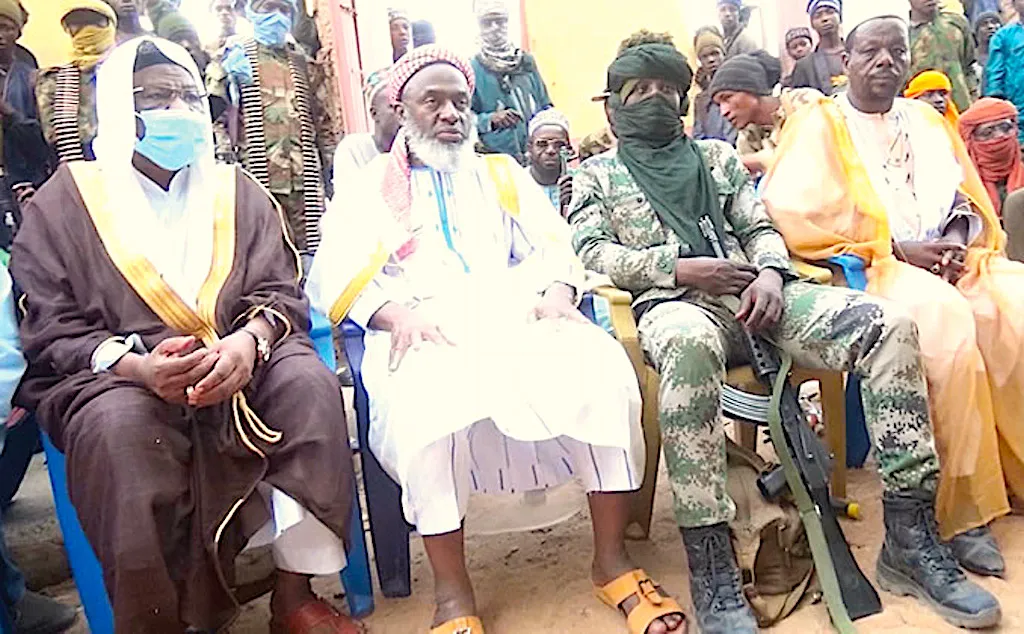
The recent events and public commentary surrounding Sheikh Ahmad Gumi have sparked a fierce debate about justice, national security, and public accountability. Amid widespread insecurity, mass kidnappings, and growing outrage over perceived double standards in Nigeria’s justice system, many voices now challenge the fact that Gumi remains uncharged and free, despite his controversial actions and statements. Legal analysts and civil society actors argue that a truly fair system would have held him to account long ago.
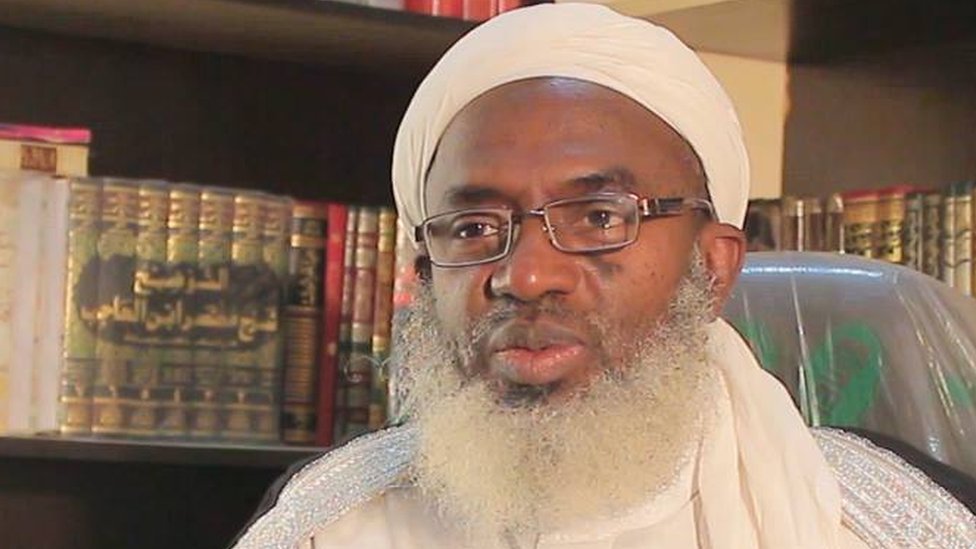
The Challenge of Selective Justice
On 21 November 2025, a lawyer and political analyst, Malcolm Emokiniovo Omirhobo, publicly criticised the glaring discrepancy in how two high-profile figures are being treated by the law. While Nnamdi Kanu, leader of Indigenous People of Biafra (IPOB), was arrested, tried and sentenced to life in prison, Sheikh Gumi, whose frequent interactions with armed bandit groups and terrorists have drawn sharp criticism, remains uninvestigated. Omirhobo described this as “a clear case of selective justice.”
According to the lawyer, Gumi’s ongoing liberty contradicts constitutional guarantees of equality before the law and equal protection under Sections 17, 36 and 42 of Nigeria’s 1999 Constitution. He pointed to the fact that the government treated speech by one individual as criminal, while seemingly rewarding or tolerating far more dangerous conduct by another. 
The contradictions are stark: where one man is prosecuted for making inflammatory broadcasts, another freely roams, entering hideouts of known terrorists, negotiating with armed criminals responsible for mass killings and abductions, publicly defending their actions, yet facing no arrest, no investigation, no prosecution. To critics, this is not the rule of law but rule by selective discretion.
Also Read: Sheikh Gumi Stirs Outrage with Bizarre Claim: Kidnapping Children ‘Better’ Than Killing Soldiers
Controversial Actions and Public Outcry
Gumi’s involvement with armed groups is not abstract or theoretical. In recent interviews and public statements, he has defended his practice of negotiating with bandits, claiming both the sacred texts, the Quran and the Bible, allow for such dialogue if it can stop bloodshed. He argued that in situations where lives are at stake, negotiation must remain a legitimate approach. 
He further asserted that he acts as a peacemaker, not a bandit spokesman, arguing that confronting the root causes of insurgency, understanding grievances, and offering alternatives through dialogue is the only sustainable path to peace. 
But such stances have sparked condemnation. Among his harshest critics is Okon Lagos, a well-known actor, who described Gumi as a “proven banditry apologist.” He called on the authorities to investigate and prosecute the cleric on terrorism-related charges. Okon Lagos argued that continued tolerance of Gumi’s actions undermines the safety of Nigerians and betrays the victims of banditry. 
Others have voiced concern that Gumi’s rhetoric and high-profile interaction with criminals could erode national unity and fuel religious or ethnic tensions. Former presidential spokesman for the Southeast, Denge Josef Onoh, warned that remarks capable of inflaming divisions are dangerous in a country striving for stability and cohesion. 

Why Gumi’s Continued Freedom Feels Unbearable to Many Nigerians
For many who have suffered the consequences of banditry, kidnappings, and both human and material loss, Gumi’s public freedom is more than an abstract grievance; it is deeply personal and painfully symbolic. In a nation where justice often feels arbitrary and selective, the contrast between Kanu’s incarceration and Gumi’s immunity sends a painful message about who the law protects and who it punishes.
The problem is not just the professional or legal hypocrisy; it is the eroding public trust in the system. When people see that someone who fraternises with known criminals, negotiates on their behalf, and even defends their actions, remains untouched, while others for “lesser offences” are jailed, cynicism and resentment grow. It undermines the legitimacy of institutions meant to protect citizens.
Critics argue that such selective application of justice also sends the wrong signal to terrorists and other criminals. If mediators who negotiate with criminals remain free, it could encourage more lawlessness and deepen insecurity. The message becomes: loyalty, connections, or notoriety might shield you, but ordinary citizens will face the full weight of the law.
Conclusion: Justice Must Be Equal, or It Is Not Justice
As Nigeria grapples with persistent insecurity, rising kidnappings and deep social fissures, the resolve to uphold justice must mean more than prosecuting the powerless. It must also mean holding the powerful accountable. Sheikh Ahmad Gumi’s continued freedom, despite mounting evidence and public calls for his prosecution, stands in stark contrast to the fate of others like Nnamdi Kanu.
If Nigeria wants to prove that it is serious about security, rule of law, and equality before the law, then neutrality must extend to everyone, irrespective of religion, region or social influence. In a sane country, many believe, Sheikh Gumi would not still be walking free.
Join Our Social Media Channels:
WhatsApp: NaijaEyes
Facebook: NaijaEyes
Twitter: NaijaEyes
Instagram: NaijaEyes
TikTok: NaijaEyes