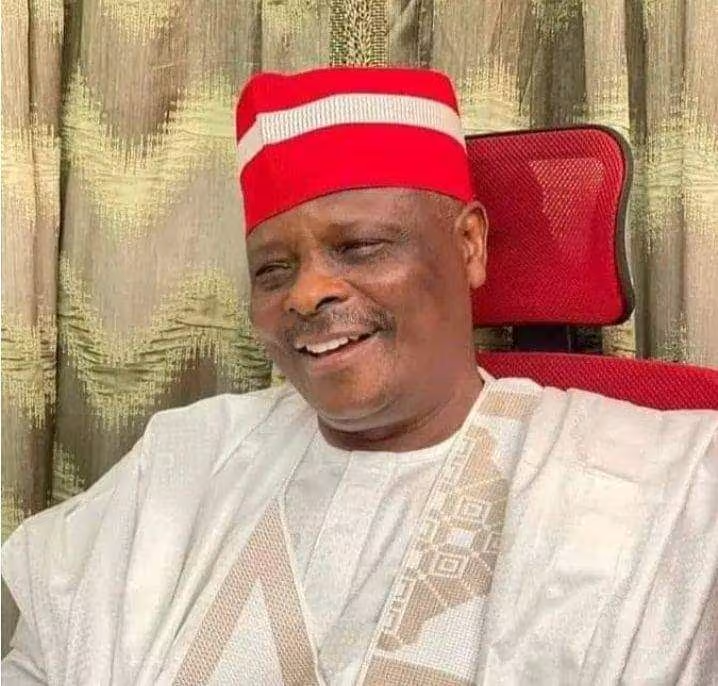

The vice-presidential candidate of the Nigerian Democratic Congress (NDC), Rabiu Kwankwaso, has expressed concerns over the proposed establishment of state police, warning that the initiative could be abused for political purposes.
Speaking during an interview on News Central TV on Thursday night, the national leader of the Kwankwassiyya Movement argued that state governors could exploit state-controlled police forces to advance their political interests.
Kwankwaso also attributed the growing calls for state police to what he described as a failure of leadership in Northern Nigeria, insisting that better governance would have reduced the demand for such a security structure.
“There is a huge leadership failure in Northern Nigeria. State police is a result of that failure,” he said.
He further cautioned against the widespread circulation of small arms, stressing that the government must ensure weapons do not fall into the wrong hands.
“The governors would want to use them for political protection. The government must not allow the circulation of small arms just like that,” he added.
BACKSTORY:
The debate over the creation of state police has remained one of Nigeria’s most contentious security issues, driven by worsening insecurity, including banditry, kidnapping, terrorism, and communal clashes across the country. Supporters argue that decentralising policing would improve response times, enhance intelligence gathering, and allow states to address local security challenges more effectively.
However, opponents have consistently warned that state police could be manipulated by governors to intimidate political opponents, influence elections, and suppress dissent, especially in states where democratic institutions are weak.
Successive administrations have revisited the proposal, with President Bola Tinubu’s government indicating support for broader discussions on establishing state police as part of efforts to reform Nigeria’s security architecture. Despite the growing push, concerns over funding, oversight, accountability, and potential political abuse continue to dominate the national conversation.
Rabiu Kwankwaso’s latest remarks add to the ongoing debate, as he cautions that without strong safeguards, the introduction of state police could create fresh political and security challenges ahead of the 2027 general elections.