A fresh analysis by BudgIT, the civic-tech group, has exposed troubling gaps in how Nigerian states fund two of the most vital public services: education and health. According to the 2025 edition of its State of States report, many states are falling short on their financial commitments, signalling deeper issues in budget credibility and governance.
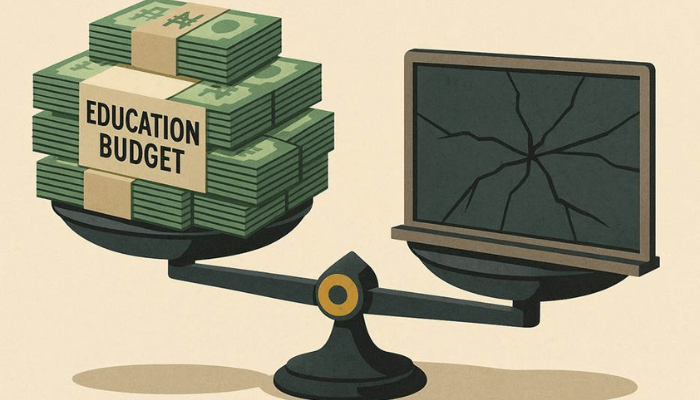
BudgIT’s report shows that while states budgeted ₦2.41 trillion for education, only ₦1.61 trillion—about 66.9%—was actually spent. On the health side, they allocated ₦1.32 trillion but ended up spending ₦816.64 billion, a modest 61.9% implementation rate.
These numbers suggest that budget allocations are not translating fully into service delivery. Even more concerning is that per capita spending remains low: on average, ₦6,981 per person for education and ₦3,483 for health, as reported by The Jour.
Spotlight on Best and Worst Performers
Despite the overall under-utilisation, a handful of states stood out for doing well in certain areas. In education, nine states—including Edo, Delta, Katsina, Rivers, Yobe, Ekiti, Bayelsa, Bauchi, and Osun—achieved over 80% of their budgeted allocations, with Edo, Delta, and Katsina surpassing 100%.
When it comes to health, only seven states reached the 80% implementation threshold. These are Yobe, Gombe, Ekiti, Lagos, Edo, Delta, and Bauchi. Notably, Yobe State achieved a remarkable 98.2% expenditure rate for its health allocation, though its absolute spending (₦13.24 billion) ranks it only 24th among all states.
Even among states that executed their budgets well, the per capita figures remain troubling. For example, only Lagos, Bayelsa, Edo, Abia, Kwara, Niger, and Delta spent more than ₦5,000 per person on health.
Root Causes: Why the Shortfall?
BudgIT’s findings raise serious questions about how states manage their finances. According to the organisation’s Global Director, Oluseun Onigbinde, the issue isn’t always about how much is budgeted, but about whether the money gets used for its intended purpose.
There are several possible reasons for the shortfalls:
- Weak Budget Credibility: The gap between budgeted and actual spending suggests that states may over-promise in their fiscal plans.
- Over-reliance on Federal Allocations: Many states still depend heavily on FAAC (Federation Account) transfers, which may limit their flexibility in funding priority sectors.
- Fiscal Priorities: Some states might prioritise recurrent costs (salaries, overheads) over capital investments or social services.
Implications and Calls to Action
The shortfall in funding for education and health has long-term consequences. Underfunded schools may lack infrastructure, learning materials, or adequately trained teachers. In health, implementation gaps can undermine the delivery of essential services, leaving citizens underserved and vulnerable.
BudgIT is calling on state governments to:
- Strengthen budget implementation — not just plan well, but execute well.
- Improve fiscal transparency and accountability so citizens can track how their taxes are being used.
- Prioritise human capital: allocate more resources to education and health, not just in name but in real spending.
- Embrace deeper fiscal reforms, including better domestic revenue mobilisation and responsible debt management.
Join Our Social Media Channels:
WhatsApp: NaijaEyes
Facebook: NaijaEyes
Twitter: NaijaEyes
Instagram: NaijaEyes
TikTok: NaijaEyes
READ THE LATEST EDUCATION NEWS