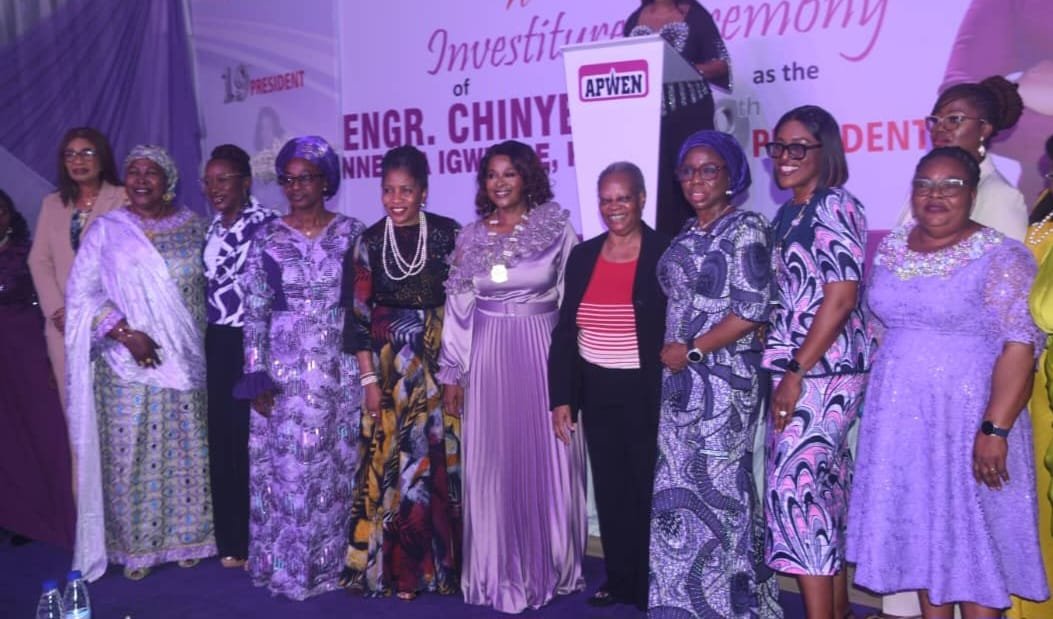
In a powerful declaration that resonated across the engineering and education sectors, the newly inaugurated 19th President of the Association of Professional Women Engineers of Nigeria, Chinyere Igwegbe, outlined a bold vision for empowering young girls and early-career engineers in Science, Technology, Engineering and Mathematics (STEM). Her remarks, made during her investiture ceremony in Abuja, highlighted a renewed focus on expanding opportunities for girls who have long been underrepresented in technical fields.
Igwegbe’s address marked an important moment for gender equity in Nigeria’s engineering landscape. She spoke with clarity and passion about APWEN’s mission to nurture, equip and inspire future female leaders in STEM, focusing on initiatives that cultivate skills from secondary school through to university and into professional practice. Her pledge reflects growing momentum among industry leaders rallying behind programmes designed to break down barriers and open doors for the next generation of innovators, as reported by the News Agency of Nigeria.
Table of Contents

A Vision for Girls in STEM and Emerging Engineers
At the heart of Igwegbe’s message was a firm commitment to creating an environment that supports both learning and practical engagement for girls and young engineers. She emphasised that early exposure is key, and outlined strategies to integrate structured robotics competitions for secondary school students alongside advanced robotics challenges targeting undergraduates. These activities, she said, are not merely competitions but foundational experiences that teach problem-solving, collaboration and technical creativity.
Building on ongoing efforts, Igwegbe noted that APWEN will deepen its focus on research and development programmes, strengthen partnerships with government, industry and academic institutions, and expand initiatives that empower youth to be both employable and entrepreneurial. This comes at a time when stakeholders across the country are increasingly advocating for an education system that delivers practical skills and real-world readiness.
Her commitment aligns with previous APWEN activities, which have seen the association engage girls through outreach, mentorship and hands-on initiatives. For example, STEM engagement projects in Lagos involved practical demonstrations on renewable energy and robotics aimed at demystifying science subjects and sparking interest among learners.

Strengthening Institutional Partnerships and Policy Engagement
During the investiture event, the President of the Nigerian Society of Engineers, Ali Rabiu, urged APWEN to intensify structured engagement with government at all levels in order to fortify women’s participation in national development and influence public policy. He called for more scholarships, research funding, and stronger industry-academia linkages that would widen the pipeline for female engineers. According to Rabiu, integrating engineering perspectives into policy design and implementation is essential for sustainable national growth, particularly in infrastructure, digital transformation and industrialisation.
This call for policy engagement echoes a larger conversation in Nigeria and across Africa about the importance of creating enabling environments where girls and women are fully supported to pursue careers in STEM. Educators, industry leaders and policymakers have increasingly recognised that diversity in STEM enhances innovation, fosters creativity and drives economic resilience.
Igwegbe’s agenda also emphasised the importance of membership growth within APWEN and building a robust secretariat that can coordinate programmes, unlock research funding, and create opportunities for internships and global exposure. These efforts are vital in bridging gaps that often prevent young engineers from accessing meaningful professional experiences.
Celebrating Progress and Mapping Future Impact
Reflecting on her tenure, the outgoing APWEN President, Adebisi Osim, highlighted the association’s achievements in expanding chapters nationwide and strengthening collaborations with local and international partners. Under her leadership, APWEN intensified professional development efforts, expanded community outreach, and elevated advocacy for women in engineering. These interventions have had a lasting impact, particularly among young people engaged in STEM activities.
Experts attending the ceremony also emphasised that gender inclusion in engineering is not a matter of social preference but an economic imperative. The Managing Director of Midwestern Oil and Gas Ltd, Elozino Olaniyan, pointed to data showing persistent gender gaps in STEM participation and leadership. She warned that without deliberate action, Nigeria risks missing out on a significant pool of talent that could contribute to national development through innovation and technical expertise.
Her remarks underscored an important truth: investing in girls’ STEM education yields benefits that extend far beyond individual careers. It strengthens communities, enhances national competitiveness and builds resilience in crucial sectors like energy, infrastructure and digital technology.
The Road Ahead for Girls in STEM
As APWEN charts its course under Igwegbe’s leadership, several key priorities have emerged. First is broadening access to STEM education through early engagement programmes, structured mentorship and inclusive competitions that make STEM appealing and accessible to all girls regardless of background. Past initiatives have shown that involving students in hands-on learning environments can significantly boost confidence and interest in engineering.
Second is the strengthening of partnerships with educational institutions and industry players to ensure that training, internships and research opportunities are available and tailored to the evolving needs of the sector. These partnerships are instrumental in helping young engineers translate learning into meaningful careers.
Third is advocacy for robust policies that support STEM education and professional development. This includes pushing for government investment in education infrastructure and inclusive policies that encourage girls to pursue and excel in higher education and technical fields.
By championing these goals, APWEN is not only shaping a new generation of female engineers but is also contributing to a broader shift in Nigeria’s social and economic landscape. Through mentorship, outreach and strategic collaborations, the association is helping to redefine what is possible for girls and young professionals in STEM.
As the nation watches this new chapter unfold, the commitment of APWEN’s leadership to championing gender equity in STEM stands as a notable blueprint for transforming education systems and supporting sustainable development in Nigeria and beyond.
Join Our Social Media Channels:
WhatsApp: NaijaEyes
Facebook: NaijaEyes
Twitter: NaijaEyes
Instagram: NaijaEyes
TikTok: NaijaEyes
READ THE LATEST EDUCATION NEWS