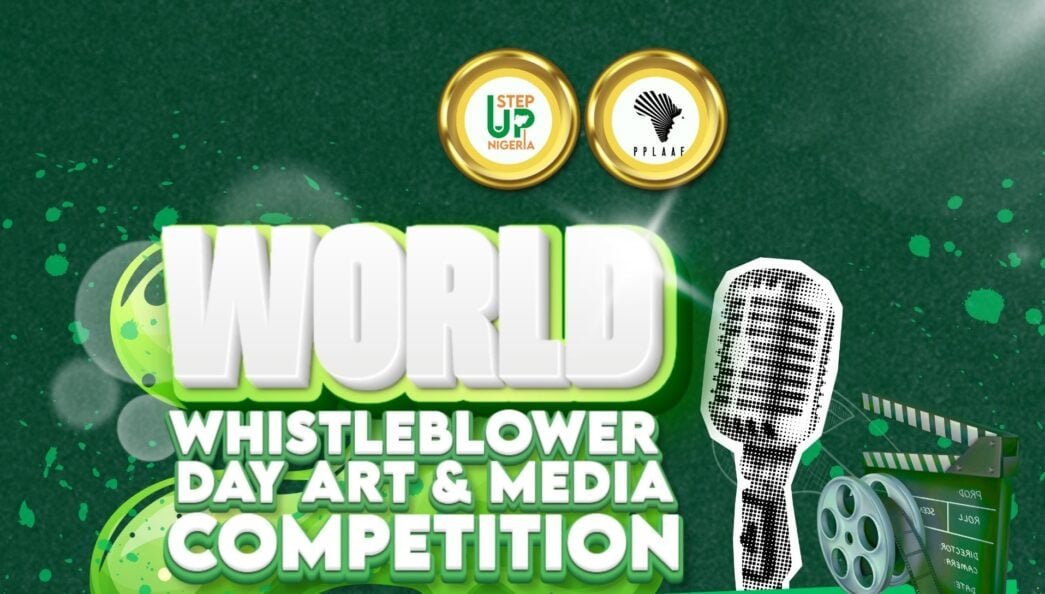
A Nigerian civil society organisation, Step Up Nigeria, has unveiled a national youth art and media competition aimed at raising awareness about whistleblowing and strengthening the culture of accountability across the country. The initiative, announced in Abuja, forms part of activities marking the 2026 World Whistleblower Day and is designed to encourage young Nigerians to use creative expression to promote transparency and integrity in public life.
The programme is being implemented in partnership with the Platform to Protect Whistleblowers in Africa, an organisation that advocates for the safety and protection of individuals who expose corruption or wrongdoing. Through this collaboration, organisers hope to spark a national conversation among young people about the importance of speaking out against corruption and the need for stronger protections for whistleblowers.
At its core, the competition seeks to empower Nigerian youth to become advocates for transparency by using creative storytelling tools such as art, music, spoken word and journalism. Organisers believe that by involving young people directly in the anti-corruption conversation, they can help shape a new culture where accountability is valued and ethical leadership is encouraged.
Table of Contents
Step Up Nigeria Competition invites Nigerian youth to express ideas through art and media
The competition is open to Nigerian residents between the ages of 15 and 35, giving students, young professionals and creatives an opportunity to participate in a nationwide campaign against corruption. Participants are encouraged to submit original works across several categories, including artwork, short skits, songs, spoken word performances, articles and short stories.
Each submission must explore themes related to whistleblowing and public accountability. These include the role whistleblowers play in exposing wrongdoing, the importance of transparency in governance, and the risks faced by individuals who report corruption when adequate legal protection is lacking.
According to the organisers, these themes are deliberately chosen to encourage young people to reflect deeply on issues of integrity in society. By translating such ideas into creative works, participants are expected to spark conversations within their communities about ethical behaviour and responsible citizenship.
The organisers emphasised that entries must be entirely original. Participants are not permitted to use artificial intelligence tools to generate content, although such tools may be used for editing or polishing submissions. Screening processes will also be deployed to verify the authenticity of entries before they are considered for judging.
Importantly, the competition does not require any entry fee, ensuring that financial limitations do not prevent interested young people from participating. Winners will receive cash rewards and public recognition for their creative contributions, providing both motivation and visibility for young advocates of integrity.
For participants under the age of 18, written consent from parents or guardians will be required before their submissions can be accepted. The organisers say this requirement is part of efforts to ensure responsible participation by minors.
Step Up Nigeria is raising awareness about whistleblower protection and accountability
Beyond the Step Up Nigeria competition itself, the initiative aims to deepen public understanding of whistleblowing and why it is a critical tool in the fight against corruption.
The organisers noted that the programme aligns with Article 33 of the United Nations Convention against Corruption, which encourages countries to adopt measures that protect individuals who report corruption in good faith.
Whistleblowers often face significant personal and professional risks when exposing misconduct. In many cases, individuals who speak up encounter threats, retaliation or social stigma. Advocates argue that stronger legal frameworks and social support systems are essential to ensure that whistleblowers can report wrongdoing without fear of victimisation.
Through the youth competition, organisers hope to educate young Nigerians about these realities while also inspiring them to champion reforms that protect those who speak up.
The initiative will also feature two educational podcast series. One podcast will focus on expert discussions about whistleblowing, corruption reporting and legal protection mechanisms. The second will highlight the works of winning participants and provide a platform for young creators to share the stories behind their submissions.
These podcasts are expected to extend the impact of the project beyond the competition period by providing accessible learning resources for students, activists and members of the public interested in understanding the whistleblowing ecosystem.
Youth engagement is seen as key to building an anti-corruption culture
For the organisers, the competition is more than a creative exercise. It is part of a broader strategy to cultivate a generation that sees integrity as a core value in both public and private life.
Shekwogaza Kure, communications manager at Step Up Nigeria, explained that young people possess the influence and imagination needed to reshape societal attitudes toward corruption.
She noted that creative platforms allow youth to communicate powerful messages in ways that resonate with wider audiences. By encouraging young artists, writers and performers to address the topic of whistleblowing, the initiative aims to transform public perception and inspire a culture where reporting wrongdoing is viewed as a courageous act rather than betrayal.
Feranmi Iyanda, the organisation’s director of programmes, also emphasised the importance of strengthening systems that protect individuals who expose corruption.
He called on policymakers, government institutions, civil society organisations and the media to work together to improve reporting channels and ensure that whistleblowers receive adequate protection. According to him, effective anti-corruption efforts depend not only on citizens speaking up but also on institutions responding responsibly to those reports.
Advocates say that when whistleblowers are protected and their disclosures taken seriously, they can help uncover financial crimes, abuse of power and mismanagement of public resources.
Strengthening collaboration to fight corruption in Nigeria
The partnership between Step Up Nigeria and the Platform to Protect Whistleblowers in Africa reflects a growing effort among civil society groups to strengthen anti-corruption advocacy through collaboration.
Jimmy Kande, executive director of the whistleblower protection platform, highlighted the critical role whistleblowers play in exposing corruption and abuse of power across the continent. He noted that supporting youth engagement on the issue is essential for building a society where speaking up is valued and protected.
According to him, the participation of young people can help drive long-term change by embedding the principles of accountability and transparency into the next generation’s mindset.
Step Up Nigeria itself has built a reputation for using storytelling, community engagement and educational programmes to bridge the gap between citizens and government institutions. The organisation believes that strengthening civic participation is key to improving public service delivery and reducing corruption.
Through initiatives like this competition, the group hopes to demonstrate that the fight against corruption is not limited to policymakers or investigators. Ordinary citizens, particularly young people, can also play a powerful role in shaping a more accountable society.
The Step Up Nigeria Competition timeline and participation details
The youth art and media competition will run from March to June 2026, giving participants several months to develop and submit their creative entries.
During this period, organisers will promote the initiative through schools, universities, youth groups and online platforms in order to reach as many young Nigerians as possible. They believe the broad timeframe will allow participants to reflect thoughtfully on the themes and produce high-quality work.
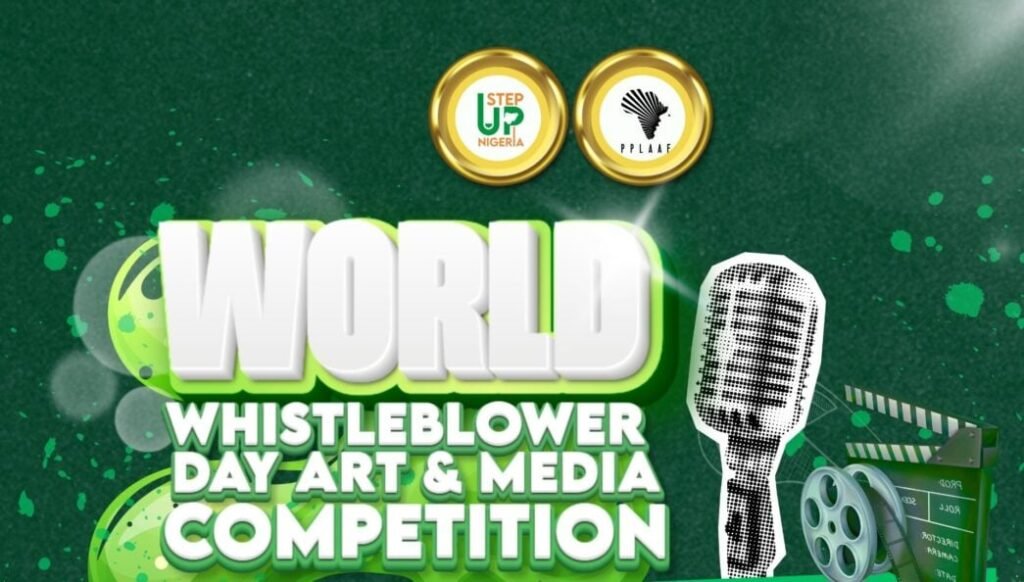
Full guidelines, eligibility criteria and submission details are available through Step Up Nigeria’s official communication channels and website. Interested participants are encouraged to review the rules carefully before submitting their entries.
For many observers, the initiative represents an innovative approach to civic education. By blending art, media and public advocacy, the organisers aim to reach audiences that traditional anti-corruption campaigns may not easily engage.
More importantly, the competition seeks to shift the narrative around whistleblowing in Nigeria. Instead of being viewed with suspicion, whistleblowers are increasingly being recognised as individuals who contribute to strengthening democracy and protecting public resources.
As the competition unfolds over the coming months, organisers hope the creative works produced by participants will inspire wider conversations about integrity, courage and the responsibility citizens share in building a more transparent society.
Join Our Social Media Channels:
WhatsApp: NaijaEyes
Facebook: NaijaEyes
Twitter: NaijaEyes
Instagram: NaijaEyes
TikTok: NaijaEyes