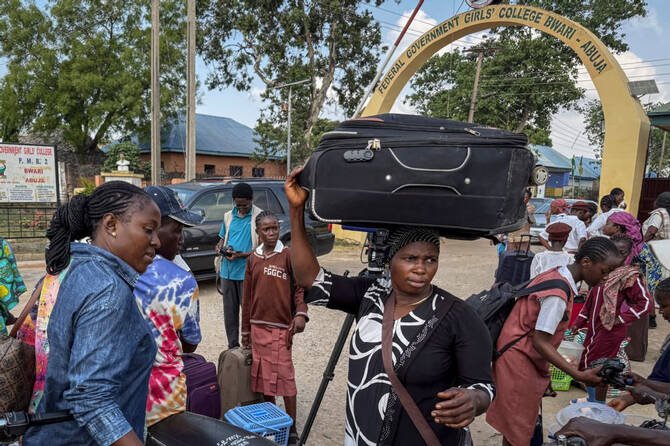
Nigeria is once again confronting a disturbing reality: the kidnapping of schoolchildren. In a devastating span of days, more than 330 students and teachers were abducted from schools in the country’s northwest and central regions, triggering outcry from global and local human rights actors. Human Rights Watch (HRW) has called on Nigerian authorities to respond urgently, not just to rescue the captives but to shore up defences and prevent further attacks.
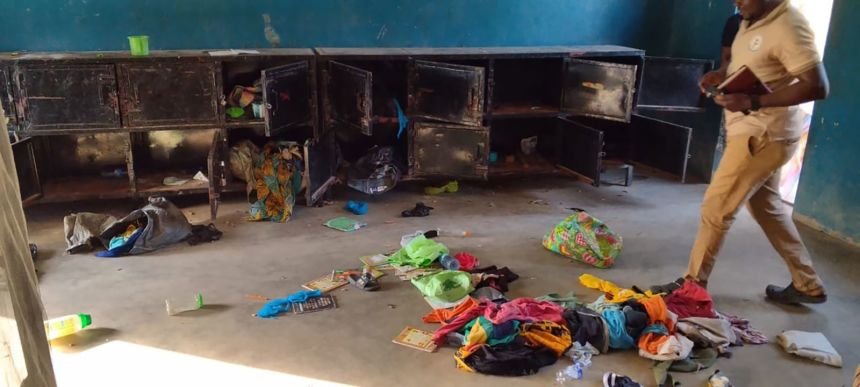
On 18 November 2025, armed assailants stormed the Government Girls Comprehensive Secondary School in Maga, Kebbi State, abducting 25 female students. Three days later, on 21 November, gunmen raided St. Mary’s Catholic School in Papiri, Niger State, carting away 303 pupils and 12 teachers. These attacks echo a painful pattern that too many Nigerians know all too well.
Parents’ Despair, Government’s Promise
Families of the abducted schoolgirls in Kebbi State were left distraught. One father, Isa Nazifi, said he rode a motorbike to the school as soon as he heard the news, only to find that his daughter, Khadija, had been taken. His remaining child, also a student at the same school, confirmed the tragedy. “My wife is in tears,” he told HRW, adding that he refused to leave the grounds until he could be certain his daughter would return.
Another parent, Malam Sani Zimri, whose daughter Salima was also abducted, expressed frustration at the glaring security lapses. According to him, there had been rumours of bandits in the week leading up to the attack, and though military personnel appeared briefly around the school, they vanished long before the violence struck.
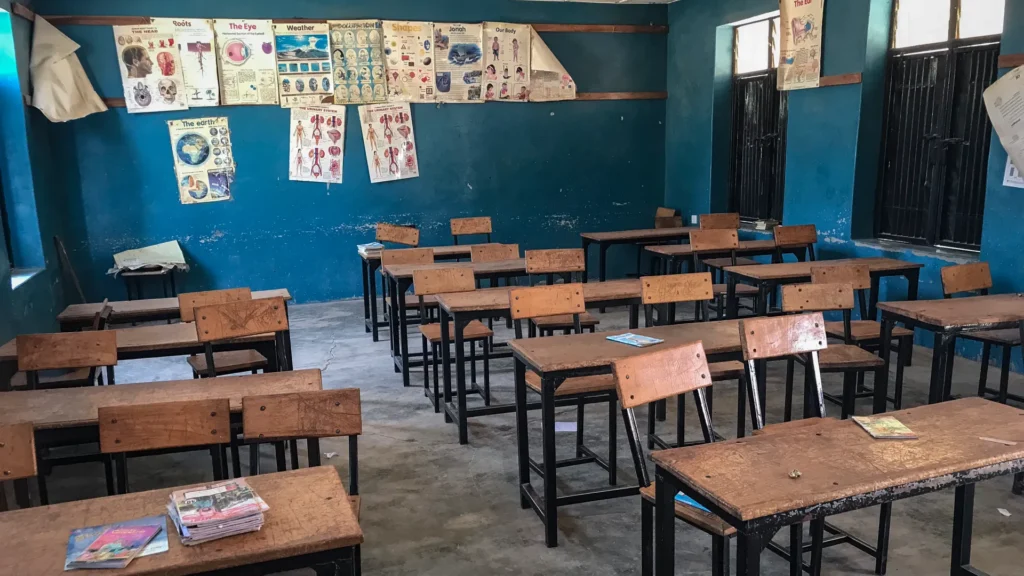
In response, President Bola Tinubu instructed security agencies to prioritise the rescue. The government has since shut down 47 federal secondary schools — known as Federal Unity Colleges — and several states, including Katsina, Niger, and Taraba, have either closed schools or restricted boarding operations. Still, the closures themselves are a bitter pill: they interrupt learning, erode social support structures in schools, and leave children at risk of academic setbacks.
A Repeating Nightmare: Kidnapped Children and Failed Protections
To many observers, the recent kidnappings lay bare a recurring failure in Nigeria’s security architecture. HRW’s Nigeria researcher, Anietie Ewang, described the attacks as a “deliberate targeting” of schools and communities in a security system that’s fast deteriorating.
Despite Nigeria’s endorsement of the Safe Schools Declaration – a political commitment to protect education during conflict – attacks on schools have become alarmingly routine. Earlier this month, the Nigerian Senate launched an inquiry into the government’s Safe School Fund, raising serious questions about why funds meant to protect children have not translated into stronger defences.
Human rights defenders warn that without legal reforms — especially legislation to institutionalise the Safe Schools Declaration — these tragedies will keep happening.
The Broader Context: Kidnapping as a Business
The kidnappings aren’t isolated incidents — they’re part of a broader crisis. In the decade since the Chibok abduction in 2014, where Boko Haram kidnapped 276 schoolgirls, Nigeria has seen scores of mass school kidnappings by so-called “bandit” groups. According to UNICEF, these armed groups have abducted more than 1,600 students and dozens of school staff over the past ten years.
Many of these raids are financially motivated. Experts say that ransom has become a driving force behind targeting schools. TIME But the tragedy goes beyond money — families are scarred, schooling is disrupted, and confidence in the state’s ability to protect its citizens weakens.
In response to the latest crisis, Nigeria’s security agencies have stepped up. Tactical units and local hunter groups are combing forests near the abduction sites. Military leaders, meanwhile, met with President Tinubu in Abuja. Major General Waidi Shaib, the Nigerian army’s Chief of Staff, confirmed that some of the captives are regaining their freedom: fifty children have escaped and rejoined their families.
Still, calls for justice and reform remain loud. The National Human Rights Commission (NHRC), for instance, has urged the federal government to give a clear marching order to security forces to adopt intelligence-led tactics and protect children proactively.
What’s Next? To prevent further tragedies, Nigerian leaders must not only react to crises, but learn from the past. Mike ask for dedicated legislation. Communities need early-warning systems. Schools should regain their role as safe spaces — not vulnerable targets. And above all, the government must rebuild trust: so every parent no longer fears that sending their children to school might haunt them forever.
Join Our Social Media Channels:
WhatsApp: NaijaEyes
Facebook: NaijaEyes
Twitter: NaijaEyes
Instagram: NaijaEyes
TikTok: NaijaEyes
READ THE LATEST EDUCATION NEWS