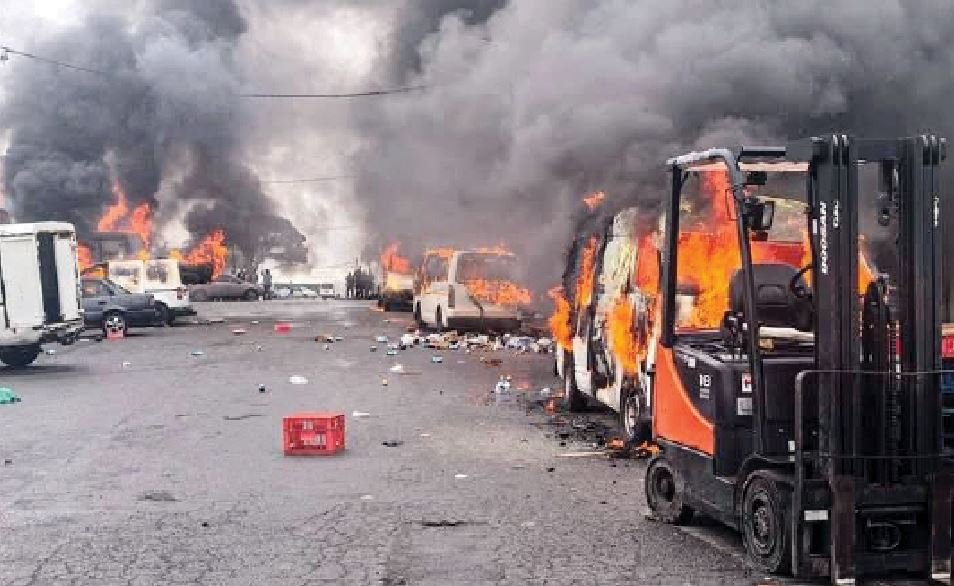
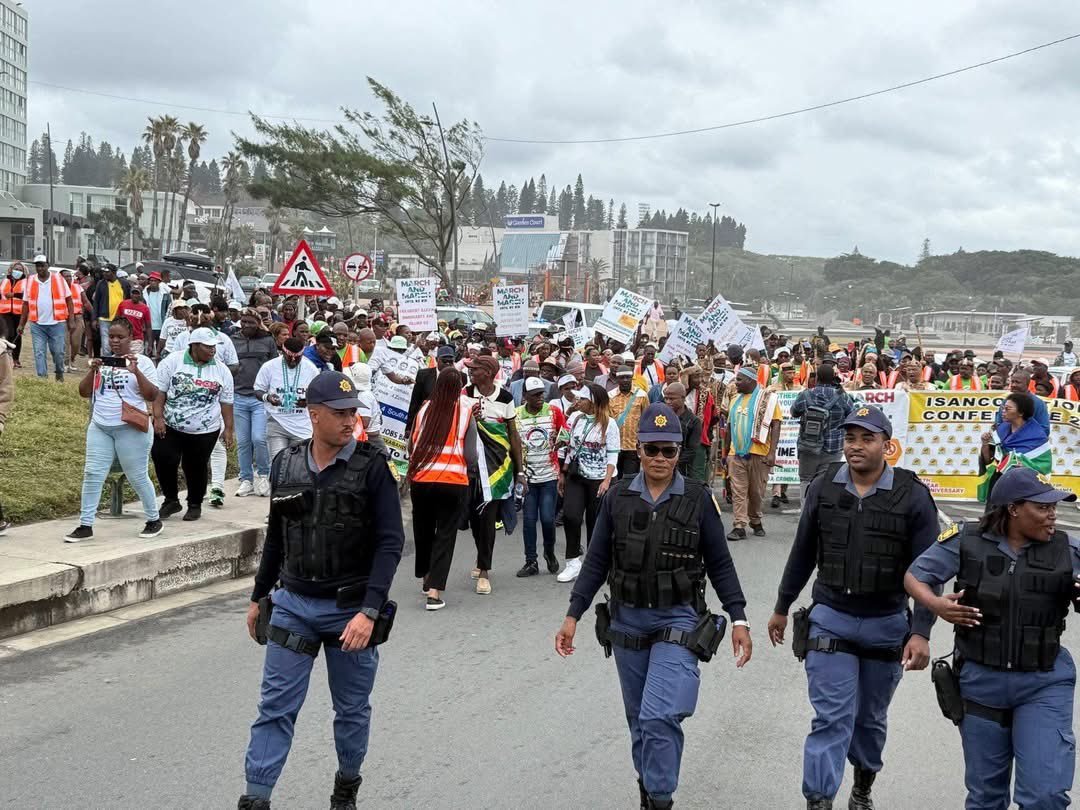
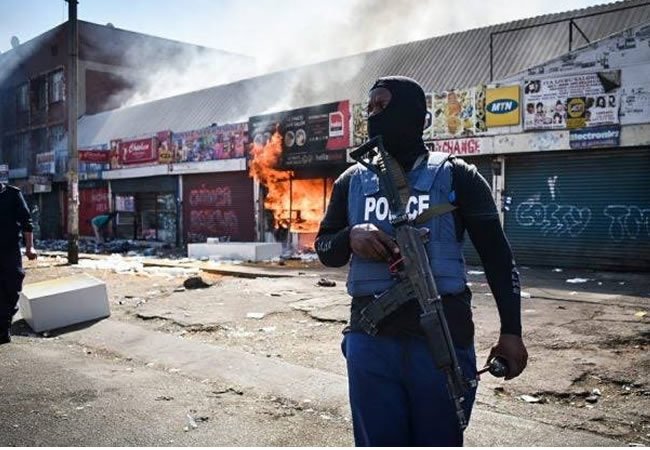
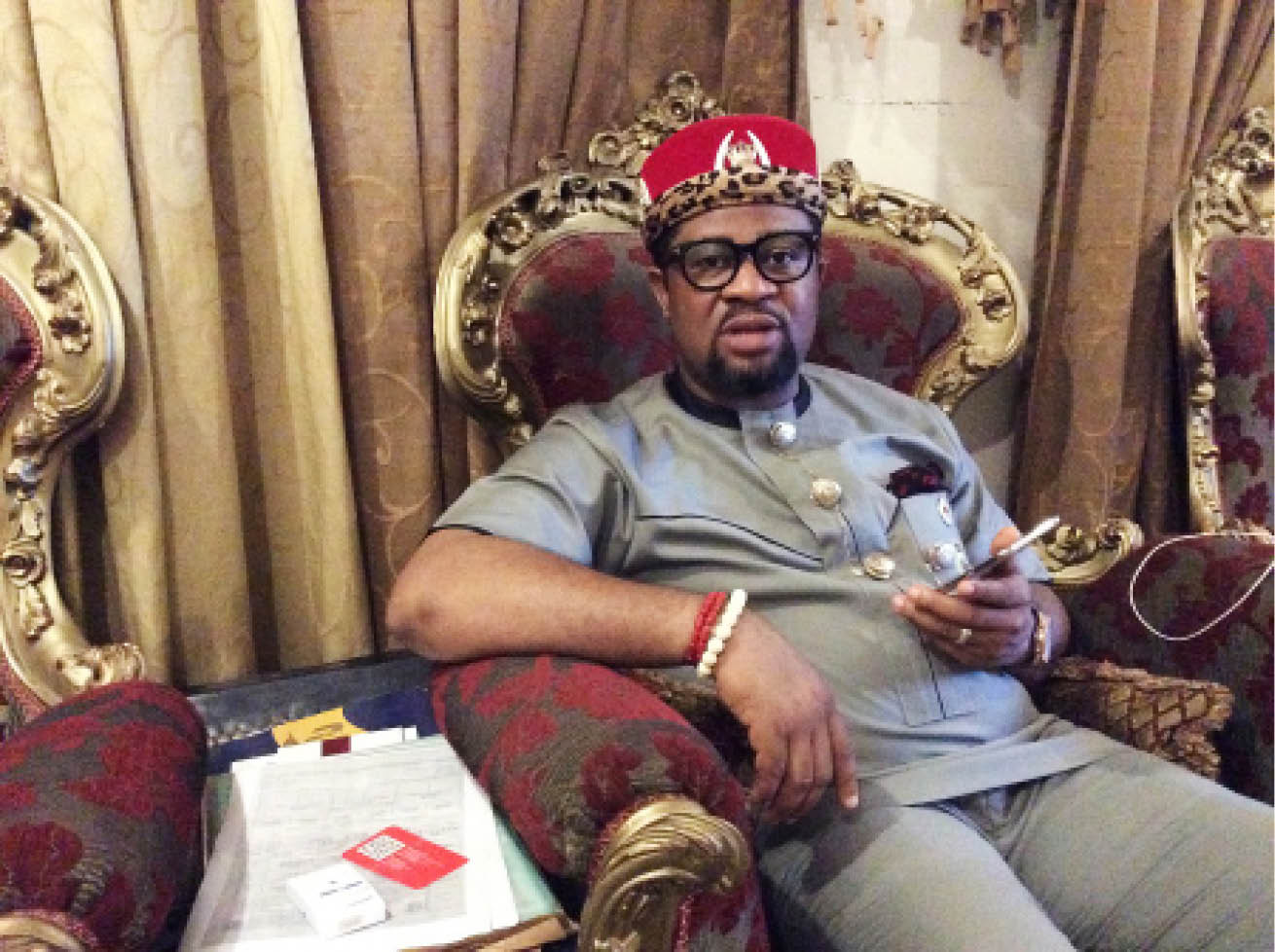
Following protests against the contentious coronation of an Igbo traditional king, violent violence has erupted in South Africa’s Eastern Cape Province. Protesters have set fire to cars and looted foreign-owned businesses.
Members of ActionSA spearheaded the demonstrations on Monday, along with locals and traditional leaders, in protest of what the organisers claimed was a breach of the province’s sovereignty, constitutional order, and acknowledged traditional authority systems.
However, according to SABC News, tensions quickly increased in KuGompo City, where the demonstrations descended into violence, necessitating police intervention and crowd dispersal.
Video footage shared on X captured protesters setting several vehicles and buildings allegedly belonging to foreigners on fire, while security forces intensified efforts to restore order.
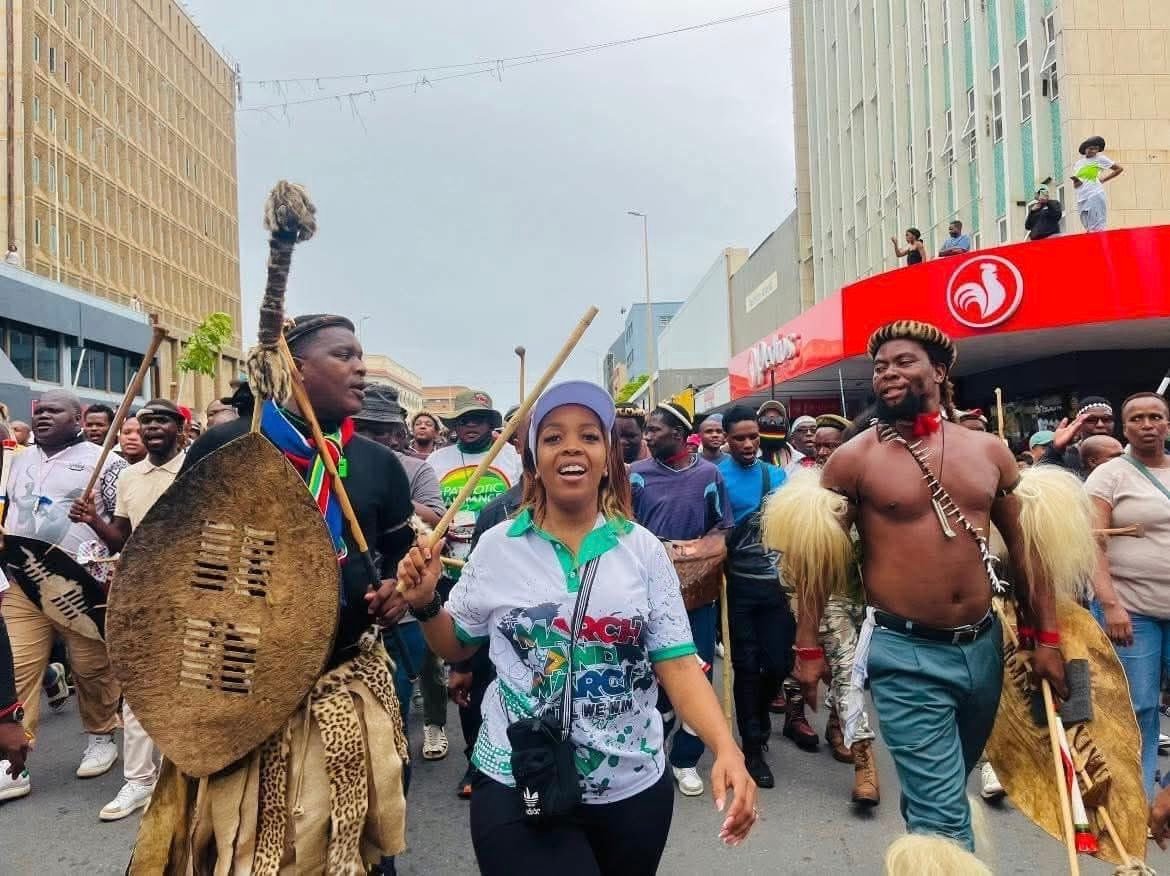
CDR Africa revealed that foreign-owned assets were the main targets of the unrest, which was a reflection of mounting indignation over the coronation.
The situation further worsened, with eNCA reporting that the violence escalated following a stabbing incident allegedly involving Ethiopian shop owners.
Athol Trollip, the Eastern Cape chair of ActionSA, reiterated the party’s objection to the coronation in East London, calling it illegal and in odds with South Africa’s customary leadership structure.
He said, “With the traditional leadership of the Eastern Cape, all the traditional leaders, and the people of the province, let me state clearly that ActionSA’s policy on illegal immigration is very clear. If you are in this country illegally and commit any offence, you will be sent back home.
“This is a sovereign nation. It is our nation, and we are protected by a constitution. Nowhere in our constitution is there a provision for a Nigerian from the Igbo tribe to be crowned as a king in the Eastern Cape.
“Beyond that, the utterances made at the coronation are what concern us as a party. They claimed to have established a kingship.”
He continued by saying that the party firmly supported acknowledged traditional authority and insisted that issues pertaining to cultural and traditional governance must be handled according to due process.
“We have a painful history of homelands in this province—the former Ciskei and Transkei—where people were displaced, their land expropriated, and opportunities limited. We will not tolerate the establishment of another homeland.
“They went further to say they would encourage their brothers and sisters in Nigeria, in their hundreds of thousands, to come and establish a homeland here. That will not happen. This province is not up for the taking.
“We respect our traditional leaders. There are five recognised kingships acknowledged by the president and the constitution.
“We also take exception to the Nigerian Embassy’s claim that the coronation was merely customary. We want the Nigerian government to speak clearly against it, and we want our government to make an unambiguous statement affirming its recognition of existing traditional leaders and rejecting any Igbo kingship in the Eastern Cape or South Africa,” he added.
Meanwhile, some demonstrators have issued stark warnings, vowing to escalate resistance if authorities fail to address their concerns.
Additionally, a protester, said South African residents were prepared to “take up arms” if the matter remained unresolved, while others called for the deportation of Nigerians linked to the coronation.
2019 South African Xenophobia Attacks
This is however not the first of it s kind where Nigerians have faced similar attacks. In 2019, South Africa experienced a major surge in xenophobic violence, particularly in September, characterized by looting and burning of foreign-owned shops, mainly in Gauteng province. Attacks resulted in a number of deaths, causing significant diplomatic tension with other African nations and prompting evacuations
Chao, panic as xenophobia breaks out in Ghana, ‘Nigerians must go,’ protests
Similar to current South African violence, in July of 2025, Nigerians in Ghana were strongly accused of serious involvement in rampant prostitution and ritual killings in the country, which sparked protests from some Ghanaians.
In a widely shared video, the demonstrators were seen holding signs with words like “Armed robbery and violent attacks must stop,” “Mass prostitution is endangering our health,” “Who defends Ghanaians’ rights and freedom?” “Nigerians are kidnapping and using people for rituals,” and “Our kids are going missing because of Igbos,” among other statements.
Xenophobia fears heighten as Nigerians in India face attacks,
More recently, in March of 2026, some Nigerians living in India have expressed serious concern about what they claim to be an increase in racial profiling and police brutality.
They bemoaned the difficulties in regularising their visas and the exorbitant renewal costs, which they claimed had made living in the Asian nation intolerable.
Speaking to newsmen, a few locals said that several Nigerian students had been physically abused and that nothing had changed despite their reports to the authorities.
Join Our Social Media Channels: