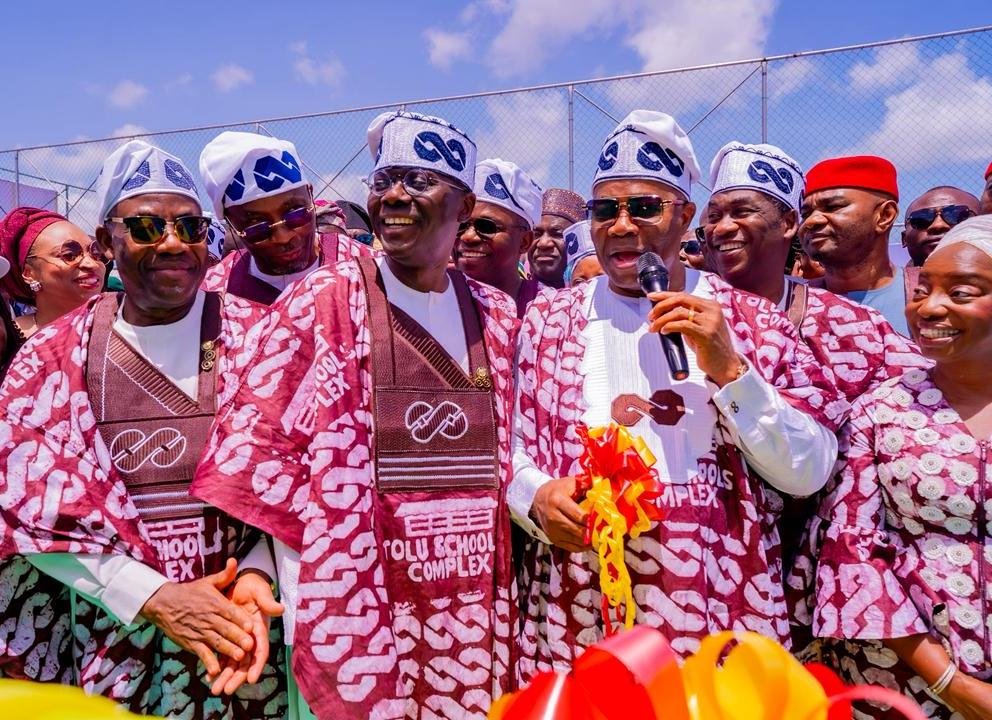
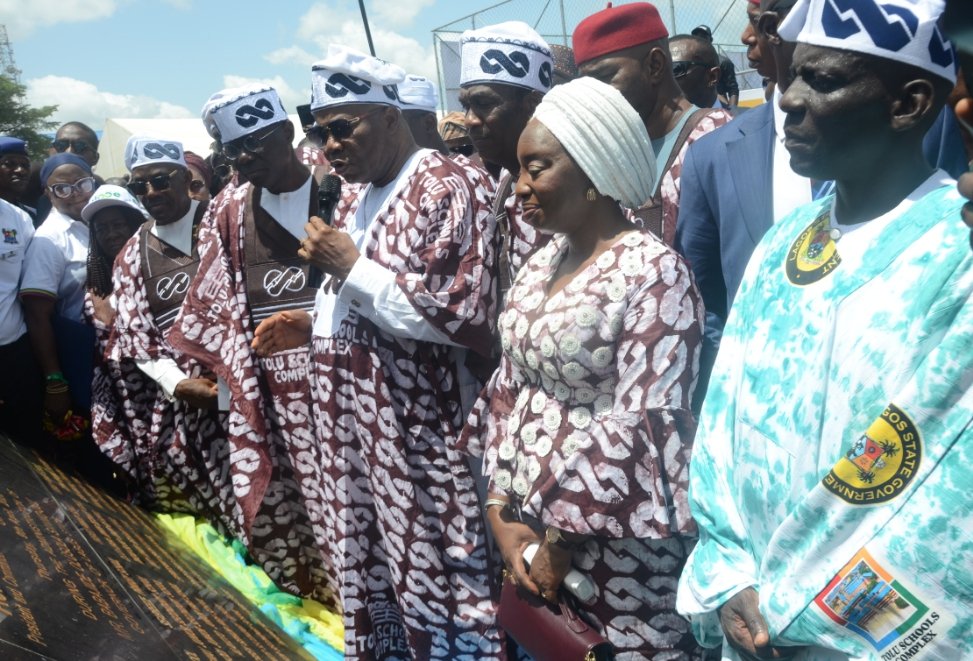
Nigeria’s education landscape received a major boost as President Bola Ahmed Tinubu presided over the inauguration of what has been described as Africa’s largest school complex in Lagos, marking a significant milestone in the country’s push to strengthen public education infrastructure.
The newly upgraded Tolu Schools Complex, located in Ajegunle, stands as a bold statement of intent by the Lagos State Government to redefine learning environments in densely populated communities. Spread across 11.73 hectares, the massive facility brings together 36 schools into a single, integrated education hub designed to serve tens of thousands of students.
The commissioning formed part of a series of high-profile projects unveiled during the President’s visit to Lagos, reinforcing the administration’s message that education remains central to national development and long-term prosperity.
A Mega School City Takes Shape in Ajegunle
What was once a cluster of ageing and overcrowded school buildings has now been transformed into a modern “school city” equipped with facilities that rival some of the best educational institutions on the continent.
The complex accommodates 36 schools comprising primary, junior secondary and senior secondary institutions, all carefully redesigned to function within a unified system. Beyond classrooms, the facility includes science laboratories, ICT hubs, vocational training centres and recreational spaces aimed at providing a well-rounded learning experience.
At full capacity, the complex is expected to cater for more than 20,000 students, offering them access to quality infrastructure that had previously been out of reach for many children in the Ajegunle area.
The scale alone sets the project apart. In a city like Lagos, widely regarded as one of Africa’s fastest-growing urban centres with a population running into tens of millions, such a consolidated educational model reflects a deliberate response to rapid urbanisation and pressure on public services.
Governor Babajide Sanwo-Olu described the initiative as more than a renovation. According to him, it represents a complete rethinking of how public education should be delivered in high-density communities, especially those historically affected by infrastructural decay and environmental challenges such as flooding.
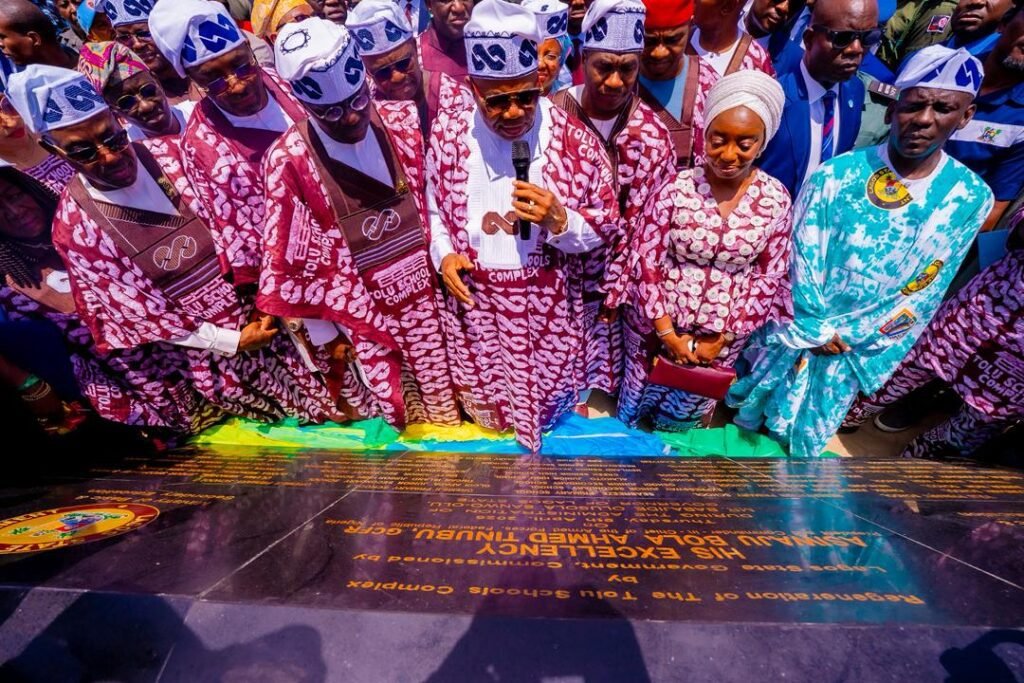
Tinubu Applauds Vision Behind Landmark Project
Speaking through Senate President Godswill Akpabio, President Tinubu praised the Lagos State Government for executing a project of such magnitude, describing it as both “exceptional” and “remarkable.”
He noted that the transformation of the Tolu Schools Complex reflects a strong commitment to improving the lives of young Nigerians, particularly those in underserved communities. According to him, the project demonstrates what can be achieved when leadership is focused and intentional about human capital development.
The President also used the occasion to emphasise the broader role of education in nation-building. He reiterated that sustained investment in schools remains one of the most effective ways to tackle crime, reduce inequality and promote social stability.
In a message directed at students, Tinubu encouraged them to take full advantage of the opportunities presented by the new facilities, describing education as a pathway to economic empowerment and a tool for breaking cycles of poverty.
His remarks struck a chord with many attendees, particularly in a community where access to quality education has long been a challenge.
Beyond Classrooms: Sports, Skills and Inclusion
One of the defining features of the project is its emphasis on holistic development. Adjacent to the academic facilities is a sports complex that includes 19 mini football pitches, designed to encourage grassroots sports and youth engagement.
The integration of sports infrastructure into the school environment reflects a growing recognition of the role of extracurricular activities in shaping well-rounded individuals.
Equally notable is the project’s focus on inclusivity. The complex incorporates provisions for students with special needs, ensuring that no child is excluded from accessing quality education due to physical or learning challenges.
Vocational training centres within the facility further expand its impact, equipping students with practical skills that can enhance employability and entrepreneurship. This blend of academic and technical education aligns with broader national goals of reducing youth unemployment and building a more skilled workforce.
A Model for Future Education Infrastructure in Nigeria
The Tolu Schools Complex is already being positioned as a reference point for future investments in Nigeria’s education sector. Its scale, design and integrated approach offer a blueprint for addressing the challenges of overcrowding, poor infrastructure and unequal access to quality education.
For many observers, the project signals a shift from incremental improvements to large-scale, transformative interventions. By consolidating multiple schools into a single, well-equipped hub, the Lagos State Government has demonstrated a model that could be replicated in other parts of the country.
There is also a symbolic dimension to the project. Situated in Ajegunle, a community often associated with resilience amid hardship, the new complex stands as a visible reminder that quality education should not be a privilege reserved for a few.
As Nigeria continues to grapple with issues such as out-of-school children and strained public education systems, initiatives like this may prove critical in bridging existing gaps.
The inauguration of Africa’s largest schools complex is therefore more than a ceremonial milestone. It represents a strategic investment in the future, one that places young Nigerians at the centre of the country’s development agenda.
Join Our Social Media Channels:
WhatsApp: NaijaEyes
Facebook: NaijaEyes
Twitter: NaijaEyes
Instagram: NaijaEyes
TikTok: NaijaEyes
READ THE LATEST EDUCATION NEWS