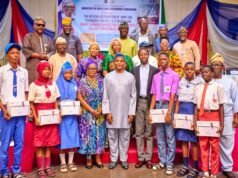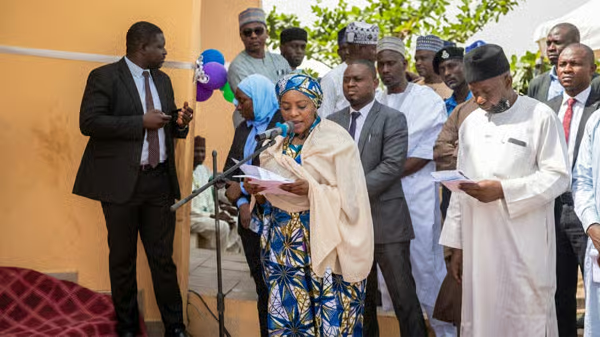
The Universal Basic Education Commission, UBEC, has again placed Nigeria’s foundational schooling on a new trajectory as it inaugurated a cutting‑edge Smart School in Hadejia, Jigawa State. This initiative represents a broader strategy to integrate modern technology into the classroom and equip learners for the demands of the 21st century. Education stakeholders have described the project as a clear signal that the landscape of basic education in Nigeria is evolving in meaningful ways.
A Landmark for Digital Learning in Basic Schools BY UBEC
In a ceremony marked by high expectations and widespread optimism, UBEC handed over the new Smart School facility to the Jigawa State Government. The execution of the project reflects a multi‑million‑naira investment and underscores the Federal Government’s Renewed Hope agenda, which prioritises digital transformation, human capital development, and improved learning outcomes for all pupils. Officials at the event said the facility is designed to equip children with the skills needed to thrive in an increasingly competitive knowledge economy.
Equipped with information and communications technology (ICT)‑enabled classrooms, modern science laboratories, e‑libraries, and innovation hubs, the school sets a new standard for public basic education. It also includes specialised facilities for learners with special needs, ensuring that access to quality education is inclusive and equitable. This attention to supportive infrastructure highlights the government’s resolve to broaden opportunities beyond traditional classroom methods.
The Hadejia Smart School is the latest addition to the growing number of UBEC Smart Schools nationwide. With its inauguration, the total now stands at 30, with additional model institutions distributed across Nigeria’s six geopolitical zones and the Federal Capital Territory. This expansion demonstrates a clear commitment to replicating successful education models across the federation.
Innovation at the Heart of Learning
Central to the Smart School concept is the belief that technology can transform how lessons are delivered and absorbed. State Model Smart Schools, such as the one in Hadejia, extend from early years (pre‑primary) to junior secondary levels. By broadening the learning stages covered under one roof, UBEC aims to create continuity in developmental education from foundational literacy and numeracy to more advanced skills.
Inside the new facility, learners have access to dedicated robotics and introductory technology labs that foster hands‑on experience with modern tools. These features are not simply about equipping students with devices; they are about building problem‑solving and critical thinking capacities that will be relevant in future workplaces. Vocational labs complement academic spaces, providing pathways for students who might choose technical careers after their basic schooling.
Officials also highlighted the inclusion of water and power infrastructure and secure play areas, enhancing the school’s environment for health and safety. By addressing these basic needs alongside academic facilities, the Smart School becomes not just a centre for learning but a community hub where children can thrive holistically.
Partnership and Support Driving Success
The success of the project owes much to strategic partnerships. UBEC’s Executive Secretary, Dr Aisha Garba, extended appreciation to the Ministers of Education and the Jigawa State Government for their support and collaboration. She described the partnership with the state as strong and forward‑looking, particularly commending Governor Malam Umar Namadi for providing land and ensuring security for the facility.
Dr Garba’s remarks also acknowledged the broader effort by national education leaders to drive smart education agendas forward. Their collective work has helped position digital learning as an essential component of Nigeria’s education reforms. Observers say this cohesive coordination among federal and state stakeholders is critical for sustaining and scaling successful initiatives.
Education experts note that this kind of collaboration is vital as Nigeria seeks to close longstanding gaps in educational quality and access. The Smart School model in Jigawa, they say, could become a blueprint for other states looking to achieve similar results with tailored approaches that reflect local contexts.
Looking Ahead: The Promise of Smart Education
Nigeria’s Smart School initiative is part of a growing suite of reforms aimed at strengthening the country’s education system. Over recent years, UBEC and partners have implemented projects that bring technological tools to classrooms and train teachers in digital pedagogy. A notable partnership with the Korea International Cooperation Agency delivered a $10 million smart education project impacting thousands of learners across multiple states. That project established multimedia learning environments, trained educators, and created thousands of digital learning resources, helping bridge gaps in foundational literacy and numeracy.
Stakeholders say these efforts are changing the narrative about public education in Nigeria. Instead of chalkboards and rote memorisation, classrooms are becoming spaces where learners can interact with content, explore concepts visually, and develop skills relevant to modern economies. Such shifts, advocates believe, will pay dividends in the long term by better preparing young Nigerians for future academic and career opportunities.
As more Smart Schools take shape, officials are optimistic that the country can make substantial progress toward achieving equitable education for all children, regardless of their background. Efforts to integrate digital tools with inclusive practices for children with special needs, for example, reflect a nuanced understanding that quality education must be both accessible and adaptive.
The UBEC Smart School in Jigawa stands as a testament to what is possible when vision, investment, and collaboration align. For communities in Hadejia and beyond, it offers a glimpse of a future where every child can benefit from enriched learning environments that support curiosity, growth, and success.
In rewriting this story as a comprehensive news article, the focus was to capture not only the event itself but the broader context of educational reform in Nigeria and what Smart Schools signify for learners, teachers, and the nation’s future. By highlighting innovation, partnership, and forward planning, this version presents the initiative as both a milestone and a continuing journey toward quality basic education for all.
Join Our Social Media Channels:
WhatsApp: NaijaEyes
Facebook: NaijaEyes
Twitter: NaijaEyes
Instagram: NaijaEyes
TikTok: NaijaEyes
READ THE LATEST EDUCATION NEWS