
In a bold declaration that has stirred hope across the innovation and business sectors, Dr Kingsley Tochukwu Udeh—Nigeria’s newly appointed Minister of Innovation, Science and Technology—has vowed to reposition the Ministry as a central pillar of economic and technological transformation. Addressing the nation shortly after assuming office, Minister Udeh asserted that Nigeria can no longer treat innovation, science and technology as an appendage—but must place them squarely at the heart of national progress.
He emphasised that the Ministry’s relevance will no longer be measured by its name alone, but by the tangible difference it makes in the lives of Nigerians, especially the youth. “We will energise Nigerians, particularly our youth, to find and express their skills, their knowledge, their acumen in the area of innovation, science and technology,” Udeh declared.
This fresh leadership signals a strategic shift away from passive ambition toward actionable delivery — a shift that sits squarely within the framework of the government’s broader “Renewed Hope” agenda.

Table of Contents
Quick Wins & Youth-Centred Strategy
One of the most striking aspects of Udeh’s briefing is the emphasis on “quick wins” — projects and initiatives designed for short-term traction while longer-term innovation frameworks are set up. In his first high-level meeting with directors and agencies under the Ministry, he said: “We have agreed as a leadership that we will identify quick wins … so that we begin to make remarkable impacts next week.”
This focus on early momentum reflects an understanding that credibility in innovation cannot rely solely on lofty rhetoric. Speed matters. The decision to zero in on youth empowerment—giving young innovators the room, tools and enabling environment to experiment—is also noteworthy. Udeh firmly tied success in innovation with meaningful change in security, employment, and national development challenges: “It will be innovation, science and technology that provide solutions … even the hard-headed monster of insurgency and terrorism.”
By linking the Ministry’s mandate to hard-foot national issues—job creation, security, stability—he is effectively broadening the innovation agenda beyond gadgets and apps to the foundational resilience of the nation.
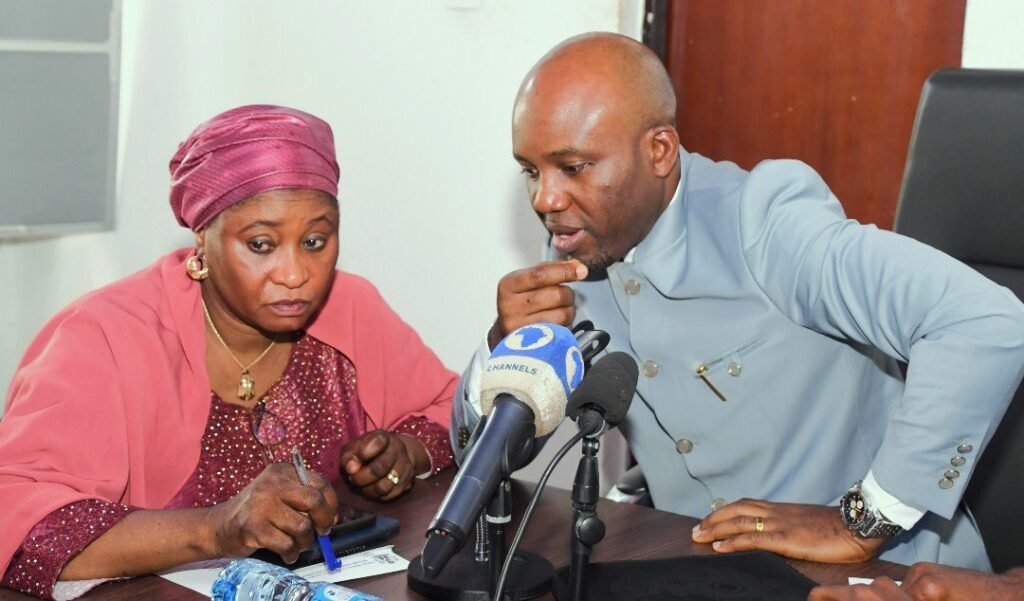
Anchoring Innovation in Economic Growth
At the core of Udeh’s message is the idea that science, technology and innovation (STI) are no longer optional for Nigeria’s economic trajectory—they are essential. During his address, he contextualised the Ministry’s role as a driver of upward mobility not only for the youth but for the economy as a whole: upgrading infrastructure, boosting productivity, nurturing local research and connecting Nigeria with global innovation ecosystems.
He stressed that the Ministry’s performance will be judged by impact rather than titles or organisational charts: “What will make us relevant is the impact we make in the lives of Nigerians.”
This standpoint—measuring success by outcomes—is significant in a policy environment where many ministries have been criticised for low visibility and limited implementation. Udeh appears to want to flip that narrative. His mandate will involve forging stronger synergies with academia, the private sector, start-ups and international partners. The aim is to build an innovation ecosystem that not only spawns start-ups, but also supports large-scale research, industrialisation and job generation.
Challenges Ahead and the Path Forward
Despite the bold tone and early momentum, Udeh’s vision faces significant challenges. Nigeria’s innovation ecosystem has long grappled with under-funding, infrastructure deficits, brain-drain, weak institutional coordination and regulatory bottlenecks. The transformation that the Minister envisages will require confronting these systemic issues head-on.
To succeed, several pointed steps will need to happen:
- Funding & Infrastructure: Without adequate investment in laboratories, broadband, power supply and research grants, even the best ideas will be held back.
- Talent & Retention: Empowering youth means not only enabling them, but keeping them within the country’s ecosystem. The risk of brain-drain remains real.
- Policy & Regulation: Clear, consistent regulations that encourage innovation, protect intellectual property and allow rapid deployment of technologies will be crucial.
- Private Sector Engagement: The Ministry’s ambition must be matched by collaboration with the private sector which drives commercialisation, scale-up and market access.
- Regional Equity: Innovation must not be confined to a few urban centres. Harnessing science & tech for all corners of Nigeria will be vital.
- Measuring Impact: The “quick wins” mantra must be backed by transparent metrics, timely reporting and visible results to sustain public confidence.
In his early remarks, Udeh has acknowledged some of this: leadership alignment, teamwork, and agency synergy. However, converting promise into sustained structural transformation will be the real test. He said, “We understand our role, and the promise that we made as leadership is that we will not let Nigerians down. So, work has started.”
For Nigerians watching closely, what matters next isn’t the declarations but the rolling out of initiatives: funding announcements, grassroots innovation hubs, partnerships launched, startup accelerator metrics, measurable security or employment gains.
Conclusion
Minister Udeh’s pledging to reposition the Ministry of Innovation, Science & Technology as a key driver of Nigeria’s economic transformation signals a decisive departure from business-as-usual. His focus on youth empowerment, quick-impact projects and measurable outcomes lends fresh energy to the national innovation agenda. But the ambition is matched by the seriousness of the challenge: transforming institutional inertia into active, innovation-led growth demands more than rhetoric. It will require consistent funding, infrastructure build-out, policy reform and public-private synergy.
In the coming months, Nigerians will be looking for visible signs of change. If Minister Udeh delivers on his promise, the innovation ecosystem that once felt distant may well begin to materially shape lives, careers and the economy. The repositioning of the Ministry is underway—and with it, the opportunity to redefine Nigeria’s role in the global science and technology landscape.
Join Our Social Media Channels:
WhatsApp: NaijaEyes
Facebook: NaijaEyes
Twitter: NaijaEyes
Instagram: NaijaEyes
TikTok: NaijaEyes
READ THE LATEST EDUCATION NEWS