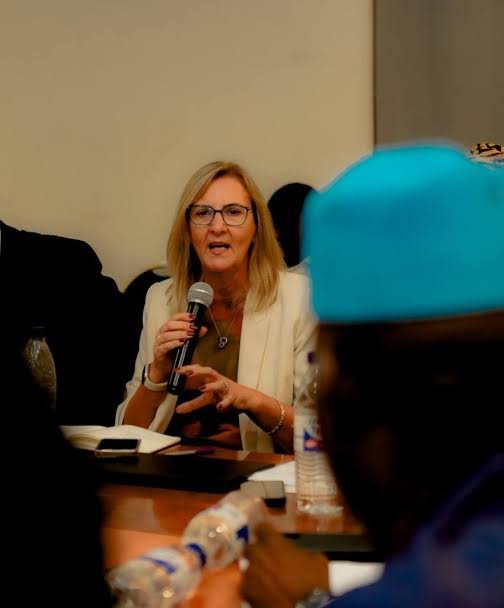
UNESCO is strengthening cooperation between Africa and Asia to expand access to artificial intelligence education, improve digital skills among young people and help teachers prepare students for a technology-driven future.
The initiative, implemented in partnership with Chinese education technology company CODEMAO, is part of efforts to make coding and AI education more accessible to students in developing countries. It also seeks to ensure that young people are not merely consumers of emerging technologies but can develop the skills required to create solutions for their communities.
According to the UNESCO Institute for Information Technologies in Education, the partnership launched a new Coding and AI for Youth platform in March 2026 to provide young learners across Africa and Asia with access to coding and artificial intelligence education.
The platform is designed to support practical learning, promote responsible AI development and help educators integrate technology into teaching. It also reflects a broader effort to reduce inequalities in access to digital education.
For African countries, including Nigeria, the development highlights the growing importance of equipping students with skills that can support innovation, employment and economic development as AI becomes increasingly influential across industries.
Also Read: Nigeria, UNESCO and African Union Launch Mobile Learning Programme to Boost Teacher Training
UNESCO Expands AI Training for African and Asian Students
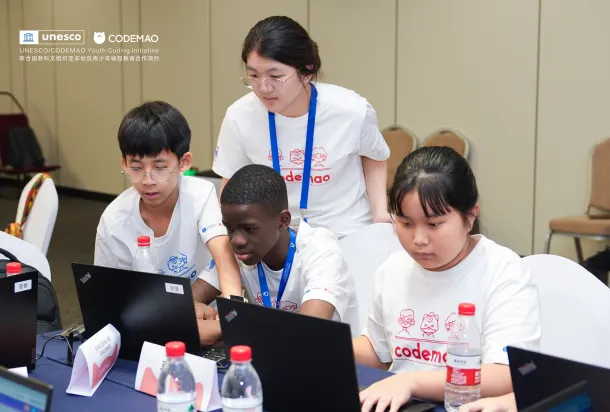
The partnership builds on the UNESCO/CODEMAO Youth Coding Initiative, launched in 2021 to improve coding and AI skills among young people and teachers in Africa and Asia.
The programme has already recorded progress across participating countries. According to UNESCO’s account of the initiative, more than 200 teachers from Kenya, the Republic of the Congo, Namibia and Thailand have participated in intensive training programmes.
About 45 per cent of the teachers who took part were women, reflecting the programme’s commitment to improving female participation in digital education.
The initiative also recorded participation from nearly 1,500 students across Côte d’Ivoire, the Republic of the Congo, Thailand, Kenya and Namibia in introductory AI literacy courses and online programming workshops since 2024.
Beyond classroom instruction, the programme encourages teachers to share their knowledge with colleagues and students. This approach is intended to extend the benefits of training beyond individual participants and help schools build stronger local coding communities.
The partnership’s second phase, covering 2025 to 2030, includes annual AI Day activities, student and teacher exchanges, international study tours and further cooperation between African and Asian education stakeholders.
UNESCO and CODEMAO also announced plans to extend their partnership until 2035, with the online platform expected to help reach additional countries.
New AI Platform Targets Digital Education Gaps
The launch of the Coding and AI for Youth platform comes as education systems face increasing pressure to adapt to the rapid development of artificial intelligence.
AI tools can support personalised learning, assist teachers with lesson preparation and help students understand complex subjects. However, unequal access to technology, limited digital infrastructure and insufficient training remain barriers to their effective use.
UNESCO has consistently stressed that AI should improve educational opportunities without deepening existing inequalities.
Its guidance on artificial intelligence in education promotes an inclusive, human-centred approach that protects learners’ interests while encouraging critical thinking, creativity and responsible technology use.
For Nigeria, these priorities are particularly relevant as schools, universities and training institutions consider how to incorporate AI into teaching and learning. Access to practical coding education could help more students understand the technology behind digital products and develop skills for careers in software development, data analysis and other technology-related fields.
However, expanding AI education will require more than providing online learning resources. Schools also need reliable internet access, suitable devices, trained teachers and learning materials that reflect local needs.
The success of initiatives such as the UNESCO-CODEMAO partnership will therefore depend partly on how effectively participating countries translate international cooperation into accessible opportunities for students and educators.
Back Story: UNESCO’s Long-Term Push for Inclusive AI Education
UNESCO’s cooperation with CODEMAO forms part of its wider effort to ensure that emerging technologies contribute to sustainable development and equitable access to education.
The organisation has supported coding programmes, teacher training and international exchanges to help young people gain practical digital skills. The initiative also connects students and educators across countries, allowing them to learn from different approaches to technology and innovation.
Previous Africa-Asia study tours have taken students and teachers from participating countries to Chinese technology centres, including Zhuji and Shenzhen, for coding activities, workshops, visits and student competitions.
The programme has also highlighted the potential of AI to address practical challenges. UNESCO has showcased projects developed by African innovators in areas such as cybersecurity, water management, healthcare and accessibility.
One example is Fezzant, a project developed by Nigerian innovator Faith Obafemi to make cybersecurity more accessible by identifying accessibility gaps in cybersecurity tools.
Such projects illustrate how AI education can extend beyond learning to code. With appropriate training and support, young people can apply technical knowledge to challenges affecting their communities.
As UNESCO and CODEMAO expand their cooperation, the broader objective is to give more young people the opportunity to participate in shaping the future of artificial intelligence rather than being left behind by its rapid development.
Also Read: UNESCO Urges Schools to Combine Screen Restrictions With Digital Literacy