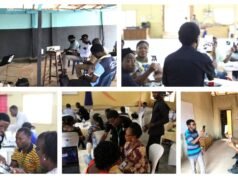
In a keynote address at the University of Ilorin (UNILORIN) Alumni Colloquium, themed “From Unilorin to Globalisation,” former Abdulfatah Ahmed called on the university to set up a formal Ethics and AI Board to regulate data-driven research and champion responsible innovation.
Ahmed’s call acknowledges that technologies such as artificial intelligence and big data are rapidly reshaping global development. He argued that for a university with UNILORIN’s history and reputation, adapting to this reality is not optional, but essential for staying relevant and trustworthy in a digitally dominated future.

Table of Contents
A Golden Jubilee That Demands Vision
As UNILORIN marks its 50th anniversary, Ahmed said the milestone should not simply be a nostalgic celebration of past glories. Instead, it should spark serious reflection on how the institution positions itself for a world undergoing seismic shifts — from globalisation to technological disruption.
Recalling his days as a student, he said his experience at UNILORIN shaped his leadership path and instilled in him a deep respect for disciplined academic culture. But he warned that past accomplishments, although admirable, may no longer suffice if the university does not adapt to evolving global challenges such as AI, climate change, economic volatility and population movement.
For Ahmed, the next half-century of UNILORIN must rest on more than academic excellence. It must be anchored on robust oversight, meaningful public impact and a readiness to harness innovation for national development.

Key Recommendations: Structure, Innovation and Impact
Among the concrete proposals Ahmed laid out:
- Establish a University Ethics and AI Board to oversee data-driven research, ensuring transparency, accountability and ethical standards.
- Set up a Curriculum Innovation Unit to overhaul academic programmes, embedding digital literacy, data fluency, community immersion and industry-linked research into the learning experience.
- Launch an Alumni Seed Fund and foster structured partnerships between academia, government and industry to turn research ideas into market-ready solutions that address national challenges.
- Encourage faculty and students to engage beyond traditional academic publishing, emphasising curiosity, ambition and problem-solving — qualities vital for producing graduates capable of navigating and shaping a rapidly changing world.
Ahmed described this as a “globalisation blueprint”, a plan not only to elevate UNILORIN’s academic prestige but also to ensure that its work yields measurable benefits for society.
Why This Matters for Nigeria’s Universities
Ahmed’s vision for UNILORIN does not exist in isolation. Across Nigeria, universities are gradually recognising that AI is not just a buzzword but a critical tool for innovation, development and global competitiveness.
At UNILORIN itself, recent moves show a growing commitment to AI capacity-building. The university has already trained 21 students in AI, with plans to extend that to 500 more. The institution’s leadership describes this push as part of a broader “SMART Agenda,” aiming to modernise teaching, research and learning with technology.
But as AI becomes more central to research and education, concerns around ethics, misuse, overreliance and data privacy grow. Some academic voices caution against blind dependence on AI, arguing that too much confidence in algorithmic decisions can erode the human judgment and integrity at the heart of scholarship.
By calling for an ethics board and formal governance structures, Ahmed’s proposal seeks to balance innovation with responsibility, a crucial safeguard in a context where regulatory frameworks around AI are still evolving.
For UNILORIN, and indeed for other Nigerian universities, striking that balance could be the key to unlocking AI’s potential while preserving academic integrity and public trust.
Ahmed’s speech at the Alumni Colloquium makes it clear: as UNILORIN steps into its second fifty years, the university must not just celebrate what it has built. It must also prepare for what lies ahead — a world where data, AI and global challenges demand institutions that are not only educated, but ethical, future-ready and socially grounded.
References:
Eleje, L. I., Ezeugo, N. C., Esomonu, N. P. M., Metu, I. C., Anierobi, E. I., Mbelede, N. G., Nwosu, K. C., Ezeonwumelu, V. U., Ufearo, F. N., & Eleje, G. U. (2025). Artificial intelligence adoption in higher education in Nigeria. Discover Artificial Intelligence, 5(1).
Join Our Social Media Channels:
WhatsApp: NaijaEyes
Facebook: NaijaEyes
Twitter: NaijaEyes
Instagram: NaijaEyes
TikTok: NaijaEyes
READ THE LATEST EDUCATION NEWS