

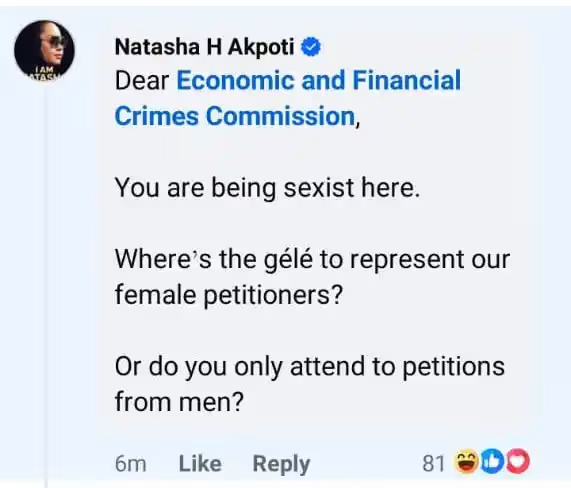
Reacting in the comment section, Kogi Central senator questioned the exclusion of women from the campaign imagery, suggesting it conveyed the impression that only men were being addressed.
“Dear EFCC, you are being sexist here. Where’s the gele to represent our female petitioners? Or do you only attend to petitions from men?” she wrote.
Her comment quickly drew reactions from other social media users, with some agreeing that the agency’s post overlooked women, while others argued that the message was intended to be symbolic and inclusive regardless of gender.
The EFCC had yet to respond to the senator’s remarks as of the time of filing this report.
The anti-graft agency regularly uses social media campaigns to encourage members of the public to report cases of corruption, financial crimes, and other related offences.
ALSO READ: Police report indicts Senator Natasha Akpoti-Uduaghan over murder allegation against Akpabio
BACKSTORY:
The controversy began after the Economic and Financial Crimes Commission shared a public awareness post on its official Facebook page encouraging Nigerians to submit petitions regardless of their ethnic background.
The post featured three traditional male caps representing Nigeria’s major ethnic groups — Igbo, Hausa, and Yoruba — with the message that all petitions would be heard.
However, Senator Natasha Akpoti-Uduaghan questioned the symbolism, asking why there was no female representation such as a “gele,” a traditional headwrap commonly associated with women.
Her reaction has sparked conversations online about gender inclusivity in public messaging and whether government agencies should be more mindful of representation in their campaigns.