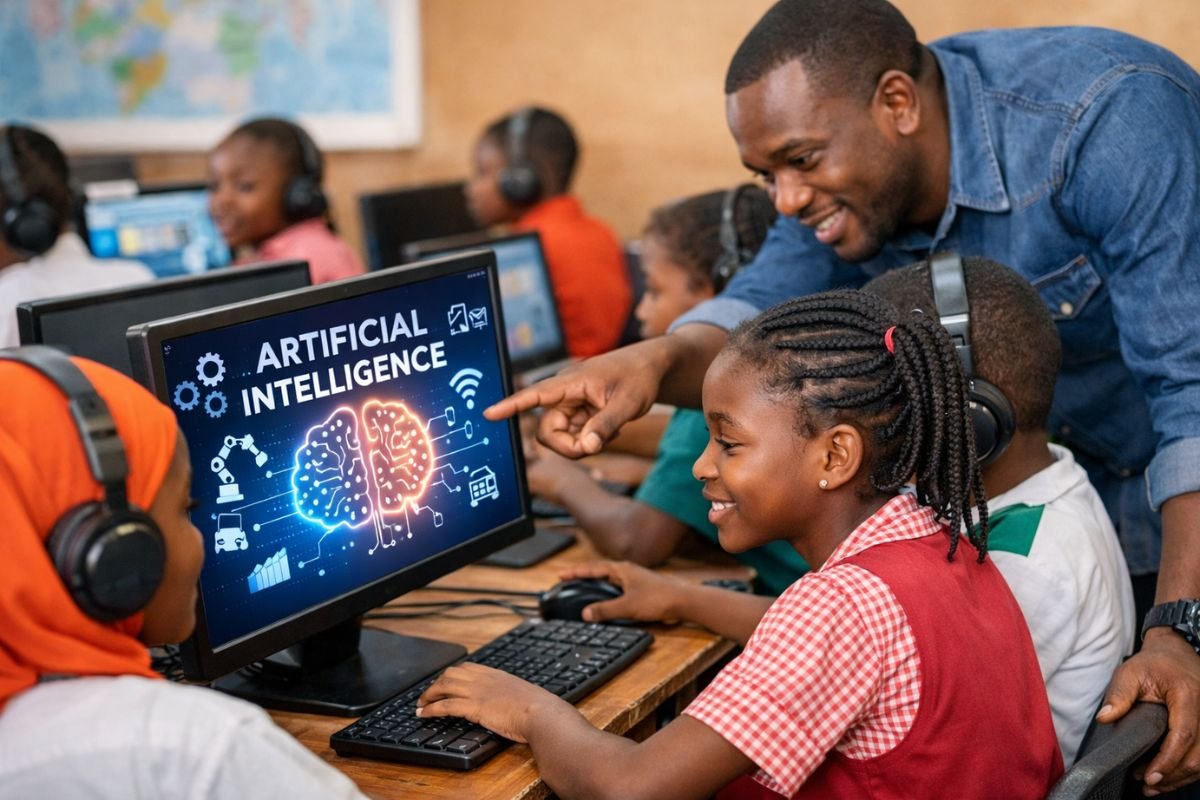
Artificial intelligence is rapidly transforming how the world learns, works, and makes decisions. From automated research tools to intelligent tutoring systems, the technology is reshaping higher education globally. Yet across much of Africa, universities are still struggling to keep pace with this technological revolution.
Experts increasingly argue that African universities must urgently begin teaching responsible artificial intelligence as a core academic discipline, not merely as an optional skill. Without it, the continent risks becoming only a consumer of AI technologies developed elsewhere rather than a creator of solutions tailored to African realities.
Across campuses from Lagos to Nairobi and Cape Town, students are already using AI tools for assignments, research assistance, coding, and data analysis. But many institutions have yet to develop clear policies or training on how these technologies should be used ethically and responsibly. Scholars warn that this gap could have long-term consequences for innovation, governance, and economic development on the continent.
The call is growing louder: Africa’s universities must act now.
Table of Contents
The rapid rise of AI in African higher education
Artificial intelligence is no longer a futuristic concept in African universities. Generative tools, automated research assistants, and machine learning systems are already influencing how students learn and how lecturers conduct research.
Studies on AI adoption in African higher education show that universities are beginning to experiment with these technologies to improve teaching, streamline administrative tasks, and support academic research. However, the pace of technological adoption is moving faster than institutional policies or ethical frameworks.
Recent research examining AI governance in African universities highlights a significant gap. While AI use among students and faculty is increasing, many institutions still lack formal guidelines to regulate how these tools should be used responsibly.
This gap matters.
Artificial intelligence systems can shape decisions about grading, admissions, recruitment, and research analysis. If these technologies are deployed without ethical oversight, they may introduce hidden biases, misuse personal data, or encourage academic dishonesty.
Experts studying AI adoption across African universities say institutions must develop policies that guide how AI tools are used in teaching, learning, and research. Such governance frameworks help ensure that technological innovation supports education rather than undermines it.
Beyond regulation, universities must also teach students how AI works, how it can be misused, and how to apply it responsibly.
Why responsible AI education matters for Africa
Teaching responsible AI is not simply about technology. It is about preparing a generation of African innovators who understand the social, ethical, and cultural implications of the tools they build.
Artificial intelligence systems rely heavily on data. If that data reflects biases or lacks African representation, the resulting algorithms can produce unfair outcomes. Researchers have already identified concerns related to algorithmic bias, transparency, and data privacy in AI systems used within educational environments.
For example, facial recognition technologies have been criticised globally for performing poorly on darker skin tones. Recruitment algorithms used in hiring processes have sometimes reproduced discriminatory patterns embedded in historical data.
These problems illustrate why African perspectives must be embedded in AI development.
Scholars studying ethical AI frameworks stress that responsible technology requires cultural awareness, transparency, accountability, and community participation. In Africa’s context, this also includes protecting local knowledge, respecting social values, and ensuring that AI tools address local challenges rather than importing foreign assumptions.
Universities play a central role in shaping this future.
When responsible AI is integrated into academic curricula, students gain the skills to question technology rather than blindly adopt it. They learn how algorithms work, how datasets are constructed, and how digital systems influence society.
In effect, responsible AI education equips graduates to become not just users of technology but architects of ethical innovation.
The risks of ignoring AI ethics in universities
Failing to teach responsible AI could create several long-term risks for African higher education systems.
One immediate concern is academic integrity. Generative AI tools can produce essays, summaries, and research assistance within seconds. Without clear ethical guidelines, students may rely heavily on automated content generation, raising concerns about plagiarism and originality in academic work.
Researchers studying generative AI use among university students highlight these risks, noting that institutions must establish frameworks that preserve academic integrity while still encouraging innovation.
Another challenge lies in data governance. AI systems rely on vast amounts of personal data, including student information, research datasets, and institutional records. Without proper policies, universities risk exposing sensitive data or allowing external technology companies to control valuable academic resources.
Experts studying AI governance in African higher education stress that universities must develop institutional oversight mechanisms to guide how AI technologies are developed, deployed, and monitored.
There is also the risk of technological dependency.
If African universities fail to build their own AI expertise, the continent may rely heavily on foreign technologies designed for different contexts. This dependency could limit Africa’s ability to shape global technology standards or protect its digital sovereignty.
Responsible AI education, therefore, becomes not just an academic issue but a strategic one.

How universities can build responsible AI education
Across the continent, several initiatives are already attempting to bridge the gap between technological adoption and ethical awareness.
Research networks and policy organisations are developing programmes to strengthen responsible AI capacity within African universities. One such initiative aims to promote inclusive AI education and research while ensuring that ethical principles guide technological development.
However, experts say these efforts must be expanded significantly.
Responsible AI education should not be confined to computer science departments alone. It should involve interdisciplinary teaching that connects technology with law, philosophy, sociology, public policy, and development studies.
Students studying engineering should learn about algorithmic fairness and transparency. Law students should explore regulatory frameworks for AI governance. Social science students should analyse how digital technologies influence communities and economies.
This integrated approach reflects the reality that artificial intelligence does not operate in isolation.
Universities must also invest in training lecturers and researchers. Many educators themselves are still learning how AI tools function and how they should be used in academic settings. Professional development programmes can help faculty members adapt their teaching methods while maintaining academic standards.
Infrastructure is another important factor.
Responsible AI education requires access to data resources, computing power, and digital laboratories. Without these resources, universities may struggle to teach practical AI skills or conduct meaningful research.
International partnerships may help address some of these challenges, but local leadership remains essential.
African universities must design AI programmes that reflect regional priorities such as agriculture, healthcare, climate resilience, urban development, and public governance.
The moment for action
The conversation about responsible AI in African universities is no longer theoretical. The technology is already shaping classrooms, research laboratories, and job markets.
Students across the continent are experimenting with AI tools every day. Companies are increasingly seeking graduates with data science and machine learning skills. Governments are beginning to draft national AI strategies.
Universities sit at the centre of this transformation.
If they move quickly, they can position Africa as a global leader in ethical AI innovation. By teaching responsible AI now, they can nurture a generation of technologists who design systems that are transparent, inclusive, and aligned with African values.
But if institutions delay, the continent may struggle to influence the future of technologies that will define the twenty first century.
The choice facing African universities is therefore clear.
Artificial intelligence will shape the world whether institutions prepare for it or not. The real question is whether Africa will help shape that future or simply adapt to decisions made elsewhere.
Responsible AI education offers a pathway toward the former.
Join Our Social Media Channels:
WhatsApp: NaijaEyes
Facebook: NaijaEyes
Twitter: NaijaEyes
Instagram: NaijaEyes
TikTok: NaijaEyes
READ THE LATEST EDUCATION NEWS