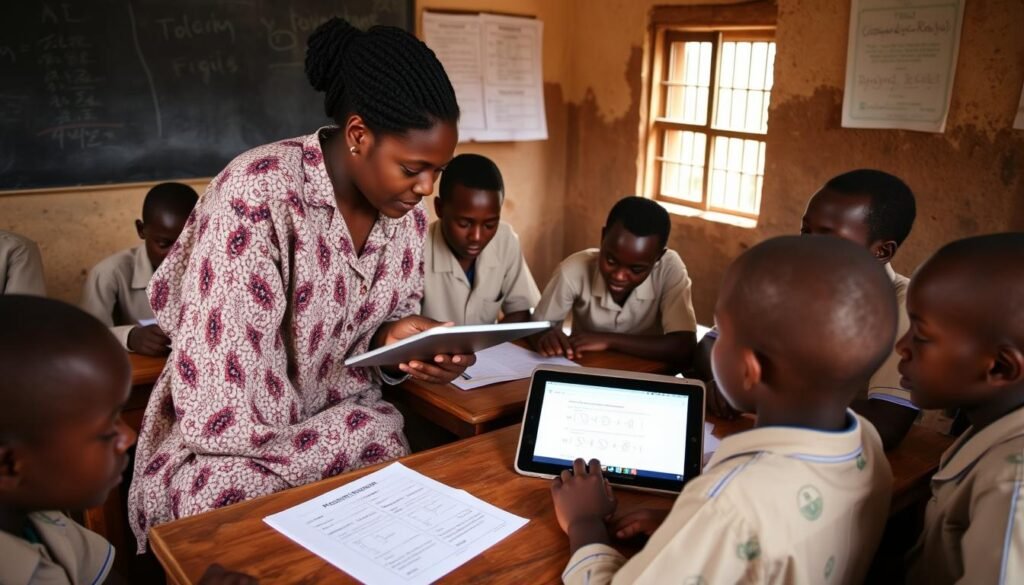
Across staff rooms, lecture halls, and WhatsApp groups for educators, one topic keeps surfacing with urgency: artificial intelligence. Tools like ChatGPT are reshaping how knowledge is created, shared, and assessed globally. Yet for many Nigerian teachers, keeping pace with this shift feels less like progress and more like pressure.
What is striking is not a lack of willingness. Many teachers are curious, even excited. But between infrastructure gaps, limited training, and deep concerns about ethics, the transition has been anything but smooth. This is the story of a profession caught between tradition and transformation.

The sudden rise of AI in Nigerian classrooms
Only a few years ago, digital learning in many Nigerian schools was still centred on PowerPoint slides and basic internet research. Today, generative AI tools can draft lesson notes, generate exam questions, and even simulate classroom discussions within seconds.
This rapid shift has left many educators feeling like they are trying to catch a moving train. Research shows that while AI tools are increasingly being used for teaching and research tasks, adoption remains uneven and often experimental rather than structured.
In conversations with teachers across public and private institutions, a common pattern emerges. Younger educators and those already comfortable with technology tend to experiment with AI tools more freely. Others, especially those who have spent decades teaching without digital tools, often find the learning curve steep and intimidating.
There is also the issue of awareness. Many teachers have heard of ChatGPT but do not fully understand how it works or how it can be used responsibly in the classroom. Without clear guidance, curiosity quickly turns into hesitation.
At the same time, students are not waiting. They are already using AI tools to complete assignments, generate essays, and solve problems. This creates a new dynamic where students sometimes move faster than their teachers, quietly shifting the balance of the classroom.
The real barriers holding teachers back
The struggle Nigerian teachers face with AI is not simply about willingness. It is rooted in structural challenges that have existed long before artificial intelligence entered the picture.
One of the most significant issues is access. Nigeria’s digital divide continues to affect both teachers and students, with many lacking reliable internet, functional devices, or consistent electricity. For a teacher in a rural area, using AI tools is not just about learning a new skill. It may require overcoming basic infrastructure limitations first.
Cost is another factor. While some AI tools offer free versions, meaningful use often requires paid subscriptions or consistent data access. For teachers already managing tight personal budgets, this becomes a practical barrier.
Training is perhaps the most critical gap. Studies consistently highlight that many educators feel uncertain about how to use AI effectively and ethically in teaching. Without structured professional development, teachers are left to figure things out on their own, often through trial and error.
Institutional support is also limited. In many schools, there are no clear policies on AI use, no guidelines for integrating it into lesson plans, and no frameworks for assessment. This lack of direction creates confusion and, in some cases, resistance.
Even where there is interest, the absence of coordinated training programmes means adoption remains fragmented. Experts continue to emphasise that targeted training and curriculum integration are essential for meaningful progress.
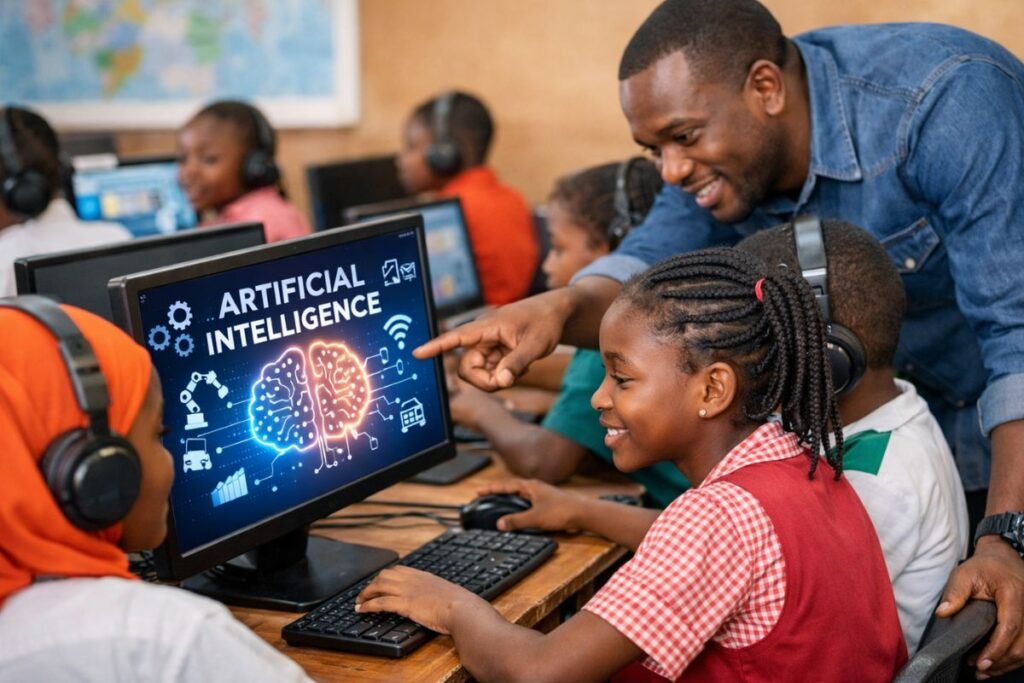
Ethical concerns and the fear of losing control
Beyond infrastructure and training, there is a deeper concern that many teachers are quietly grappling with: trust.
Artificial intelligence introduces new ethical questions that traditional teaching methods never had to confront. Issues such as plagiarism, academic integrity, and the authenticity of student work are now at the forefront.
Educators worry that if students rely too heavily on AI tools, they may lose critical thinking skills. There is also concern about fairness. If some students have access to advanced AI tools while others do not, the gap in performance may widen.
Research has already identified ethical concerns and academic integrity as major challenges in the adoption of generative AI in Nigerian education. These concerns are not abstract. They are playing out daily in classrooms where teachers struggle to determine whether a piece of work reflects a student’s understanding or an AI-generated response.
There is also the question of authority. Traditionally, teachers have been the primary source of knowledge in the classroom. With AI tools providing instant answers, that dynamic is changing. Some educators feel that their role is being challenged in ways they are not fully prepared for.
Yet, it is important to note that AI is not inherently a threat to teachers. Global research suggests that while AI can assist with tasks such as content generation and feedback, it cannot replace the human elements of teaching, such as empathy, mentorship, and creativity.
The challenge, therefore, is not about competition between teachers and AI. It is about redefining the teacher’s role in an AI-enabled classroom.
What needs to change for teachers to catch up
If Nigerian teachers are to fully embrace AI tools like ChatGPT, the solution must go beyond individual effort. It requires a coordinated response at multiple levels.
First, training must become a priority. Teachers need practical, hands-on programmes that go beyond theory. They need to see how AI can be used to design lessons, assess students, and personalise learning experiences. Without this, AI will remain an abstract concept rather than a useful tool.
Second, the infrastructure must improve. Reliable internet access, affordable devices, and stable electricity are not luxuries. They are essential foundations for any meaningful integration of technology in education.
Third, clear policies and guidelines are needed. Schools and regulatory bodies must define how AI should be used in classrooms, how to handle issues of plagiarism, and how to ensure fairness among students. This will help reduce uncertainty and build confidence among educators.
There is also a need for a shift in mindset. Instead of viewing AI as a threat, teachers can begin to see it as a support system. For example, AI can help reduce the time spent on repetitive tasks such as grading or lesson planning, allowing teachers to focus more on student engagement and mentorship.
Government initiatives aimed at improving digital skills offer a starting point, but more targeted efforts are needed specifically for educators. Without intentional investment in teacher development, the gap between technological advancement and classroom practice will continue to widen.
Ultimately, the future of education in Nigeria will not be determined by whether AI is adopted. That is already happening. The real question is whether teachers will be equipped to lead that transformation or be left trying to catch up.
For now, many Nigerian teachers remain in a difficult position, balancing curiosity with caution, and innovation with uncertainty. But with the right support, this moment of struggle could become a turning point, one that redefines teaching for a new generation.
Join Our Social Media Channels:
WhatsApp: NaijaEyes
Facebook: NaijaEyes
Twitter: NaijaEyes
Instagram: NaijaEyes
TikTok: NaijaEyes
READ THE LATEST EDUCATION NEWS