World Bank predicts Nigeria’s economic growth to hit a decade high of 4.4 percent.
If you have been following the news lately, you would know that the conversation around Nigeria’s economy has been quite heavy. We have all felt the “sapa” and the “wahala” of rising costs, but today, there is a fresh breeze of hope coming from the international stage.
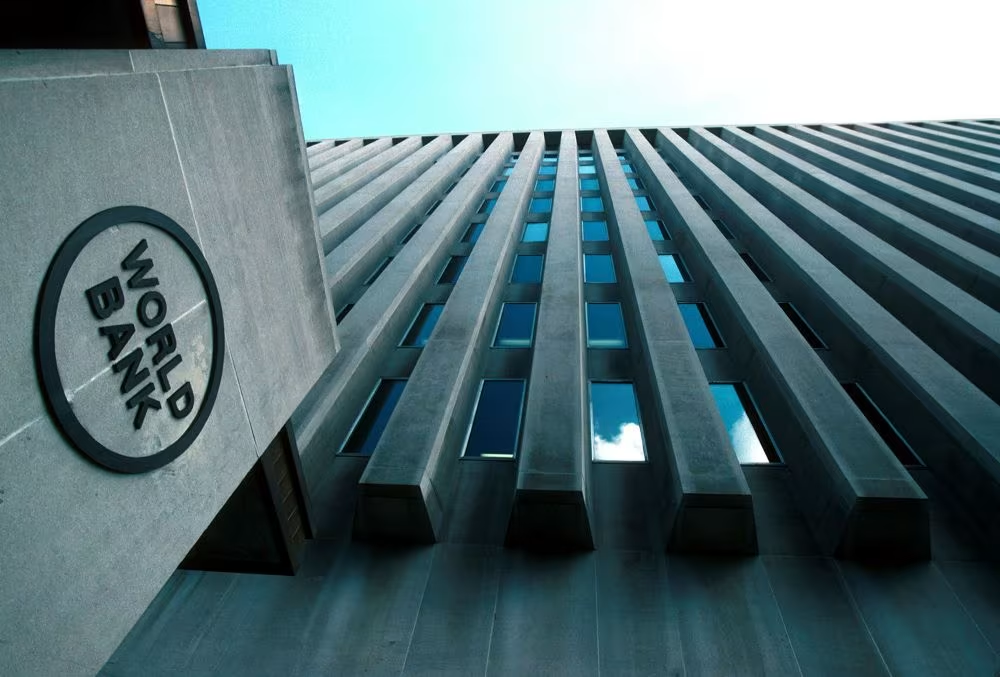
In its latest Global Economic Prospects report released this January 2026, the World Bank has officially upgraded its growth forecast for Nigeria.

The global lender is now projecting that our economy will expand by 4.4 percent in both 2026 and 2027. To put this in perspective, this is not just another random number; it represents the fastest growth pace our country has seen in over ten years.
As an editor watching these trends, I can tell you that this kind of optimism from Washington is exactly what the “Giant of Africa” needs to attract the right kind of attention from global investors.
Services and agriculture sectors driving the new era of prosperity
You might be wondering what exactly is pushing this new found momentum. According to the report, the heavy lifting is being done by our services sector, particularly in finance and information technology.
We are witnessing a digital revolution that refuses to slow down. Beyond the tech sector, the World Bank is also witnessing a modest but steady recovery in the agricultural sector. Even with the climate shocks and security issues we face on the ground, the resilience of the Nigerian farmer is starting to show in the national numbers.
Furthermore, Nigeria’s transition to becoming a net exporter of refined petroleum products is a total game-changer.
For years, we exported crude only to buy it back as petrol, but that era is finally fading, and it is adding some much-needed weight to our Gross Domestic Product figures.
Economic reforms and oil output stability as the backbone for recovery.
The report does not shy away from giving credit to the ongoing economic reforms. We know that some of these policies have been “pepperish” for the average citizen, but the World Bank notes that the tax system overhauls and prudent monetary policies are starting to stabilize the system.
They believe these moves will improve investor sentiment and help keep inflation on a downward path. There is also the matter of our oil production. While international oil prices might fluctuate, Nigeria is expected to offset this by simply pumping more crude and refining more at home.
This shift is expected to strengthen our external balance and give the government more “change” in its pocket to handle fiscal responsibilities.
Tackling structural challenges to ensure growth reaches every Nigerian pocket
While we celebrate this 4.4 percent forecast, we must stay “woke” to the realities that could still trip us up. The World Bank warned that for this growth to actually mean something to the man on the street, we must address our structural bottlenecks.
Issues like inconsistent power supply, high logistics costs, and insecurity in some food baskets remain significant hurdles. Growth on paper is good, but growth that puts food on the table and creates jobs for our teeming youth is the real goal.
The government must stay disciplined with its spending and ensure that the gains from these reforms are not swallowed by corruption or waste. As we look ahead to 2026, the potential is clear, but the work to make it a reality for every Nigerian has only just begun.
Join Our Social Media Channels:
WhatsApp: NaijaEyes
Facebook: NaijaEyes
Twitter: NaijaEyes
Instagram: NaijaEyes
TikTok: NaijaEyes