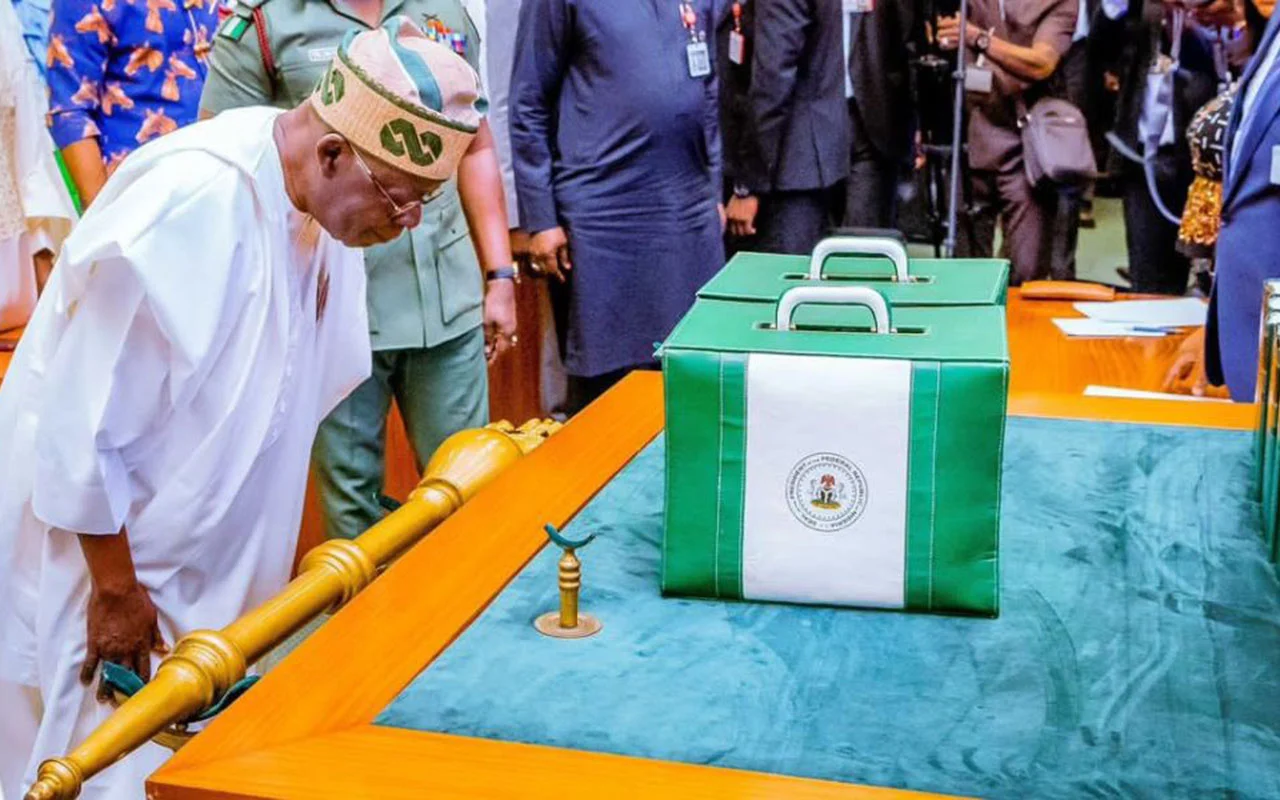
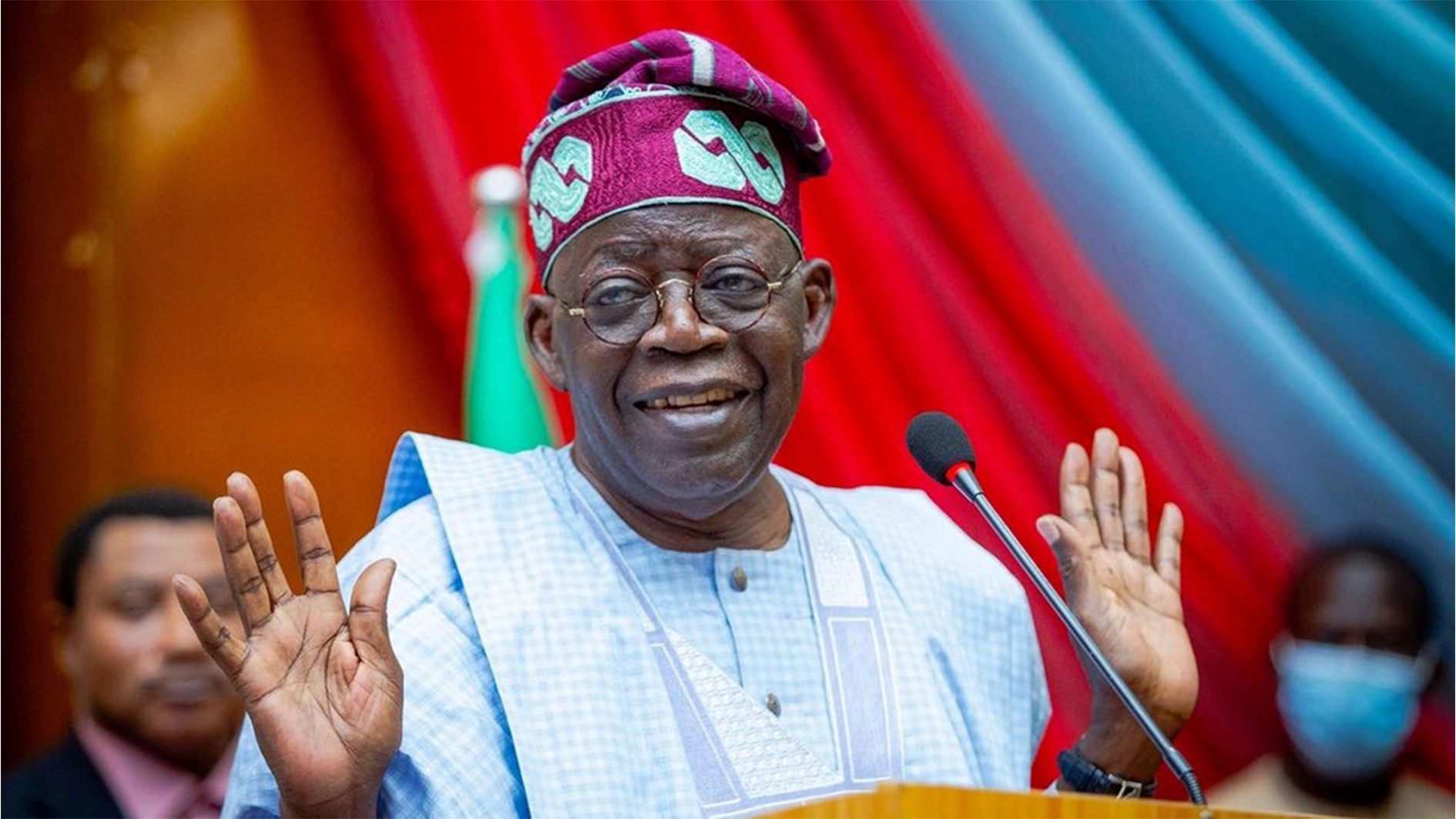
President Bola Ahmed Tinubu’s proposed N58.47 trillion 2026 budget for the fiscal year on Friday has drawn both optimism and pessimism as economists pinpoint major strengths and fault lines.
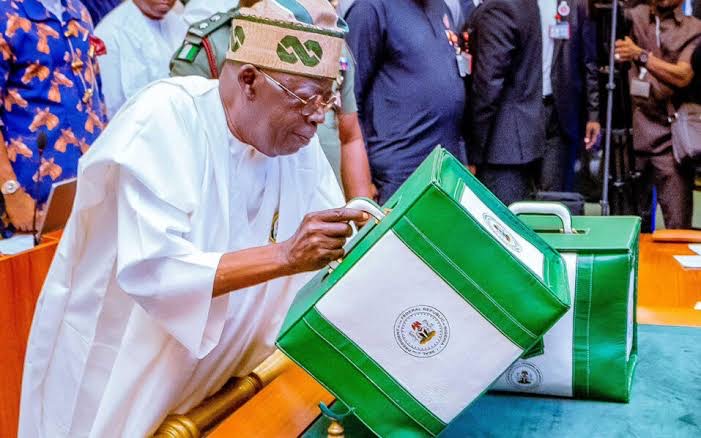
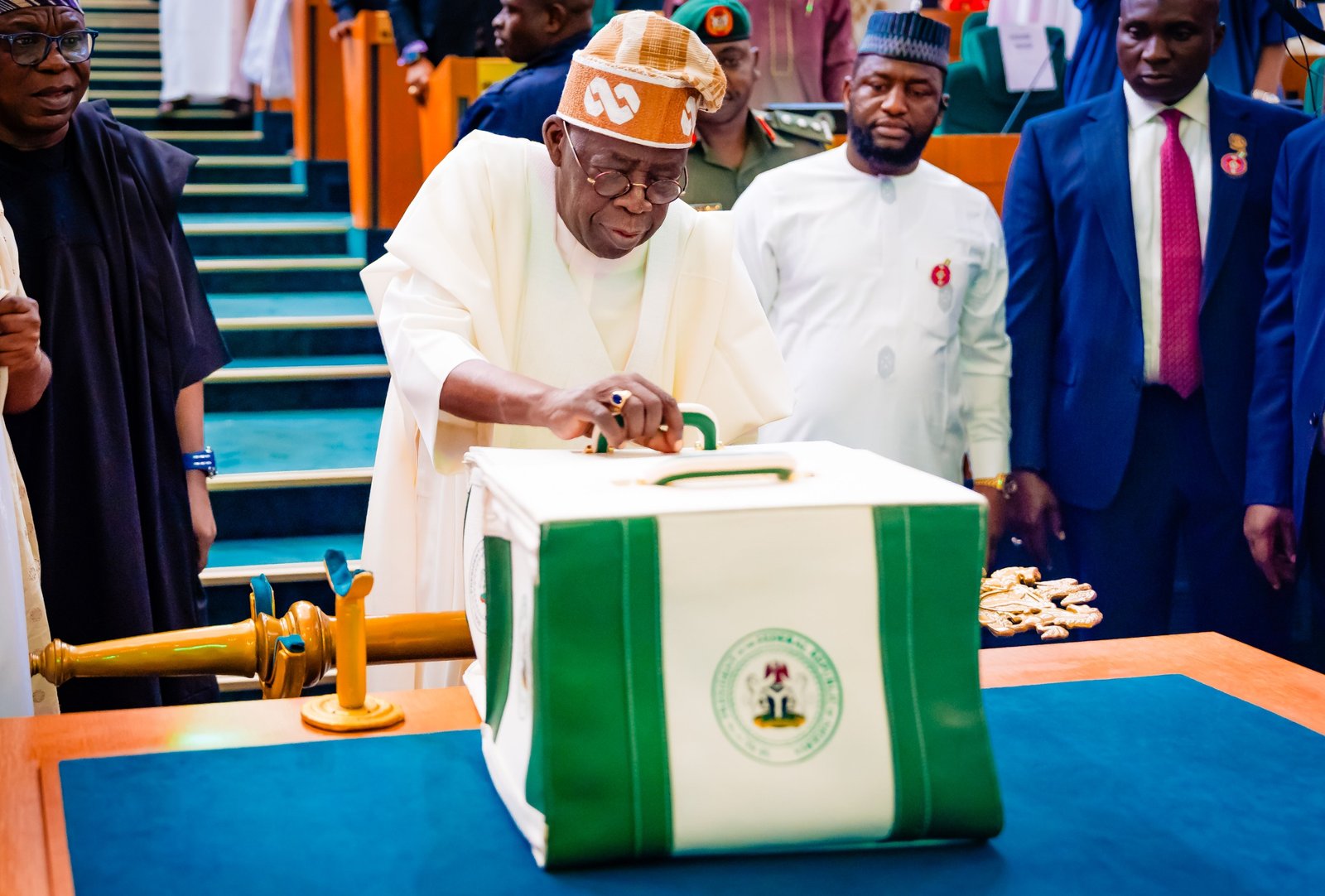
Security and Defence received the largest allocation of N5.41 trillion, followed by Infrastructure with N3.56 trillion, Education with N3.52 trillion, and Health with N2.48 trillion, according to a breakdown of the 2026 budget proposal that President Tinubu presented to the Joint Session of the National Assembly on Friday.
The predicted revenue of N34.33 trillion, the estimated expenditure of N58.18 trillion, and the N15.52 trillion allocated for debt servicing serve as the foundation of the budget.
Join our WhatsApp community
The 2026 budget is based on several key assumptions, such as a benchmark oil price of $64.85 per barrel, daily output of 1.84 million barrels, and an exchange rate of N1,400 to the dollar. Compared to the N43.56 trillion and N54.99 trillion budgets for the 2024 and 2025 fiscal years, respectively, the plan is a considerable rise.
Dr Muda Yusuf, CEO of the Centre for the Promotion of Private Enterprise (CPPE), and Gbolade Idakolo, CEO of SD & D Capital Management, discussed the advantages and disadvantages of the 2026 budget plan in separate interviews with newsmen.
Yusuf said that the 2026 budget’s assumptions are more realistic and conservative than those of 2025 and that it is better structured than the 2024 and 2025 budgets.
He did, however, issue a warning, stating that given Nigeria’s past performance, the oil price benchmark of $64.85 per barrel and production objective still seem optimistic and urging a downward revision to increase credibility.
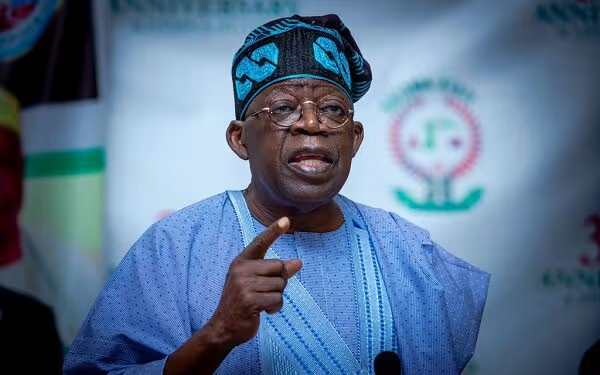
Additionally, he cautioned the National Assembly against inflating the budget through constituency projects, pointing out that frequent upward adjustments frequently jeopardise implementation and public confidence.
He believes that the 2026 budget’s legitimacy is just as crucial as its size.
Yusuf emphasised the necessity of optimising income creation and noted that government agencies’ poor non-tax revenue performance was a persistent problem.
Additionally, he warned against the possibility of overlapping budget regimes and demanded clarification on how the recently proposed 2026 budget would be in line with the just reenacted 2025 Appropriations Act.
He pointed out that inadequate capital budget execution continues to limit economic impact, even though recurrent expenditure has been mostly implemented in previous budgets.
Dr. Yusuf emphasised that state and local governments must be held responsible in addition to the federal level, pointing out that many subnational governments already have substantial resources that may spur advancements in infrastructure, agriculture, health, and education.
“Well, I believe we should have a much better budget in 2026 than what has been presented. The assumptions on which the budget was based look to be a lot more realistic and a lot more conservative as compared to what we had in 2025. But it will not be a bad idea to further review the assumptions.
“$64 per barrel is still a bit on the optimistic side. If it can come down to $60, that will not be a bad idea. And the oil output of 1.8, given the historical level of performance, is also a bit on the optimistic side.
“So those assumptions are much more realistic, but they can be even more realistic. So I would rather suggest that we have a further review of those assumptions. Then we also need to appeal to the National Assembly not to inflate the budget.
“Because over the years we have not had this arbitrary review or upward review of budgets as a result of these constituency projects. We should not allow that kind of thing to happen this year. Because the beauty of a budget is in the credibility of the budget.
“If we continue to have budgets that are poorly implemented, the budget itself will lose credibility, and it will lose trust. And I think the president alluded to that even in his speech to members of the National Assembly. So we have to be careful about throwing all manner of projects into the budget in a way that will now create huge expenditure expectations, which will not be met.
“Then, of course, one of the areas in which we have been having serious shortfalls is also from that performance of revenue. It’s in the area of revenue from generating agencies of government, which generate non-tax revenue. I think we need to optimize that.
“And I think, again, the President emphasized that. And those first steps will be taken to ensure that we optimize tax revenue that is from agencies of government that are generating that revenue. So if we put all of this together, I think optimizing will improve the fiscal consolidation.
Join our WhatsApp community
“But we need to worry about the burden of debt service. It underscores the need for us to review our debt management strategy and the need for us to also moderate the level or the rate of debt accumulation.
“Because debt servicing costs, even in this budget, are almost 50 percent of revenue.

“I mean, we cannot continue that way because that is shrinking the fiscal space. It’s also one of the factors affecting budget implementation. So that’s the percent of the things that we need to look at.
“Generally, it’s a good budget, but we need to look at these areas that I’ve just mentioned. And of course, the president recently re-enacted it. The 2025 budget authorizes a release of about 43 trillion from the consolidated revenue account.
“Now, that has just been sent to the National Assembly in the form of another appropriation act.
“So we need to know how we are going to reconcile the new budget. and the one that the president recently sent to the National Assembly. I’m talking now about the enactment of the 2025 appropriation act. We need some clarity around that so that we know exactly where we stand and what to expect so that we don’t have another cycle of multiple budget regimes.
“The past budget, of course, the implementation has been poor, and this has been clearly acknowledged even by the Finance Minister. Some projects were done, and according to the Finance Minister, I think 30 percent of the releases have been made. It remains 70 percent.

“So that, of course, has affected the capacity of the budget to impact productivity, and quite some projects, of course, were not able to be implemented as a result of those challenges. So the cent that has been taken, hopefully, will help to avoid a repeat of that experience that we had with the 2025 budget. But in all of this, we also need to realize or underscore the fact that the current part of the budget was almost fully implemented.
Even though a significant amount of capital expenditure is anticipated to roll over into 2026, Gbolade Idakolo stated that the N58.46 trillion 2026 budget proposal is a daring move intended to consolidate recent budgetary improvements.
He argued that increased security is essential to investor confidence and long-term growth, and he applauded the prioritisation of defence and security.
He, however, advised the National Assembly to subject all projections and allocations on the 2026 budget proposal to rigorous scrutiny to ensure realism and prevent implementation gaps.
“The N58.46 trillion 2026 budget is a bold step by the Federal government to consolidate its achievements in the last budget cycle, although over 70% of capital expenditure would be carried over to 2026, according to Minister of Finance Mr. Wale Edun.
“The 2026 budget will greatly help to stabilize and grow our economy if it can be effectively implemented by releasing corresponding funding for these critical sectors of the economy. The National Assembly should, however, take a critical look into all the budgetary projections and allocations to ensure that the budgetary framework is realistic,” he stated.
Join Our Social Media Channels: