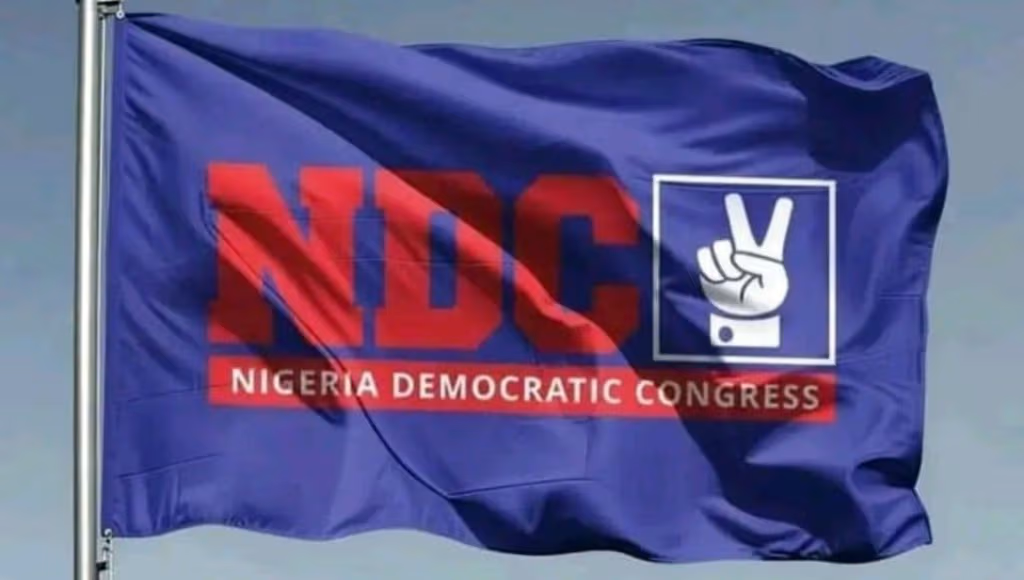

The Nigerian Democratic Congress (NDC) has urged the public, particularly its members in Imo, Abia, Anambra, and other affected states, to ignore circulating social media lists claiming to be the party’s official candidates.
In a statement signed by NDC National Secretary, Barr. Ikenna Alex-Morgan Enekweizu, the party described the lists as false and said they did not originate from its national headquarters.
The party clarified that it had already submitted its genuine list of candidates to the Independent National Electoral Commission (INEC) through the proper procedures in line with the Electoral Act.
It added that the fake lists were being spread by individuals seeking to cause confusion and undermine the party’s internal processes.
According to the statement, the party is currently investigating the source of the misinformation and what it described as deliberate attempts to mislead members and create internal division.
The NDC reassured its supporters of its commitment to building a strong and credible political platform aimed at national development.
Meanwhile, the party recently introduced an anti-defection agreement requiring aspirants and candidates to sign a commitment to relinquish their positions if they defect from the party after being elected.
BACKSTORY…
The controversy over candidate lists in the Nigerian Democratic Congress (NDC) reflects a familiar challenge in party politics ahead of major elections—internal competition, misinformation, and struggles over control of nomination processes.
As political parties conclude primaries and finalise their candidates, it is standard practice for official lists to be compiled at the party headquarters and submitted to the Independent National Electoral Commission (INEC). However, during this period, unofficial or premature lists often surface online, usually attributed to factions, supporters, or political actors seeking influence or recognition.
In this case, the NDC moved to distance itself from such circulating lists, suggesting they did not come from the party’s formal approval structure. The party’s response also points to efforts to maintain internal discipline and prevent confusion among members, especially in states where electoral contests are highly competitive.
The situation is further shaped by wider concerns about political loyalty, as many parties have recently tightened rules to discourage defection after elections, including requiring binding commitments from candidates to remain within the party after securing office.
Overall, the dispute highlights the tension between official party processes and the rapid spread of unverified political information, particularly on social media during election cycles.

Chinenye Ubunama
Chinenye Ubunama is a content writer and storyteller with a background in Biological Science. She specializes in crafting engaging, well-structured, and SEO-optimized content that simplifies complex ideas for everyday readers. With a focus on audience-centered writing, she consistently delivers value-driven content that informs, connects, and drives visibility across digital platforms.