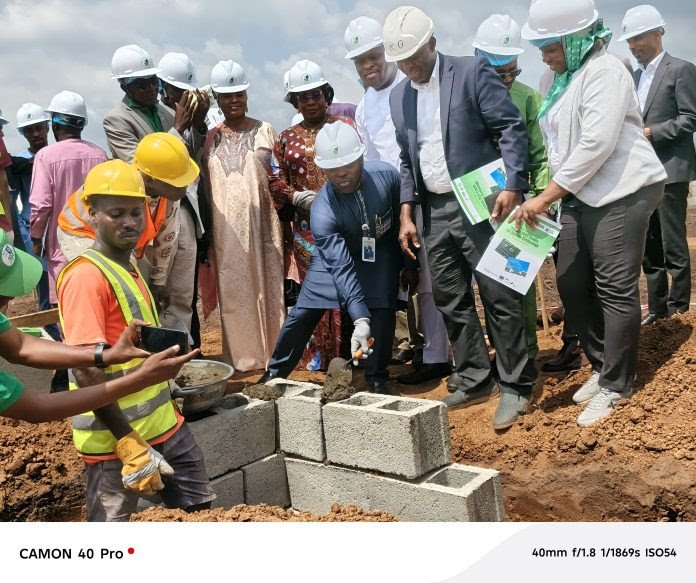
MOMAS Group has officially broken ground on a €3 million Technical Vocational and Educational Training (TVET) Centre for Electro-Technology in Ogun State, marking a substantial private-sector investment in Nigeria’s technical skills landscape. The facility, supported by the African Union (AU), AUDA-NEPAD, and the Skills Initiative for Africa (SIFA) programme, is poised to become a centre of excellence for electro-technology training.
A Partnership Bridging Skills Gaps and Energy Needs
At the foundation-laying ceremony, Engr. Kola Balogun, Chairman of MOMAS Group, underlined the centre’s dual mission: to lift young Nigerians out of poverty through practical vocational training and to bolster Nigeria’s capacity in renewable energy. He explained that the institution will train engineers and technicians in advanced skills such as solar panel installation, energy storage systems, and smart metering—areas critical to the country’s energy transition.
The €3 million funding was secured under SIFA’s Funding Window 1, reflecting the project’s strategic importance in developing large-scale technical education across Africa.
Private-Sector Leadership and National Impact
Speaking on behalf of the government, Mr. Adamson Oluwatosin Ayinde, Senior Special Assistant to the President on Industrial Training and Development, hailed the TVET centre as a shining example of private enterprise stepping in to close national skills gaps. According to him, the power sector faces acute manpower shortages in areas such as smart electricity metering, electrical wiring, renewable energy tech, and electro-technology safety practices.
He also praised MOMAS for committing to more than the mandatory 10 percent counterpart funding, demonstrating real ownership and national commitment.
Vision for Youth Empowerment and Energy Transition
Representing AUDA-NEPAD, Mr. Gemechu Berhanu Kusa framed the training centre as a transformative space for African youth. He strongly emphasised that vocational education is not a fallback but a first-rate route to dignity, opportunity, and sustainable livelihoods.
Kusa highlighted the centre’s focus on electrotechnology, particularly solar photovoltaic systems, as central to solving Nigeria’s dual challenges of youth unemployment and energy insecurity.
For the engineering community, the response has been overwhelmingly positive. Engr. Margaret Aina Oguntala, President of the Nigerian Society of Engineers (NSE), called the initiative timely and visionary. She stressed that Nigeria urgently needs skilled manpower to drive infrastructure growth and technological advancement, applauding MOMAS’s leadership.
A Landmark Day for MOMAS and the Youth Economy
MOMAS’s Group Managing Director, Engr. Hammed Abiodun described the day as historic. He emphasised the company’s long-term commitment to youth development and said that the German government’s recognition further underscores MOMAS’s role in adding value to society.
Abiodun argued that the future belongs to hands-on skills, pointing to global models like China, where technical training undergirds industrial strength. By tapping into Nigeria’s youthful population, he said MOMAS hopes to reshape a generation to contribute powerfully to national development.

Ambitious But Targeted: What the Centre Will Do
According to the SIFA factsheet, the TVET centre will deliver a number of concrete outcomes: two new buildings, modern training equipment for electrical engineering, and curricula tailored for electrotechnology and solar energy.
Importantly, the centre aims to be inclusive: about 30 per cent of the trainees will be women, and at least 75 percent will come from low-income or vulnerable backgrounds.
There are also plans to launch a scholarship scheme, ensuring that financial constraints don’t bar prospective students from accessing this life-changing training.
Why This Matters: Skills, Jobs, and a Greener Nigeria
- Closing the Technical Skills Gap
Nigeria’s power sector has long struggled with a shortage of skilled manpower. The TVET centre is explicitly designed to tackle this shortfall, especially in crucial fields such as smart metering and renewable energy systems. - Empowering Youth for Employment and Entrepreneurship
By offering hands-on training, the centre gives young people practical tools to become gainfully employed or even start their own businesses. As Mr. Ayinde said, it’s “a promise to our youths.” - Driving Nigeria’s Renewable Energy Goals
With solar energy and energy storage among its core training modules, the centre aligns directly with Nigeria’s efforts to scale up renewable energy infrastructure. Balogun made clear that graduates would be equipped to install solar panels and manage battery systems. - Private Sector Leading Development
The centre demonstrates how private companies like MOMAS can partner with continental agencies and governments to deliver large-scale social impact—providing a model for other industries to follow.
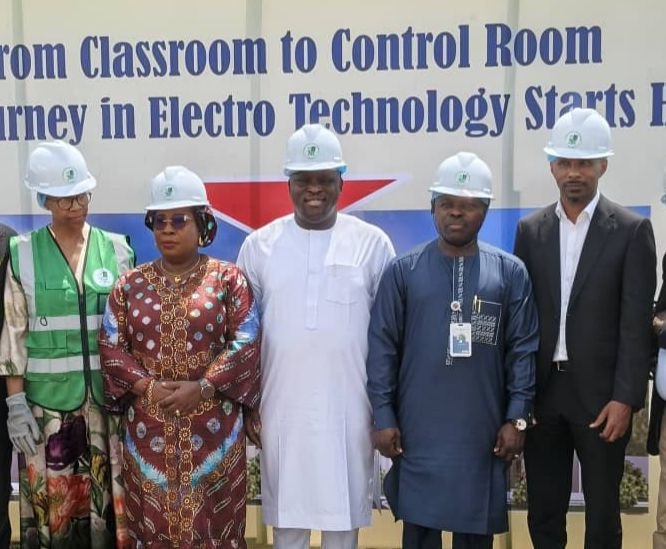
With construction expected to be completed within a year, the MOMAS TVET Centre for Electro-Technology is fast becoming one of the most promising developments in Nigeria’s skills and energy ecosystem. If executed well, it could reshape the way the country builds its future workforce—and supports its green energy ambitions.
Join Our Social Media Channels:
WhatsApp: NaijaEyes
Facebook: NaijaEyes
Twitter: NaijaEyes
Instagram: NaijaEyes
TikTok: NaijaEyes