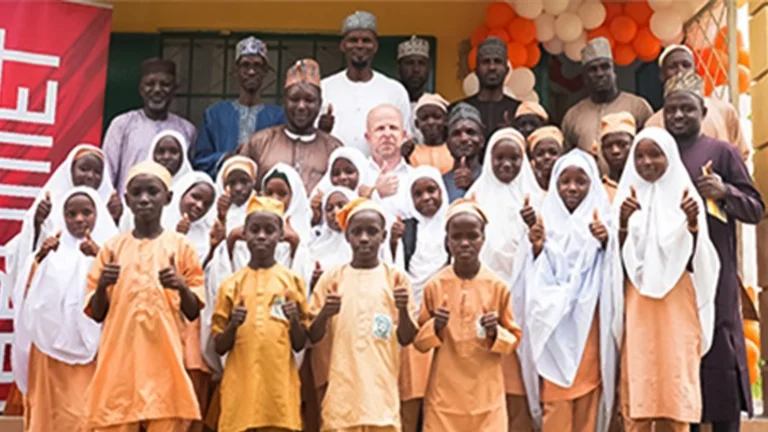
The Federal Government of Nigeria (FG) has officially initiated full recovery of the 157 “model” Almajiri schools that were originally established across the country under the administration of former Goodluck Jonathan. The announcement was confirmed by the National Commission for Almajiri and Out-of‑School Children Education (NCAOOSCE), and marks a renewed push to revitalise Almajiri education nationwide.
Nura Muhammad, the commission’s spokesperson, told the News Agency of Nigeria (NAN) in Abuja on Sunday that the programme would begin by bringing all 157 schools back under federal oversight before any rehabilitation work begins. He described the move as a decisive step to institutionalise Almajiri education, under a legal framework that was previously absent.
Muhammad commended the vision behind the original project, acknowledging that the 157 schools represented a “noble and well-intentioned stride toward modernising the system.” However, he added that the implementation had been hampered by critical shortcomings, especially the failure to meaningfully involve “Alarammas,” the traditional Qur’anic teachers responsible for Almajiri pupils, and the lack of a robust institutional foundation under the previous Ministry-led approach.
He expressed confidence that, with the formal establishment of the Commission and the recent adoption of a national policy on Almajiri education, the renewed effort now stands on far stronger ground. “We are confident that, in due course, all negative practices associated with the system will be eliminated,” he said.
The context behind the 157 schools’ recovery
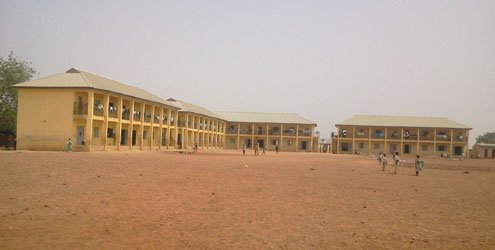
The 157 model Almajiri schools were built under the Jonathan administration, as part of a reform agenda aimed at transforming what had long been a largely informal Almajiri system, characterised by street-begging and lack of formal schooling, into a structured, modern educational model.
But over time, successive governments failed to maintain or utilise these schools. They were largely abandoned, left to deteriorate, and in many cases handed over to state authorities, many of whom lacked the resources or commitment to sustain them.
Earlier this year, the FG began signalling its intent to reclaim the schools. In January 2025, the executive secretary of the Commission, Idris Sani, announced that the Commission had directed staff to finalise arrangements for the takeover and rehabilitation of the 157 schools. Plans were also pitched for collaboration with the National Board for Arabic and Islamic Studies (NBAIS) to deploy teaching staff once rehabilitation is complete..
Civil society organisations also urged increased funding for education, calling for Nigeria to meet the recommended benchmark for educational investment set by UNESCO, 15 to 20 per cent of the national budget. Observers had warned that without stronger financial commitments, any plan to revive the Almajiri schools would likely stall, as has happened in the past.
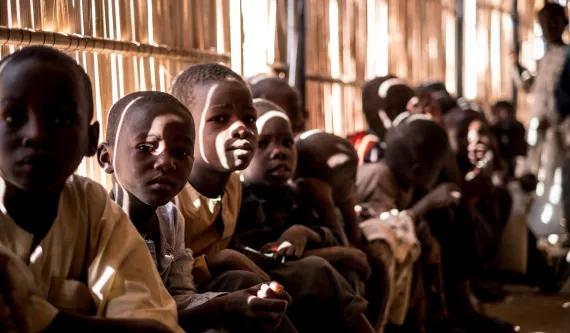
What the recovery means for Almajiri education
By bringing the schools under the mandate of a legally backed national body, the government aims to institutionalise Almajiri education — combining traditional Qur’anic learning with mainstream curricula, oversight, and accountability. This would address long-standing concerns over neglect, poor infrastructure, and the vulnerability of out-of-school children associated with the old Almajiri system.
Rehabilitating the 157 schools and ensuring they’re managed and staffed properly could provide a viable, dignified educational pathway for thousands of children previously outside the formal school system. It would also present an opportunity to integrate Islamic education with literacy, numeracy, and civic education, offering Almajiri children a chance at better future prospects.
At the same time, the move signals a broader commitment by the federal government to resolve the out-of-school children crisis. Recent efforts under the Education Ministry have already aimed to enrol over one million out-of-school children in formal or low-cost private schools across the country, including children from Almajiri backgrounds.
Challenges ahead and what needs to be done
While the recovery initiative is promising, it faces several challenges. First, rehabilitating 157 schools across different states requires substantial funding, something civil society stakeholders have consistently flagged as a limitation. Without urgent and sustained financial support, the rehabilitation process may stall again.
Second, there is the question of how to engage and integrate the traditional Alarammas meaningfully. Their initial exclusion undermined earlier efforts, and success now will depend heavily on ensuring their cooperation, training, and alignment with the formal educational framework.
Third, building capacity, providing qualified staff, learning materials, proper infrastructure, and regulatory oversight — will take time and consistent commitment. The authorities will need to coordinate across federal, state, and community levels to avoid a repeat of past neglect.
Finally, there must be mechanisms to monitor progress and hold stakeholders accountable. Transparency, citizen engagement, and periodic reporting will be essential to ensure the revived Almajiri schools truly deliver on their promise.
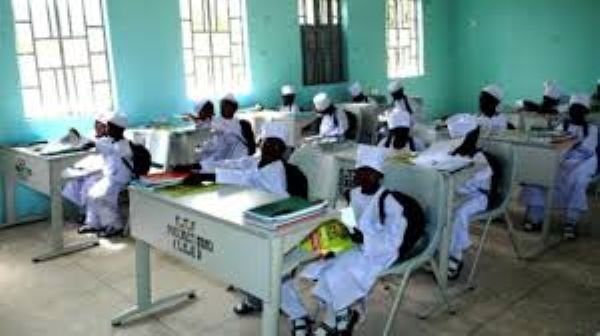
A renewed hope for Nigeria’s Almajiri children
The initiation of the recovery of 157 model Almajiri schools marks a moment of renewed hope in Nigeria’s education sector. For decades, Almajiri children have been among the most vulnerable, deprived of stable schooling, exposed to street life, and denied prospects. Bringing these schools back under a dedicated, legally sanctioned national Commission opens the door to giving these children a dignified and structured educational pathway.
If properly implemented, with adequate funding, community engagement, and transparent oversight, this initiative could transform the lives of thousands of children and contribute meaningfully to tackling the broader challenges of out-of-school youth and social inclusion in the country.
The path ahead will not be easy, but the resolve appears firmer this time. Nigeria awaits visible action and tangible results.
Join Our Social Media Channels:
WhatsApp: NaijaEyes
Facebook: NaijaEyes
Twitter: NaijaEyes
Instagram: NaijaEyes
TikTok: NaijaEyes